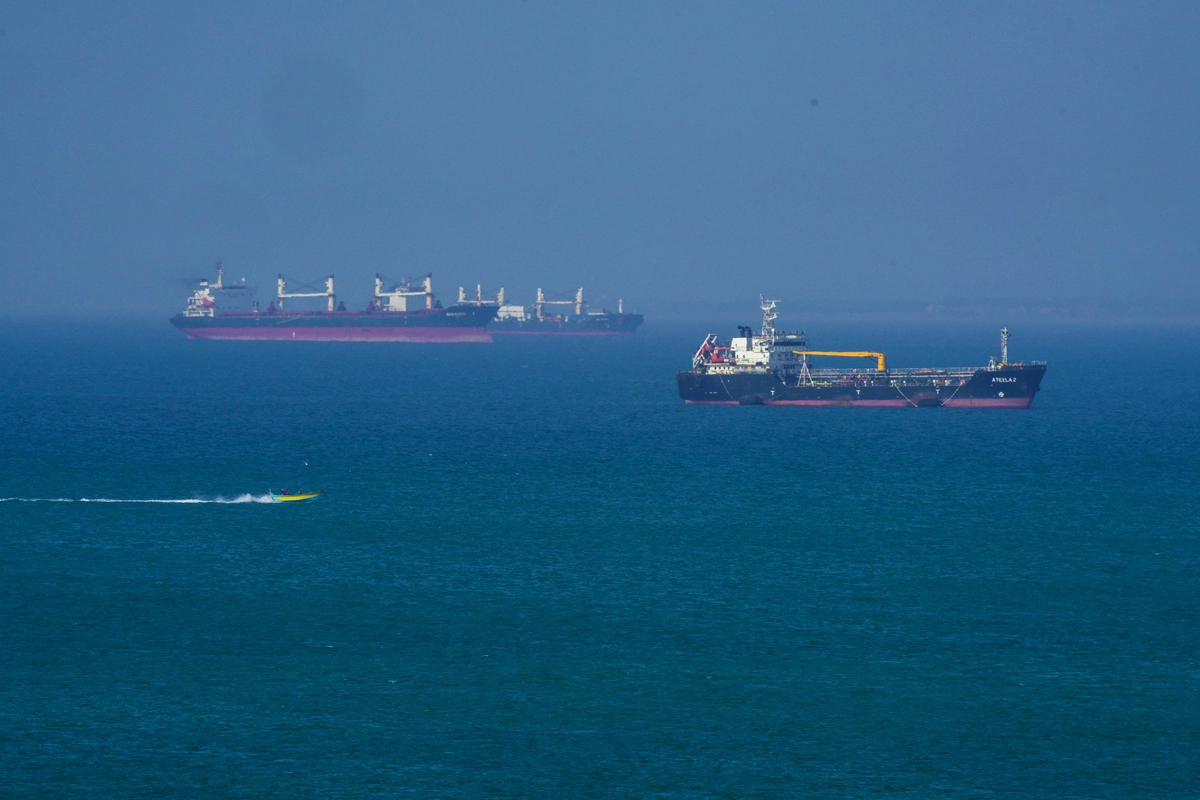
The European Union announced on June 8 that it has imposed new sanctions against a unit of Iran’s Islamic Revolutionary Guard Corps (IRGC) and two Iranian nationals over actions affecting commercial shipping in the strategically important Strait of Hormuz.
According to a statement from the European Council, the sanctions target the Hormozgan Provincial Command, a branch of the IRGC, following allegations that it has assumed control over traffic passing through the vital waterway and established a system requiring vessels to submit identifying information before being allowed to continue their journey.
The European Council stated that commercial ships are now required to provide documentation regarding their identity, cargo, and destination. According to the statement, that information is ultimately passed to the Hormozgan Provincial Command, which then determines whether vessels may transit the strait. In some cases, ships are reportedly required to pay tolls before receiving approval to proceed.
EU officials argued that these measures violate international maritime law and interfere with long-established rights governing the passage of vessels through international waterways. The European Council specifically stated that the actions infringe upon the principles of both transit passage and innocent passage that apply to international straits.
The Strait of Hormuz remains one of the world's most critical maritime chokepoints, serving as a major route for international trade and energy shipments. Any restrictions on navigation through the waterway attract significant global attention due to their potential impact on commerce and regional stability.
The sanctions represent the latest effort by European leaders to respond to concerns about freedom of navigation in the region. Supporters of the move argue that international shipping lanes must remain open and accessible under established legal frameworks. After all, global trade tends to work much better when ships aren't required to seek permission from armed officials before passing through international waters.
The European Union's action underscores the continuing international focus on maintaining secure and lawful maritime transit in one of the world's most strategically important regions. As diplomatic and economic pressure increases, policymakers hope that respect for international norms and freedom of navigation will ultimately prevail.