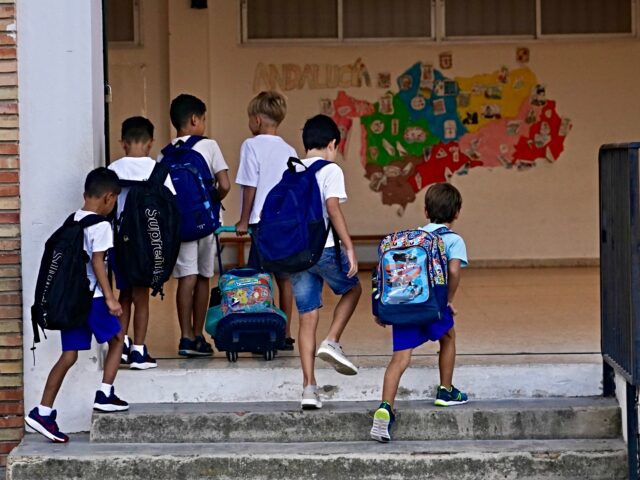
New data from Spain’s Ministry of Education reveals that students from migrant families now account for nearly 20 percent of all children enrolled in the country’s elementary and secondary schools, highlighting a major demographic transformation that has taken place over the past decade.
According to official statistics, 1,151,694 migrant students were enrolled in Spanish schools during the 2024–2025 academic year. That represents a substantial increase of 427,059 students compared to the 724,635 migrant students recorded during the 2014–2015 school year.
Spanish media outlets have described the figures as a “thermometer” for measuring how migration patterns are reshaping the country, particularly within its education system.
The data illustrates how rapidly Spain's student population has changed in recent years. As migration levels have increased, schools across the country have seen growing numbers of students from foreign-born families entering classrooms.
While migrant students are present throughout Spain, the highest concentrations are found in several key regions. The Balearic Islands, Valencian Community, La Rioja, Aragon, Catalonia, Murcia, and Madrid all exceed the national average for migrant student enrollment.
Officials note that the national average of migrant students stands at 12.9 percent, though some regions have significantly higher concentrations due to local migration trends and economic opportunities that attract newcomers.
The figures are likely to fuel ongoing debates surrounding immigration, education policy, integration, and public services. Supporters of immigration often point to the cultural and economic contributions made by migrant communities, while critics raise questions about the challenges associated with rapid demographic change and the strain it can place on schools and local resources.
Education systems frequently serve as one of the earliest indicators of broader societal shifts, making school enrollment data an important metric for policymakers. After all, if you want to know what a country's future looks like, a classroom is usually a good place to start.
As Spain continues to experience changing migration patterns, educators and government officials will face the task of adapting schools to meet the needs of an increasingly diverse student population while maintaining educational standards and social cohesion.
The new statistics underscore a reality that is becoming increasingly visible across much of Europe: migration is not merely affecting border policy debates—it is reshaping communities, institutions, and classrooms throughout the continent. How governments respond to those changes will remain a major topic of discussion in the years ahead.