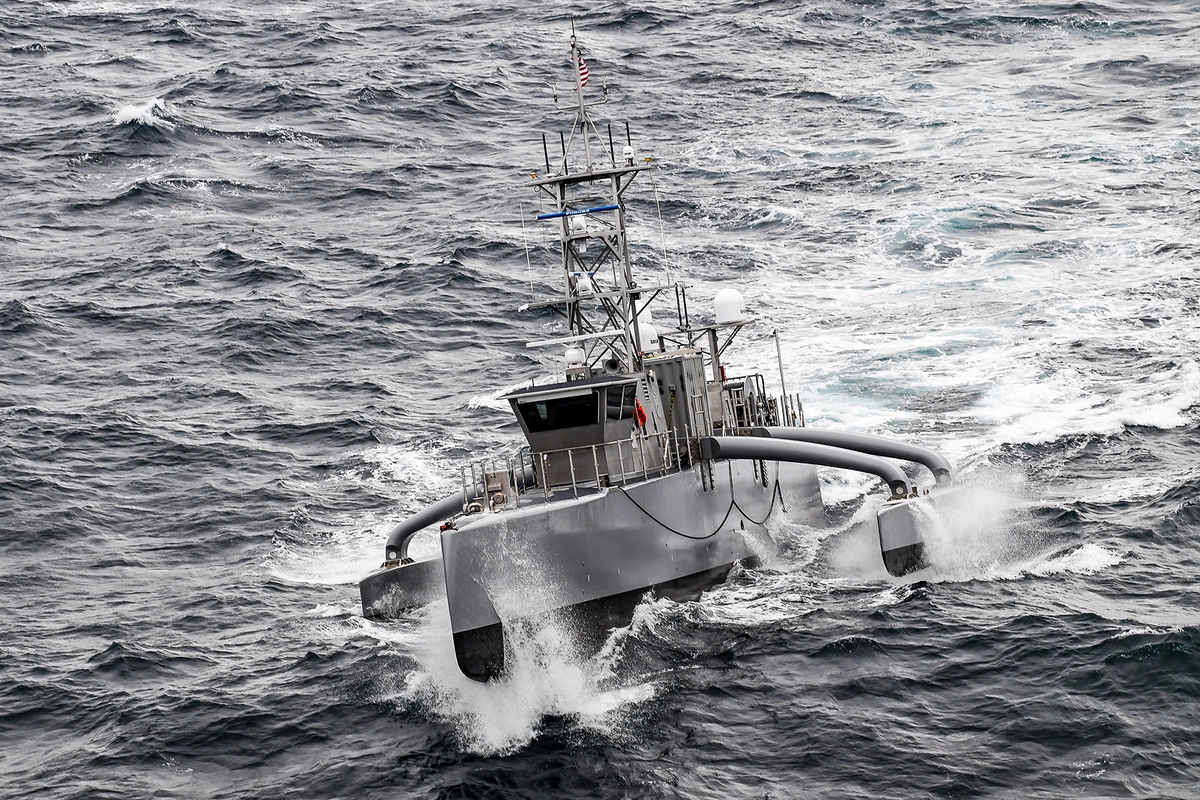
A groundbreaking rescue operation near the Strait of Hormuz has marked a new milestone in military technology, as the U.S. military successfully used an unmanned surface vessel to help rescue the crew of a downed helicopter for the first time.
According to U.S. Central Command, a U.S. Army AH-64 Apache attack helicopter went down off the coast of Oman on June 8. The helicopter's two crew members were later recovered safely through a coordinated rescue effort that featured cutting-edge autonomous technology.
Navy Capt. Timothy Hawkins, a spokesman for CENTCOM, said a 24-foot Corsair unmanned surface vessel was the first asset to reach the stranded flight crew after the crash.
The drone boat is assigned to Task Force 59, the U.S. Navy unit responsible for overseeing and integrating unmanned systems throughout Middle Eastern waterways. Designed to operate without a crew onboard, the Corsair represents part of the military's broader effort to expand the use of autonomous technology in maritime operations.
According to Hawkins, the unmanned vessel successfully transported the two airmen from the crash site to another location, where a rescue helicopter arrived and completed the recovery mission.
The operation is being viewed as a significant achievement for military innovation. While unmanned aircraft and drones have become increasingly common in military operations, the use of an autonomous surface vessel to directly assist in a rescue mission represents a new step forward in operational capability.
Supporters of these technologies argue that unmanned systems can reach dangerous areas faster, reduce risks to rescue personnel, and improve response times during emergencies. In this case, the technology appears to have done exactly what it was designed to do: get to the scene quickly and help save lives. Not bad for a boat with no one actually driving it.
The Strait of Hormuz remains one of the world's most strategically important waterways, making rapid-response capabilities especially valuable in the region. Military officials continue to invest heavily in autonomous systems to strengthen operational flexibility and improve mission effectiveness.
While investigations into the cause of the Apache helicopter crash are expected to continue, the successful rescue stands out as the most important outcome of the incident. Both crew members survived and were safely recovered.
For the U.S. military, the mission may also serve as a glimpse into the future of rescue operations, where autonomous technology works alongside traditional forces to respond more quickly and effectively in critical situations. In this case, innovation and teamwork combined to produce exactly the result everyone hoped for: two American service members brought home safely.