U.S. Ambassador to NATO Matthew Whitaker sounded more optimistic than any Biden-era diplomat has dared to be, telling Spain’s EFE news agency on Saturday that the world may be witnessing the closest moment yet to ending the Russia-Ukraine war.
“You could say we are close — close to peace, closer than ever,” Whitaker said, calling the present moment “the best opportunity” so far to stop nearly four years of bloodshed.
Whitaker stressed that any deal must be real, not the kind of empty “peace at any price” negotiated in European conference rooms. Ukraine must voluntarily accept it, he said, and Russia must actually show a “sincere desire” to end the war — something Kyiv and Western leaders say Moscow has repeatedly avoided.
Russia Attacking NATO? Whitaker Says the Chance Is ‘Very Low’
Speaking later at a forum in Qatar, Whitaker dismissed the constant fear-mongering from the European establishment about an imminent Russian attack on NATO.
“I don’t think this will happen anytime soon… if it happens at all,” he said, describing the likelihood as “very low.”
Even so, Whitaker reaffirmed that the U.S. and NATO remain committed to Article 5 collective defense — a reassurance likely aimed at the same European leaders who spend more time making dramatic predictions than paying their fair share for defense.
Trump’s Envoys Take the Lead Where Biden Never Could
Meanwhile, the real diplomatic action is happening in Florida, not Brussels.
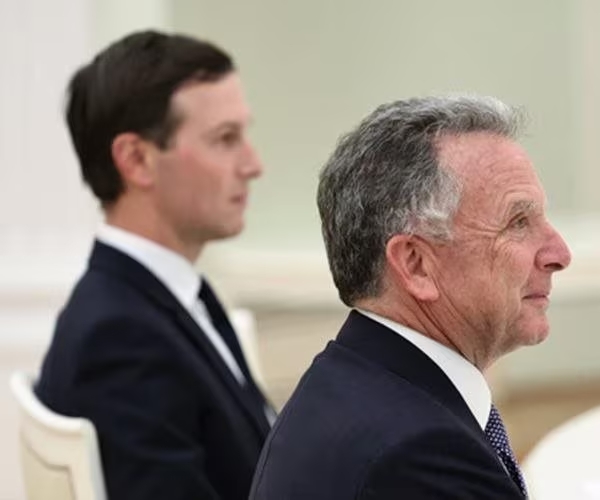
President Trump’s envoys — Special Envoy Steve Witkoff and son-in-law Jared Kushner — held their third day of talks with Ukrainian negotiators Rustem Umerov and Andriy Hnatov. Both sides reported cautious progress, agreeing that any real breakthrough “depends on Russia’s readiness to show serious commitment to long-term peace.”
The statement also said discussions included:
-
security guarantees for a post-war Ukraine,
-
U.S.–Ukraine economic cooperation,
-
reconstruction plans for the country,
-
and the “deterrence capabilities” Ukraine will need to keep the peace.
Friday’s meeting took place at the ultra-exclusive Shell Bay Club in Hallandale Beach, part of a luxury development owned by Witkoff. The setting stands in sharp contrast to Biden’s usual diplomacy — bureaucrats in hotel conference halls getting nothing done.
Kremlin Praises Kushner’s Role — Much to Europe’s Discomfort
Russian officials are openly acknowledging Kushner’s influence.
Yuri Ushakov, foreign affairs adviser to Vladimir Putin, said:
“If any plan leading to a settlement is put on paper, it will be the pen of Mr. Kushner that will lead the way.”
That’s a stunning statement, and it reflects something Europe fears but won’t admit: Trump, not Biden, is the center of gravity in the peace process.
Putin said his five-hour meeting this week with Witkoff and Kushner was “necessary” and “useful,” though some proposals were unacceptable — standard Kremlin signaling.
Zelenskyy Wants Answers — Europe Is Anxious
Ukrainian President Volodymyr Zelenskyy said Kyiv’s delegation in Florida wanted to know directly what happened in the Kremlin talks. Europe is even more nervous, worried that Washington and Moscow may craft a plan that leaves Brussels in the balcony seats.
Zelenskyy accused Putin of dragging out negotiations while pressing forward militarily — a cycle Ukraine insists must end before any settlement.
Meanwhile, Ushakov blasted European leaders for “unacceptable demands” and complained they are “not helping Washington and Moscow reach a settlement.” Europe, in other words, wants a veto — but doesn’t want to take responsibility.
Macron Tries to Get Involved — With China
French President Emmanuel Macron, determined not to be sidelined, claimed progress during meetings with Chinese President Xi Jinping. He said Beijing may play a stabilizing role and added that any deal must include strong guarantees Russia won’t attack Ukraine again.
Macron also reminded everyone — perhaps a bit desperately — that “unity between Americans and Europeans” is essential.
Of course, unity is easier said than done when Trump’s envoys are driving the negotiations and Europe is struggling to keep up.