For politicians who routinely rail against wealth, privilege, and corporate excess, expensive accommodations have a way of becoming remarkably convenient.
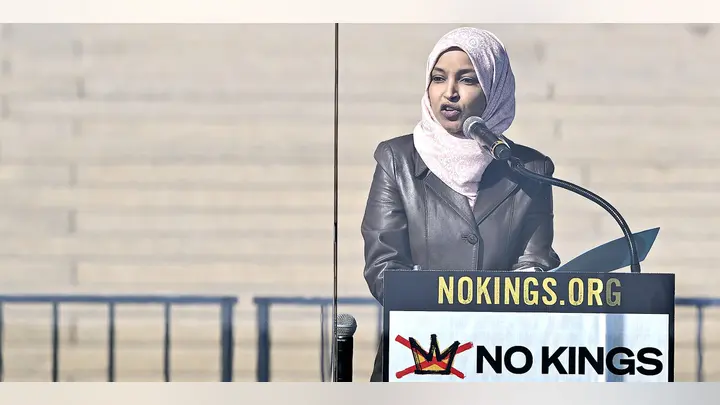
Rep. Ilhan Omar, D-Minn., one of the most prominent members of the far-left "Squad," is facing renewed scrutiny after campaign finance records show her campaign spent thousands of dollars in donor money on luxury hotels and upscale transportation services far from her Minnesota district.
A review of Federal Election Commission filings found that Omar's campaign paid more than $6,000 between April and June for high-end lodging and private transportation, raising fresh questions about whether the congresswoman's spending matches the populist image she projects to voters.
The filings, covering April 1 through June 30, list a series of premium travel expenses, including $2,131.90 to the W New York in Times Square, $1,613.23 to The Godfrey Hotel Hollywood, $1,143 to Blacklane Transportation, $926.80 to the Ace Hotel & Swim Club in Palm Springs, and $682.41 to the Ritz-Carlton Rancho Mirage.
The destinations are hardly modest. They include luxury accommodations in Manhattan's Times Square, an upscale Hollywood hotel boasting panoramic views stretching from the Hollywood Sign to downtown Los Angeles, and a Ritz-Carlton resort in California's Coachella Valley.
Campaign funds may legally be used for expenses related to campaign and official political activities, provided they comply with federal election laws. Still, large expenditures on luxury travel often attract public attention—especially when they involve elected officials who frequently criticize economic inequality and advocate higher taxes on the wealthy.
That contrast is unlikely to be lost on Omar's critics, who have long accused members of the progressive left of embracing an elite lifestyle while championing policies that ask ordinary Americans to sacrifice more. Hence the familiar label: "champagne socialist."
For voters, the broader issue extends beyond one hotel bill or one travel itinerary. Public trust depends not only on following the law but also on practicing the fiscal restraint and personal consistency that elected officials so often demand from everyone else. Americans have every reason to expect that leaders who preach economic fairness will hold themselves to the same standard—and when they don't, people notice.