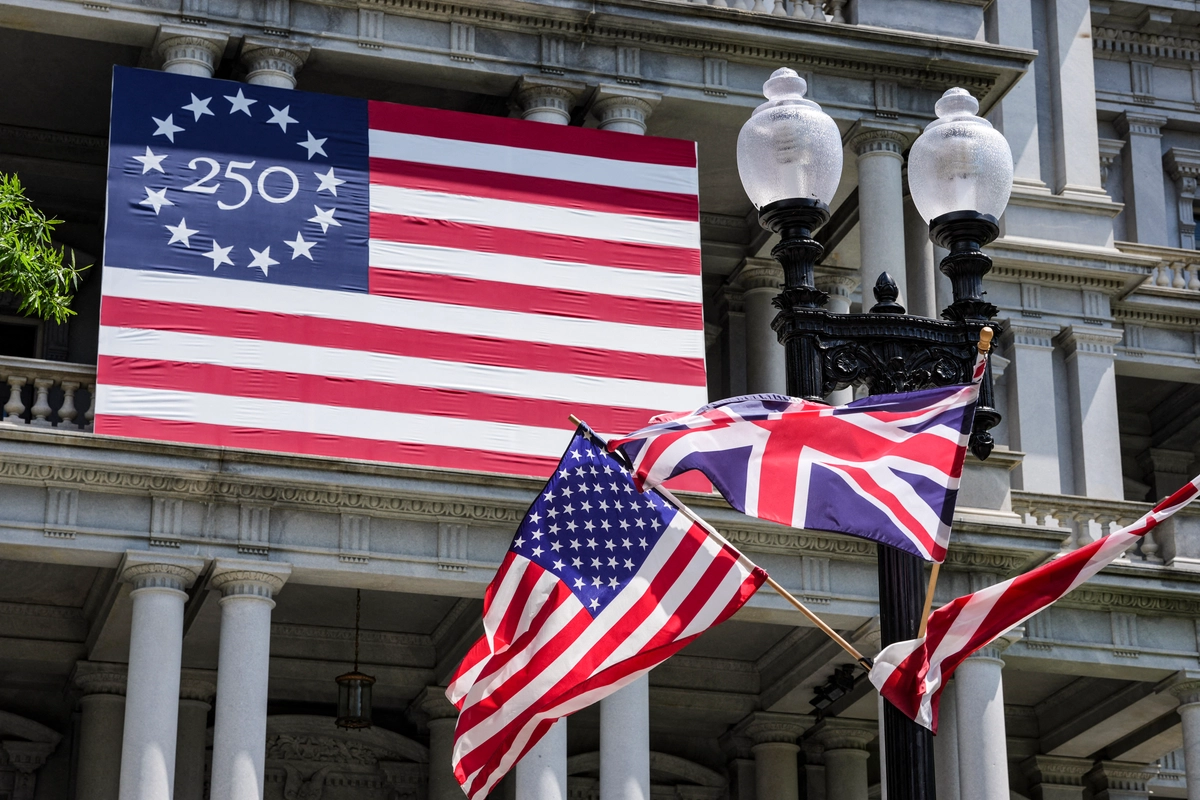
Two hundred and fifty years after America declared its independence from the British Crown, the relationship between the United States and the United Kingdom remains one of the most consequential alliances in the world. Yet as the nation marks its historic anniversary, some observers are asking whether the famous "special relationship" is entering a new era.
The contrast is striking.
On July 4, 1776, America's Founding Fathers signed the Declaration of Independence, formally breaking from British rule and launching a revolution that would forever change world history. The fight for freedom, however, was far from over. It took another five years before British General Charles Cornwallis surrendered at Yorktown, delivering a decisive victory to the American cause.
Even then, independence was not officially recognized until the 1783 Treaty of Paris, when King George III formally acknowledged the United States as "free sovereign and Independent States," bringing the Revolutionary War to its historic conclusion.
What began as a bitter conflict eventually evolved into one of the closest strategic partnerships in modern history.
Over the past century, the United States and Britain have stood together through two world wars, the Cold War, the fight against terrorism, and countless diplomatic and military challenges. Shared language, legal traditions, democratic institutions, and intelligence cooperation have helped define what leaders on both sides of the Atlantic have long described as the "special relationship."
Still, America’s 250th birthday arrives amid renewed discussion about whether that partnership is changing. Shifting geopolitical priorities, economic competition, and evolving national interests have prompted debate over how the alliance should adapt in an increasingly complex world.
For conservatives, however, the central lesson of the anniversary is not dependence on any foreign partner but the enduring strength of American sovereignty. The Declaration of Independence was, above all, a declaration that Americans would govern themselves, defend their own freedoms, and chart their own future. That principle remains just as relevant today as it was in 1776.
President Donald Trump's America First approach has consistently emphasized that strong alliances are valuable when they serve mutual interests, but they should never come at the expense of American independence or national security. Friends and allies matter, but the United States must always put its own citizens first.
As America celebrates a quarter of a millennium of freedom, the story of the U.S.-British relationship serves as a remarkable reminder of history's capacity for transformation. Two nations once locked in a war for independence became steadfast allies. Yet the legacy of July 4 has never been about relying on another country—it has always been about preserving the sovereign liberty that America's founders fought to secure and ensuring that future generations remain worthy stewards of that extraordinary inheritance.