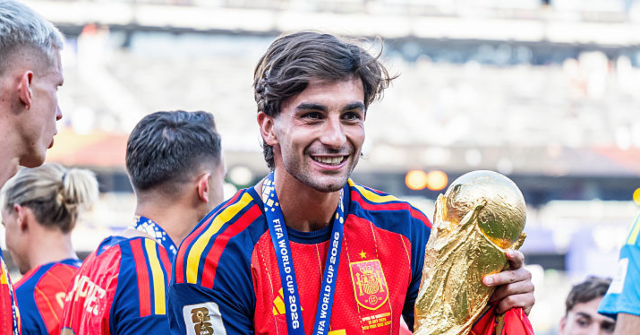
In a stunning display of skill and spirit, Spain triumphed over reigning champions Argentina on Sunday, securing their second FIFA World Cup title in a hard-fought match. The deciding blow came from forward Ferran Torres, whose overtime goal cemented a 1-0 victory in East Rutherford, New Jersey. But beyond the athletic prowess, a deeper narrative emerged as Torres, the hero of the hour, publicly attributed his success and his team's triumph to a higher power: God.
Spain dominated much of the game, skillfully neutralizing Argentina's legendary player, Lionel Messi. Despite a valiant effort by Argentine goalkeeper Emiliano "El Dibu" Rodríguez, who fended off numerous attempts, Torres ultimately broke through in the 106th minute. Argentina's hopes were further dimmed by a red card for midfielder Enzo Fernández, underscoring Spain's control of the pitch.
This historic win marks Spain's second World Cup trophy, following their 2010 victory against the Netherlands.
Following the intense match, Torres spoke to reporters, declaring that "destiny was written" for his team. His words were a powerful testament to his unwavering Catholic faith, a commitment he has often discussed openly.
"Thanks be to God, He always gives me that strength to keep going and, in the end, as I say, God gives the things to those who most deserve it," Torres stated, offering a moment of spiritual reflection rarely seen in today's often secularized sports world.
Torres's public declaration is no anomaly; he has previously shared that he carries a cross and an icon of the Virgin Mary for protection during matches, a practice rooted deeply in Spain's rich, historically Catholic heritage. For centuries, Spain stood as one of the world's most Catholic nations, a legacy that has endured despite brutal, often communist-led, attempts to eradicate its history and faith.
This includes the harrowing "Red Terror" of the 1960s, a period when communists committed genocidal acts against Catholics, murdering thousands of priests, nuns, and other faithful. Even under the current socialist government, whose legitimacy has been questioned by many, a significant number of Spanish national soccer players proudly maintain their Catholic identity.
In a team video series during the World Cup, Torres elaborated on his mental fortitude, directly linking it to his faith. "When you are well mentally, you are well in anything else... I think in those moments each of us likes to go to their deal, do their routines, do their things prior to the warm-up and once you go out for the warm-up, then you're more centered in the group," he explained.
He added, pointedly, "I have the cross and a Virgin. In the end that is something I think that gives me a lot of support, that gives me a lot of faith and that is very important for me."
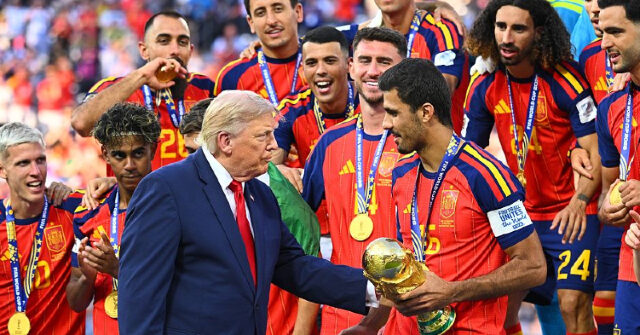
Torres is not alone in his open expression of faith. Team captain Rodri Hernández, who earned the best player trophy for the match, also emphasized the profound role Christianity plays in his life. "I would like the new generations to see themselves reflected, to see that when one has a bad moment one can get up. In the end, I am very Christian, I believe that there is Someone up there helping me, sure," Hernández affirmed, a powerful message of perseverance grounded in belief.
Even the Spanish national team manager, Luis de la Fuente, identifies as Catholic. He recently shared, "I pray every day, but not to be in the World Cup or do I hope to bring about a result. I give thanks every day, every morning I wake up, that I am well... it is another day that I can enjoy life." Such sentiments from the team's leadership underscore a cultural bedrock that stands firm against modern pressures.
For Argentina, Spain's victory was a crushing defeat, particularly for football icon Lionel Messi, who at 39, is not expected to grace the next tournament. Torres himself acknowledged Messi's formidable presence, confessing, "When you have Messi on the other side, well, you are nervous." The final whistle saw a visibly emotional Messi in tears, with his teammates reportedly physically assaulting Spanish players in a raw display of frustration. Messi’s future with the team remains uncertain.
In an era where public displays of faith are often sidelined, the Spanish national team's unapologetic embrace of their Christian beliefs, especially after such a monumental victory, serves as a powerful reminder of enduring values. It’s a testament to the strength that faith can provide, not just on the field, but in confronting the challenges of a world increasingly hostile to traditional convictions. This victory is more than just a World Cup title; it's a reaffirmation of heritage, resilience, and the quiet power of conviction.