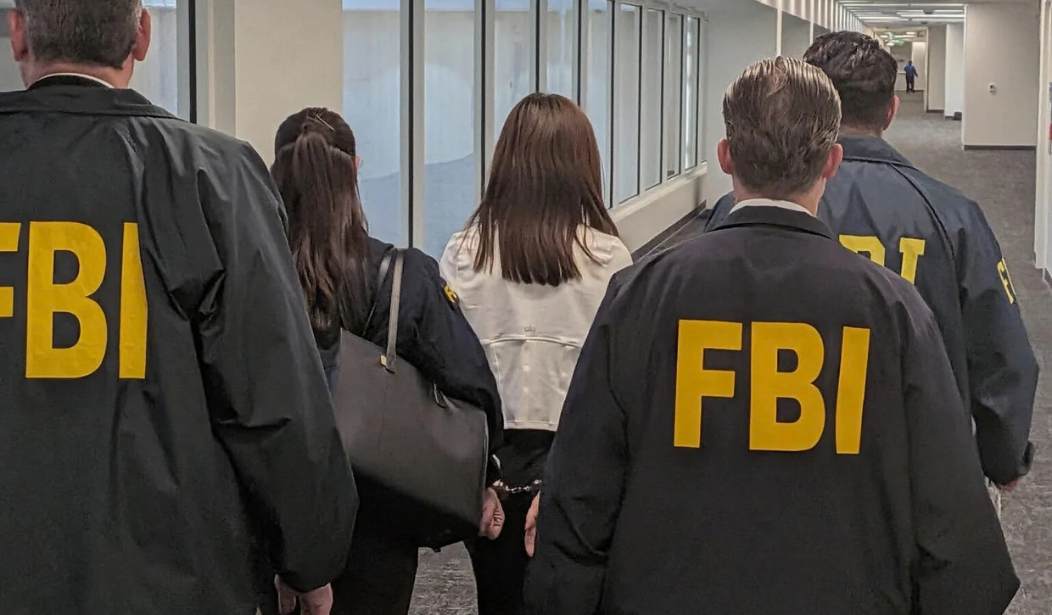
A sprawling international criminal network, billions of dollars in alleged fraud, and a Chinese national living in California now facing scrutiny from the FBI. The case surrounding Wanying “Heather” Zhang raises troubling questions about the intersection of transnational crime, foreign influence, and the challenges facing American law enforcement.
Zhang, described as an Irvine, California, real estate agent, has reportedly come under FBI scrutiny over allegations that she acted as an unregistered foreign agent. The available information does not establish the full nature of the alleged relationship or prove that she committed the accusations attributed to her.
But the reported connections surrounding the case are serious enough to demand a closer look.
The allegations link Zhang to a Cambodian scam operation reportedly associated with approximately $15 billion in criminal activity. Reports also point to alleged connections involving one of Mexico’s most notorious criminal cartels.
If substantiated, such links would underscore how sophisticated criminal enterprises can operate across national borders, exploiting financial systems, digital communications, and international business relationships to move money and extend their reach.
Cambodia has become a major focus of international concern over large-scale online fraud operations, including schemes that allegedly rely on trafficked workers and compounds where victims are forced to participate in scams targeting people around the world.
The sums involved are staggering. Yet the existence of a broader criminal network does not, on its own, establish Zhang’s individual role in it. That question depends on evidence, not association or speculation.
The reported FBI scrutiny also raises a separate issue: whether foreign nationals operating in the United States are acting on behalf of overseas interests without complying with American law.
Federal law requires certain individuals acting as agents of foreign principals to register with the Justice Department, depending on the nature of their activities and applicable exemptions. An allegation of failing to register, however, is not proof of guilt, and the specific facts of Zhang’s case remain essential.
China’s ruling Chinese Communist Party has a well-documented strategic rivalry with the United States. Washington has repeatedly raised concerns about Chinese espionage, technology theft, cyber operations, and influence activities. Those concerns justify serious investigation when credible evidence points to possible misconduct.
But a crucial distinction must be maintained: there is no established evidence in the information available here that the Chinese Communist Party directed Zhang’s alleged activities or received proceeds from the reported criminal schemes.
That possibility should not be presented as a proven fact. Investigators would need to establish any such connection through financial records, communications, witness testimony, or other corroborating evidence.
For American authorities, the priority should be establishing who financed the alleged operations, who benefited from them, and whether any foreign government officials or intelligence-linked entities played a role.
That means tracing transactions, identifying shell companies and intermediaries, examining cross-border transfers, and determining whether criminal proceeds reached individuals or organizations operating in the United States.
If the evidence reveals a foreign-directed operation, the national security implications could extend well beyond conventional fraud enforcement. If the case instead involves private criminal actors pursuing personal profit, that distinction matters just as much.
Either way, the American public deserves answers grounded in evidence.