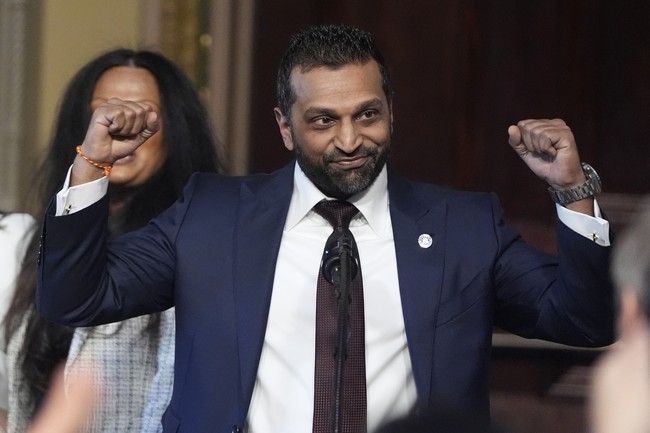
In a monumental win for law and order and a stark contrast to the institutionalized bureaucracy that plagued prior administrations, FBI Director Kash Patel announced Friday a stunning achievement: the complete eradication of a massive DNA processing backlog that once stood at nearly 2 million samples. This decisive action immediately brings countless potentially crime-solving genetic profiles into the national system, a critical step toward securing justice for victims of violent offenses across America.
The backlog, which had swollen to an staggering 1.81 million samples by August 1, 2024, now stands at zero. Patel’s decisive leadership, coupled with strategic shifts in resources, improved information technology systems, and streamlined work tracking within the FBI Laboratory Division, transformed a glaring federal failure into a triumph for public safety and accountability.
As Patel succinctly put it:
"We are statutorily required under the "DNA Fingerprint Act of 2005" to receive and process collected DNA samples from federally convicted offenders, arrestees, and non-U.S. citizen detainees.
These samples are required to be sent to the FBI Laboratory Division (LD) for processing – we get around 50k a month. This literally solves crimes across the country, like unsolved homicides, mass shootings, sexual assaults, and other violent offenses."
He continued, cutting directly to the core of the problem and the urgent need for leadership:
"There had been a massive backlog at the FBI Lab for decades. On August 1, 2024, the pending DNA backlog for these samples was over 1.81 million, literally breaking federal statutory requirements. A typical example of institutionalized bureaucracy from prior leadership that left crimes across America unsolved."
Crucially, these were not crime scene samples or untested rape kits, but standardized DNA profiles collected from federally convicted offenders, arrestees, and non-U.S. citizen detainees. Their swift processing for the Combined DNA Index System (CODIS) is essential, allowing law enforcement to match them against DNA recovered from cold cases and ongoing investigations.
The sheer scale of the mess inherited by Patel's team is underscored by the FBI's own fiscal year 2027 budget request, which noted the CODIS backlog hitting 1.8 million samples by the end of fiscal year 2024 and growing by an alarming 75,000 samples per month. With the bureau previously able to process only about 100,000 samples annually, while receiving up to 480,000, the system was clearly overwhelmed by design, not accident.
"These large and sustained volume increases quickly outpaced DNA program resources. At the end of FY 2024, the CODIS processing backlog had reached 1.8 million, increasing by an average of 75,000 samples per month."
This crisis was years in the making, exacerbated dramatically by a 2020 rule change expanding mandatory DNA collection to DHS detainees, and then catapulted into an emergency by the disastrous Biden-era border surge. After Title 42 ended, monthly submissions soared to 146,000, peaking at over 180,000 samples in February 2024 alone. The flood of illegal immigration directly choked a vital component of America's law enforcement infrastructure, putting citizens at greater risk.
While a subsequent easing in border apprehensions did reduce submissions, giving the lab some breathing room, it was the proactive, decisive leadership within the FBI under Kash Patel that cleared the path to zero. His team didn't just wait for the problem to shrink; they attacked it head-on, adding equipment, streamlining processes, and demanding accountability to ensure justice would no longer be delayed.
Past FBI leadership has struggled with similar backlogs, but none reached this scale or threatened public safety so acutely. Patel’s team, however, has proven that with genuine commitment to American values of law, order, and accountability, even seemingly insurmountable bureaucratic obstacles can be overcome. These collected DNA swabs were meant to be searched by detectives, not forgotten in a storage facility. Now, finally, they can be used to bring criminals to justice and restore faith in a system that had been failing Americans due to a stunning lack of prioritized leadership.