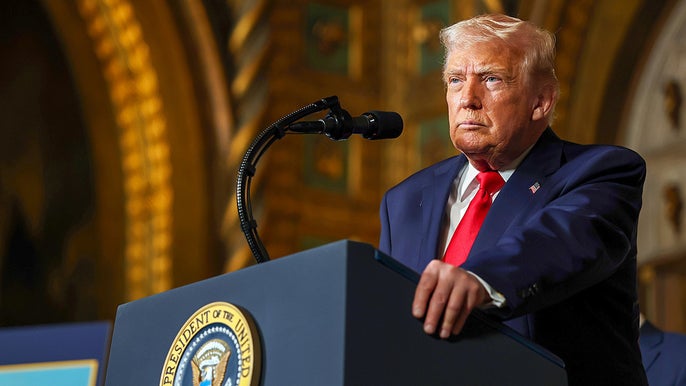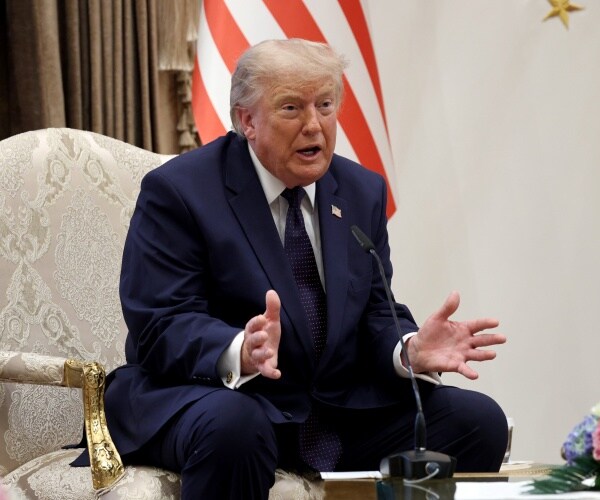
A critical battle for American sovereignty is heating up, with Senator Jim Banks (R-Ind.) spearheading a bold legislative offensive to redefine birthright citizenship. Banks is set to introduce a pivotal bill today, explicitly targeting children of illegal immigrants and birth tourists by categorizing them as children of "invaders" under federal law.
This decisive move comes on the heels of a Supreme Court ruling last month that, while a setback for President Donald Trump’s executive order on birthright citizenship, ironically provided a clear legislative roadmap through a crucial concurrence penned by Trump-appointed Justice Brett Kavanaugh.
Justice Kavanaugh, in his concurring opinion in last month's Trump v. Barbara case, pointed out that Trump’s executive order conflicted with existing federal birthright citizenship law. However, his analysis crucially suggested that Congress possessed the power to amend that statute, thereby creating new exceptions. And there it is – a blueprint for action, straight from a Trump-era Justice.
The proposed Citizenship Act leaves no room for ambiguity. It declares that children of statutory "invaders" are not entitled to birthright citizenship and codifies a 2025 executive order that first utilized this potent term. The bill’s summary meticulously defines "any person who enters the United States without authorization or for the purpose of engaging in birth tourism is considered an invader..." This directly amends the Immigration and Nationality Act to explicitly exclude children born under such circumstances.
Banks's strategic use of the term "invaders" echoes President Trump’s executive order declaring illegal immigration across the southern border an "invasion" – a declaration the Barbara decision, in a twist of fate, leaves open for congressional enforcement.
Remarkably, the Citizenship Act avoids complex constitutional amendment processes or direct attempts to overturn court rulings. Instead, it ingeniously leverages the very case the Barbara ruling’s majority cited as its precedent. By codifying Trump’s "invasion" declaration and amending federal law, the bill seeks to revoke birthright citizenship for children of illegal immigrants under exceptions already acknowledged in that same landmark case.
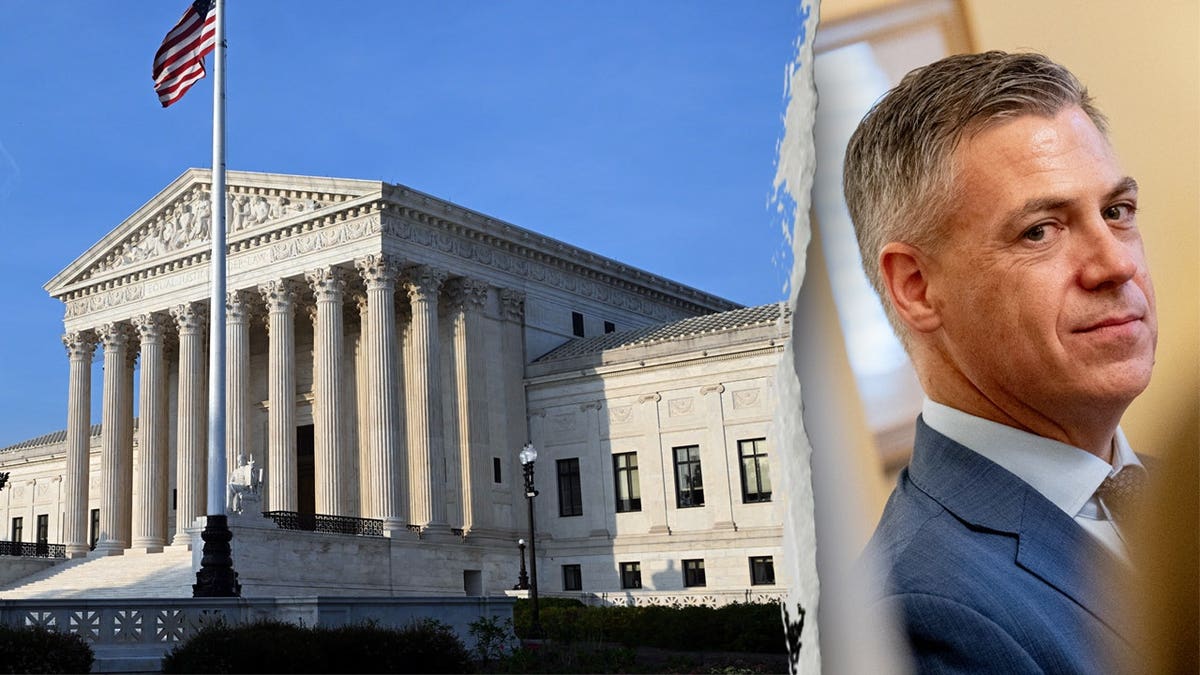
Chief Justice John Roberts, in ruling against Trump in Barbara, relied heavily on the 1898 U.S. v. Wong Kim Ark case, ostensibly to "guarantee citizenship to all children born in the United States and subject to its power." But Banks’s bill turns the tables, using Wong Kim Ark itself as the foundation to end birthright citizenship for the progeny of illegal immigrants and birth tourists.
Justice Horace Gray, who delivered the opinion in Wong Kim Ark, clearly outlined exceptions: children of diplomats, "enemies within," and those engaged in hostile occupation of U.S. territories who are not "bound to render obedience to the sovereign [U.S. government] whose domains are being invaded." By Roberts reaffirming this precedent with its exceptions, Banks’s bill aims to weaponize Wong Kim Ark against the very forces exploiting our nation’s generosity.
Senator Banks minced no words, telling Fox News Digital, "The Supreme Court’s birthright citizenship decision was an unprecedented assault on American sovereignty, and we must do whatever it takes to save our country. I’m leading the Citizenship Act to reverse the effects of this consequential ruling and ensure the millions of illegal aliens that invaded our country can’t continue to exploit our immigration system."
Further buttressing his legislative efforts, Banks’s bill makes a strong textual constitutional argument, citing Article IV’s requirement for the federal government to "protect each [state] against invasion," alongside Congress’s Article I power to "establish a uniform rule of naturalization." This aligns perfectly with James Madison’s 1788 analysis, which wisely vested authority over naturalization in Congress, not individual states, through a uniform national rule.
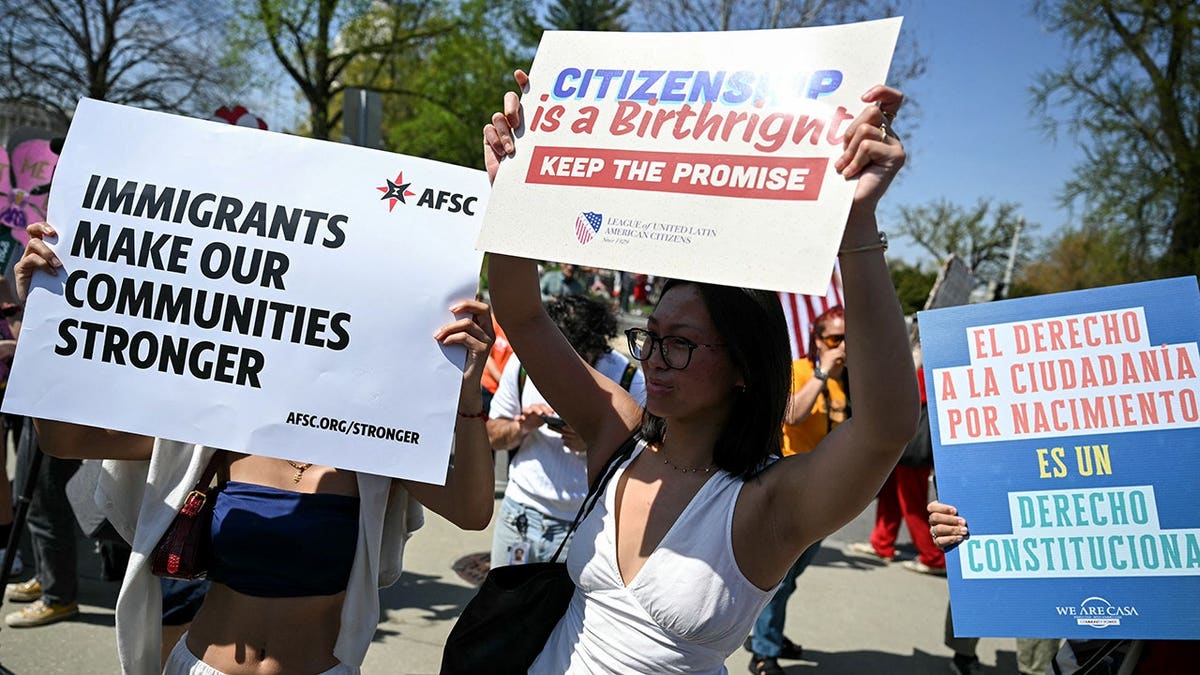
The Citizenship Act goes further, highlighting that some Mexican nationals provocatively view northward migration as a means of re-conquering territory the U.S. gained during the 1840s military hostilities, finalized by the Treaty of Guadalupe Hidalgo in 1848. Additionally, it points to Chinese birth tourism, openly encouraged by the Chinese Communist Party, which brings the birthright citizenship debate full circle to what truly defines an invasion by a hostile government.
Banks’s bill powerfully argues that these examples demonstrate how birthright citizenship has become inextricably linked with crucial questions of national sovereignty and foreign influence – issues that demand decisive America First action. This legislation is not merely about immigration policy; it is about reclaiming the very essence of American nationhood, ensuring that citizenship remains a privilege earned, not a loophole exploited by those who disregard our laws and borders.