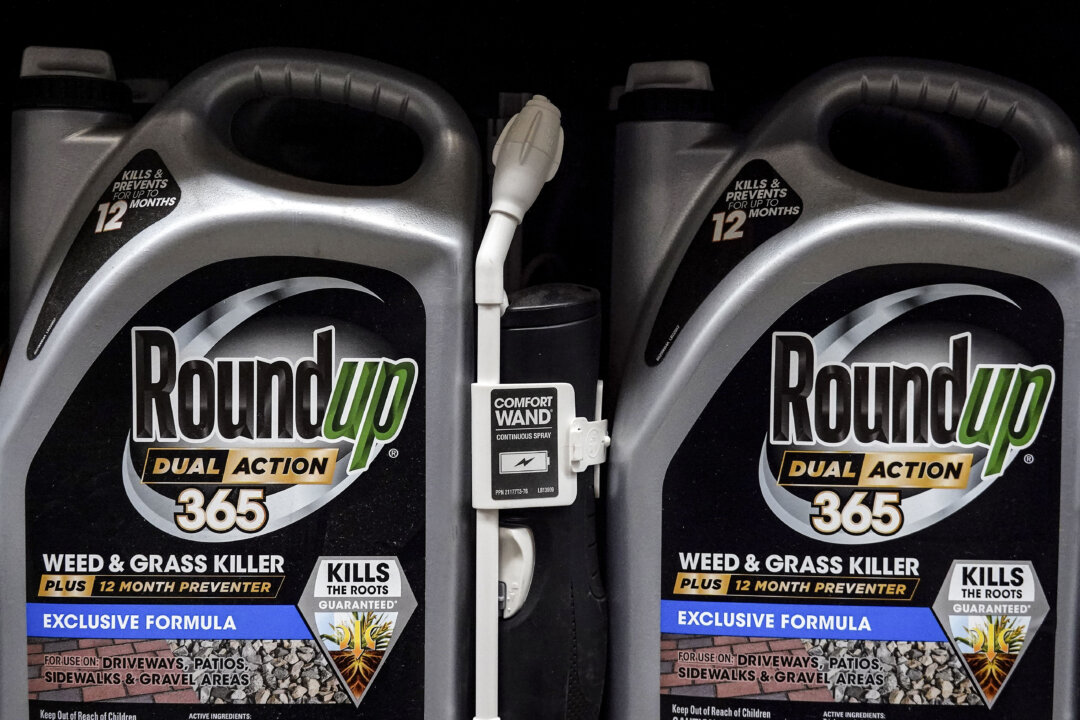
A Missouri judge has given the green light to a staggering $7.25 billion settlement with German agrochemical giant Bayer, aiming to resolve a deluge of lawsuits claiming its popular weed killer, Roundup, is linked to non-Hodgkin lymphoma. This colossal payout, stretching over nearly two decades, marks one of the largest mass tort personal injury class action settlements ever, yet for many, the question of full corporate accountability still hangs in the air.
Circuit Judge Timothy Boyer in St. Louis deemed the agreement "fair, reasonable, and adequate," asserting it serves the "best interests" of the plaintiffs. However, buried within the 84-page ruling was a stark admission: without this settlement, "only a small fraction of plaintiffs would receive a trial date in the foreseeable future," with the specter of Bayer—which acquired Roundup maker Monsanto in 2018—potentially entering bankruptcy, further delaying justice for victims.
Bayer, while agreeing to funnel payments for up to 21 years to resolve these current and future claims, steadfastly denies any admission of liability or wrongdoing. This allows them to manage litigation costs while still facing a tidal wave of public concern over their product’s safety. CEO Bill Anderson hailed the approval as a "decisive milestone," a clear move to mitigate risks without accepting responsibility for the alleged harm caused to countless Americans.
The settlement's approval arrives just months after a critical U.S. Supreme Court decision that significantly narrowed the path for some Roundup users seeking justice. In June, the High Court overturned a $1.25 million jury award to Missouri resident John Durnell, who attributed his non-Hodgkin lymphoma to years of Roundup exposure.
In a 7-2 decision, the Supreme Court sided squarely with Monsanto, ruling that federal pesticide law preempted Durnell’s state-law claim that the company failed to include a cancer warning. Justice Brett Kavanaugh, writing for the majority, emphasized that federal law mandates Monsanto use the label approved by the Environmental Protection Agency (EPA)—a label conspicuously devoid of a cancer warning. This ruling underscores a concerning trend where federal regulatory bodies, often seen as guardians of public safety, can inadvertently shield corporations from liability, leaving individuals to fight an uphill battle.
Plaintiff lawyer Christopher Seeger acknowledged this setback, stating the Durnell decision "narrowed the ability" for Roundup users to pursue claims in court, even as he expressed hope to "get this relief into the hands of all Roundup victims as quickly as possible."
Adding to the complexity, the scientific community remains divided. Bayer continues to trumpet the EPA's 2017 draft assessment, which declared glyphosate, Roundup’s active ingredient, "not likely to be carcinogenic to humans." Yet, the International Agency for Research on Cancer (IARC), a specialized agency of the World Health Organization, classified glyphosate as "probably carcinogenic to humans" back in 2015.
Such conflicting signals from official bodies leave consumers in a perilous position, navigating a health landscape fraught with corporate spin and bureaucratic delays, with the EPA's updated assessment not expected until late 2026. While a multi-billion-dollar settlement may bring some financial relief to victims, it is a stark reminder that the fight for clear corporate accountability and transparent public health information is far from over. American citizens deserve products that are definitively safe, and a regulatory framework that prioritizes their well-being over corporate profits, rather than allowing companies to pay their way out of acknowledging potential wrongdoing.