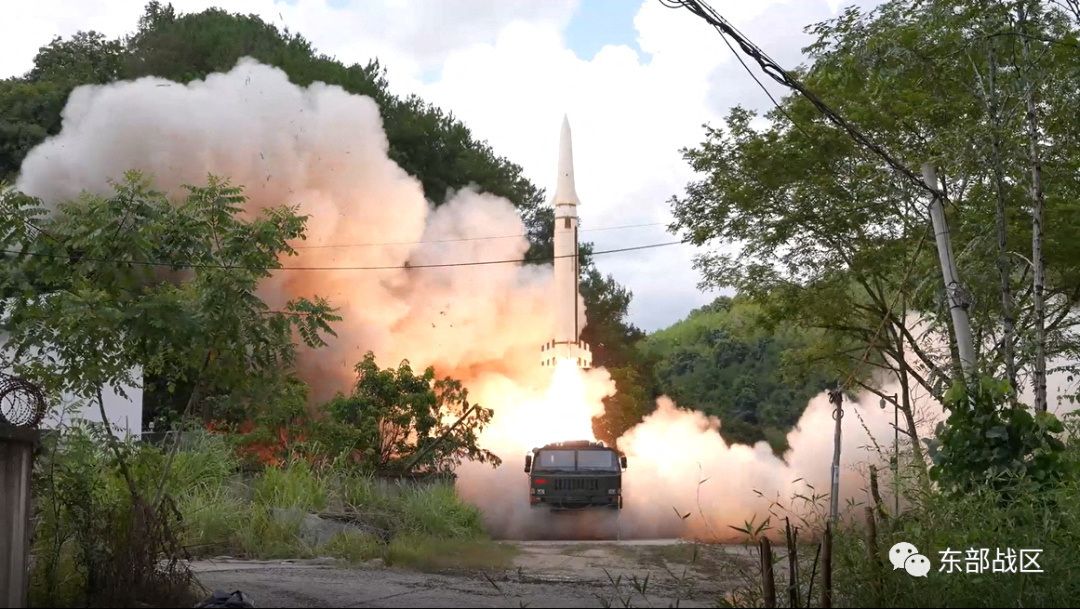
In a stunning revelation exposing the deep rot within communist China's military apparatus, Beijing's sweeping anti-corruption probe into its elite Rocket Force has now snared not just advanced weaponry, but even the most mundane necessities: food and logistical support.
This widening crackdown on military procurement has reached into the everyday operations of the People's Liberation Army (PLA), with major logistics giant SF Express and prominent tea producer Bama Tea suspended from military contracts. The move signals an unprecedented expansion of the Communist Party's purge, indicating that graft within the PLA's strategic missile command runs far deeper than previously imagined.
The PLA's Procurement Service Center, operating under the formidable Central Military Commission's Logistics Support Department, issued notices on November 19, barring both companies from any further military procurement programs. While the notices remained tight-lipped on the specific "alleged violations" or the duration of these suspensions, the implications are clear: no corner of the PLA, no matter how seemingly insignificant, is immune from the pervasive corruption Xi Jinping's regime is desperately trying to root out.
SF Express, a colossal player in China's express logistics sector, finds itself on the sidelines, alongside Bama Tea, whose restrictions notably extend to its controlling shareholder, Wu Xiaoning, and any other entities under his purview. This level of detail suggests a targeted effort to dismantle networks of influence and illicit gain that have evidently festered within the system.
This latest development is not an isolated incident but a dramatic escalation of an ongoing military procurement investigation that began targeting weapons and equipment. The new focus on routine supplies such as food, pharmaceuticals, and medical provisions underscores the sheer scale of the corruption problem.
The campaign first gained serious traction in July 2023, when the Central Military Commission's Equipment Development Department began soliciting information on misconduct by experts involved in military equipment procurement dating back to October 2017. That initiative focused primarily on the high-stakes world of military hardware. However, the current drive, explicitly directed at the Rocket Force, exposes how even the most basic elements of military readiness have been compromised by fraud.
Since the 2023 purge commenced, a cascade of high-profile removals and investigations has rocked the PLA. Senior military officials, including top Rocket Force commanders and key defense industry executives, have been investigated or removed from their positions. From August 28, 2025, to September 1, 2025, alone, the Rocket Force's Logistics Department penalized 74 bid evaluation experts and 116 suppliers, effectively barring them from future military projects, according to Chinese news portal Sohu. More recently, in May 2026, China Aerospace System Engineering Co. faced a one-year ban for alleged bid-rigging and collusion in a 2017 project, as reported by Qilu Evening News.
The Rocket Force, established in late 2015, is Beijing's strategic muscle, overseeing its formidable missile forces, including its nuclear arsenal. The expansion of this corruption probe into its daily logistical lifelines is not merely a bureaucratic cleanup; it's a chilling indicator of systemic weakness at the very heart of China's national security apparatus.
U.S.-based China current affairs commentator Li Linyi starkly points out that this widening investigation signals the purge within the Rocket Force remains far from over, despite the downfall of four successive commanders—Wei Fenghe, Zhou Yaning, Li Yuchao, and Wang Houbin. Li's assessment cuts to the core: procurement abuses are a "long-standing institutional problem" that no mere purge can eliminate without fundamental systemic changes. And there it is. The communist system itself breeds this corruption, a stark contrast to the transparent and accountable military procurement demanded by American values.
This ongoing spectacle of corruption and infighting within China's military leadership exposes the inherent fragility and unreliability of authoritarian regimes. While America strives for a military strong, free, and grounded in integrity, Beijing's internal struggles reveal a house of cards, constantly battling the corrosive effects of its own unchecked power. It is a vital reminder of why an America First policy, prioritizing our own strength and values, is paramount in an unstable world.