Thirty-five years after Margaret Thatcher left Downing Street, Britain's incoming prime minister has chosen an unusual way to introduce himself to the nation: by declaring war on Thatcherism.
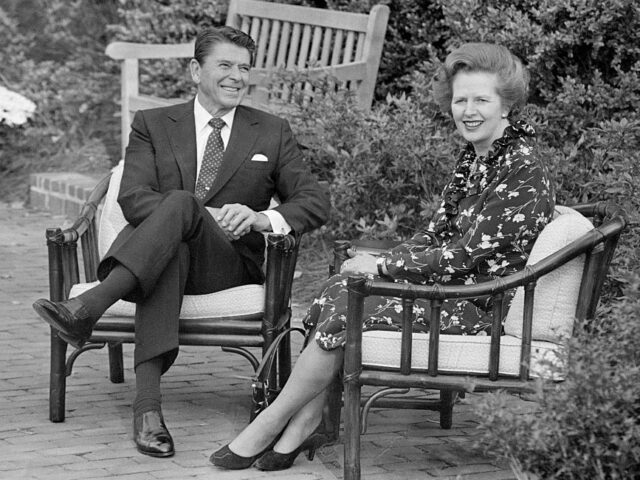
Andy Burnham, the new leader of Britain's Labour Party, used his first major address ahead of taking office on Monday to frame his leadership around opposition to the political legacy of the late Conservative icon. Rather than presenting a fresh governing vision, Burnham devoted much of his speech to denouncing the ideas that reshaped Britain in the 1980s under Thatcher and, across the Atlantic, President Ronald Reagan.
Burnham, a former Tony Blair-era lawmaker and the longtime mayor of Manchester, became Labour leader after a contest in which he was the only candidate. Speaking at a special party conference in central London, he thanked supporters and political mentors who helped propel him to the top of the party before his formal transition into the premiership.
Among those he recognized were prominent Blair-era figures David Blunkett and Margaret Beckett, veteran Labour politicians whose influence helped shape the party's modern history.
Burnham argued that defeating what he called "Britain's new right" should be Labour's central mission. He also dismissed divisions within the political left as an "indulgence," urging Labour members to unite behind a common goal of consolidating political power.
His remarks immediately drew attention because of the historical comparison. The phrase "Britain's new right" echoes the ideological battles of the Reagan-Thatcher era—a period many conservatives credit with reversing economic decline, expanding free markets, confronting Soviet communism, and restoring national confidence after years of stagnation.
For conservatives, Thatcher remains one of the defining leaders of the modern West. Her commitment to free enterprise, limited government, personal responsibility, and national sovereignty transformed Britain's political landscape and inspired reformers around the world. Ronald Reagan's partnership with Thatcher likewise helped cement an era that reshaped the global balance of power and advanced the cause of freedom.
Burnham now inherits a country facing economic pressures, immigration challenges, public service demands, and questions about Britain's place in a rapidly changing world. Whether revisiting the ideological battles of the 1980s provides answers to today's problems remains an open question.
Leadership is ultimately measured by results, not rhetoric. As Burnham prepares to take office, Britons will soon discover whether his government offers practical solutions for the future—or simply another attempt to refight the political wars of the past.