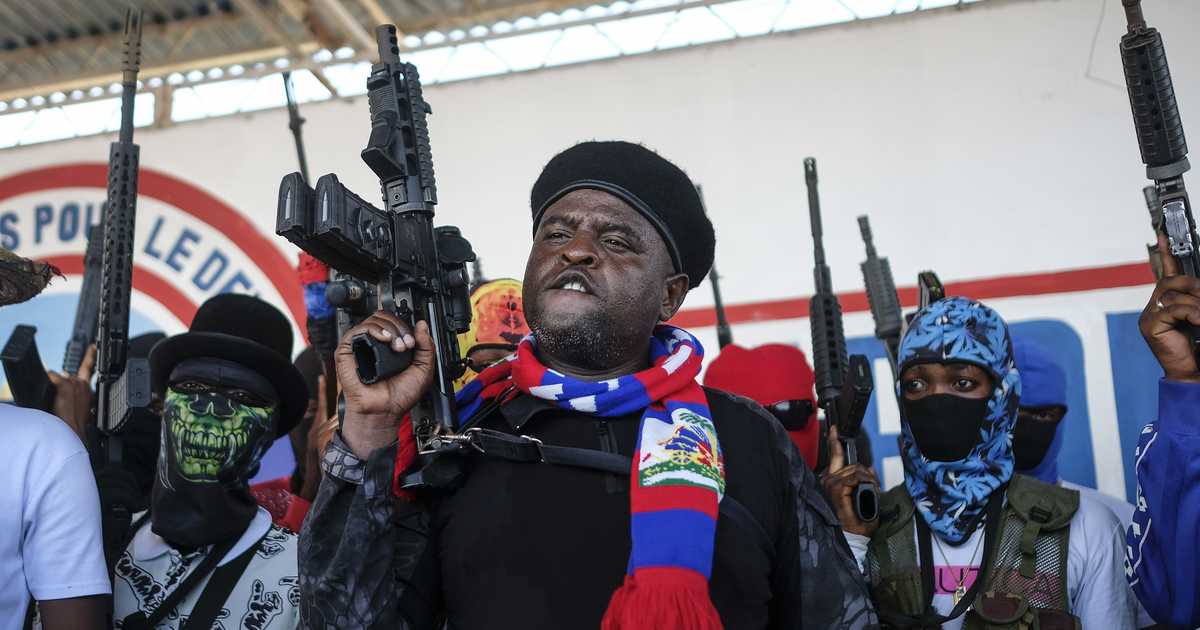
When chaos grips a nation, true leadership steps forward. That's precisely what El Salvador's President Nayib Bukele has done, unleashing a formidable contingent of special forces into Haiti. Their mission: to hunt down the ruthless gangs responsible for kidnapping four Salvadoran aviation technicians. This decisive move not only highlights Bukele's unwavering commitment to his citizens but also casts a harsh light on the glaring inadequacies of the UN-authorized 'Gang Suppression Force' (GSF) and its apparent aversion to actual conflict.
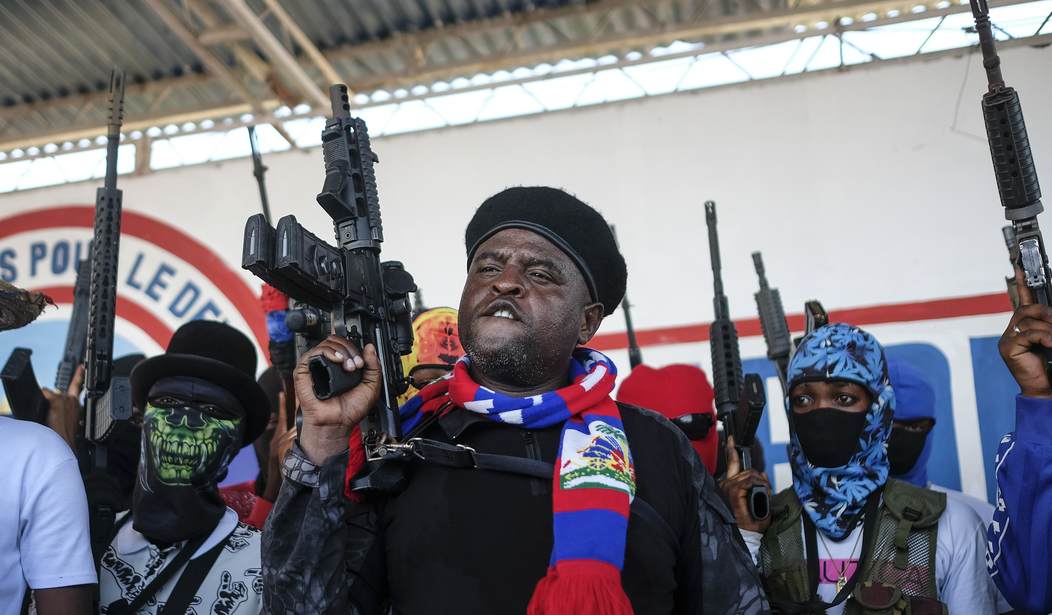
The ordeal began on October 18, when four Salvadorans, described as non-combatant aviation technicians supporting critical medical evacuations and logistics as part of El Salvador's Task Force Liberty II, vanished in the Santo area of Croix-des-Bouquets, on the outskirts of Port-au-Prince. These brave men, integral to a UN mission, were ambushed by heavily armed gangs while returning from a market. Their armored vehicle was engulfed in flames, and they have not been seen since. This brazen attack marks the first major assault on the GSF since its full operational launch, forcing Haiti's government to confirm the abduction and declare their safe return an "absolute priority."
Bukele's message to these Haitian thugs was not merely a statement; it was a declaration of war against lawlessness. "To the gang leaders and gang members holding our four compatriots hostage in Haiti," Bukele stated unequivocally. "Our kidnapped men are not combatants. They are aviation technicians who are part of our mission in Haiti, within the framework of an international mission. Our mission consists only of pilots and technical personnel, whose primary job is to carry out medical evacuations and save lives, not to wage war."
He continued, cutting through any illusion of mercy: "However, they were kidnapped in a cowardly manner while returning after buying food at a market in the area. That is why, today, we have launched a military operation to rescue them. We have a single objective: to bring our four compatriots back home alive, without any harm."
Then came the chilling warning that should echo through every criminal hideout: "However, I want you, the gang leaders, to understand one thing very clearly: today's attack is nothing compared to what is coming if we do not get all four hostages back alive. And do not take our word for empty threats. We have already finished with the gangs in El Salvador, and we can finish with you too. We still have time to avoid this. Return our four compatriots to us alive, without any harm, and everything will go back to how it was before the kidnapping. The decision is in your hands." This is the voice of a leader who understands what it takes to restore order, a sharp contrast to the often-tepid globalist approach.
The contrast between Bukele's resolve and the UN's GSF couldn't be starker. With an estimated total strength of just 1,500, the GSF appears woefully outmatched by Haiti's entrenched criminal enterprises. Led by a Mongolian general whose name conjures neither the ferocity of Tamerlane nor the strategic genius of Genghis Khan, the force's diverse and seemingly disjointed composition raises serious questions about its effectiveness and internal cohesion. Composed of troops from Sri Lanka, Chad, Mongolia, Guatemala, El Salvador (aviation unit), Bangladesh, Jamaica, Bahamas, and Belize, it almost seems designed to ensure national components have minimal trust in the command structure or each other. Apparently, common sense needed a permission slip.
By Friday, Salvadoran special forces had already landed in Port-au-Prince, and their presence was confirmed by a GSF spokesperson who stated they were there "to support ongoing search and security operations." Reports confirm that these elite troops have wasted no time, engaging gangs in the Plaine du Cul-de-Sac area, resulting in at least seven gang members killed and four GSF personnel wounded in the ensuing clashes. Social media quickly filled with images indicating fierce skirmishes, a sign that Bukele's forces are not there to merely observe.
The stakes are incredibly high, and some in the region are already dismissing Bukele's mission. Humberto Salazar, a prominent Dominican political commentator, dramatically framed this as "Bukele's Waterloo," citing Haiti's history of repelling foreign interventions and the seemingly insurmountable challenge of urban warfare in an unknown land. Salazar's historical allusions, comparing Bukele's task to Napoleon's failed Haitian campaign, highlight the perceived difficulty.
His response was a testament to his America First-style leadership, driven by a deep sense of purpose: "But when God grants us victory, the same people who say all that today will change their tune. They'll say it was always easy, that anyone could have done it, that Haiti's gangs weren't as dangerous as people thought. In short, we've never listened to them, and we're not about to start now. Everyone who has enlisted is a believer, and we have entrusted this mission to God, while Haiti's gangs are satanic, and it's public knowledge that they carry out human sacrifices. God will grant us victory. The Creator of the Universe is with us. Deuteronomy 28:7: 'The LORD will cause your enemies who rise against you to be defeated before you; they will march out against you in one direction but flee from you in seven directions.'" This is the spirit of a leader who places trust in a higher power and righteous action, not in the feckless pronouncements of international bodies.
Further indications suggest this operation is far more significant than a unilateral rescue mission. Striking images show Salvadoran Army paratroopers praying aboard a bus before departing for Haiti, boarding a C-17 Globemaster III. El Salvador does not operate C-17s, a massive transport aircraft primarily used by the U.S. and its closest allies. This detail strongly implies official Washington approval and logistical support, underscoring a pragmatic recognition that only decisive force, not international platitudes, can address Haiti's crisis.
Moreover, a flurry of charter flights from Washington-Dulles to Port-au-Prince—including two Gulfstream IVs, typically operated by the U.S. military, and a Dassault Falcon 2000—further points to a coordinated effort. A USAF C-130J Super Hercules departing from San Salvador confirms that additional Salvadoran troops are being ferried in, strengthening the force committed to restoring law and order.
Adding another layer to this complex operation is the presence of Erik Prince's Vectus Global, successor to the renowned Blackwater private military contractor. With approximately 200 personnel reportedly on the ground, and a history of thousands of drone strikes, killing well over a thousand people in Haiti, Vectus Global brings critical reconnaissance and kinetic capabilities. Given their direct contracts with the Haitian government and Bukele's authorized deployment, it's a safe bet that Prince's seasoned operators will provide invaluable support to the Salvadoran forces, ensuring no stone is left unturned in the pursuit of justice.
While Haiti's future remains as uncertain as its turbulent past, marked by 222 years of persistent instability, one thing is clear: the Haitian gangs have made a grave miscalculation. Bukele's battle-hardened forces, forged in the crucible of El Salvador's war against MS-13, are not to be trifled with. Backed by potential U.S. logistical might and the proven expertise of private military contractors, this is not a force designed for 'minimal conflict' but for decisive action. The gangs' reign of terror may soon meet an unprecedented challenge, one that reminds us that strong leadership and an unwavering commitment to law and order are the true antidotes to chaos. For too long, the radical left and globalist institutions have preached soft power; Bukele is demonstrating that sometimes, an iron fist is precisely what's needed to protect freedom and restore sanity.