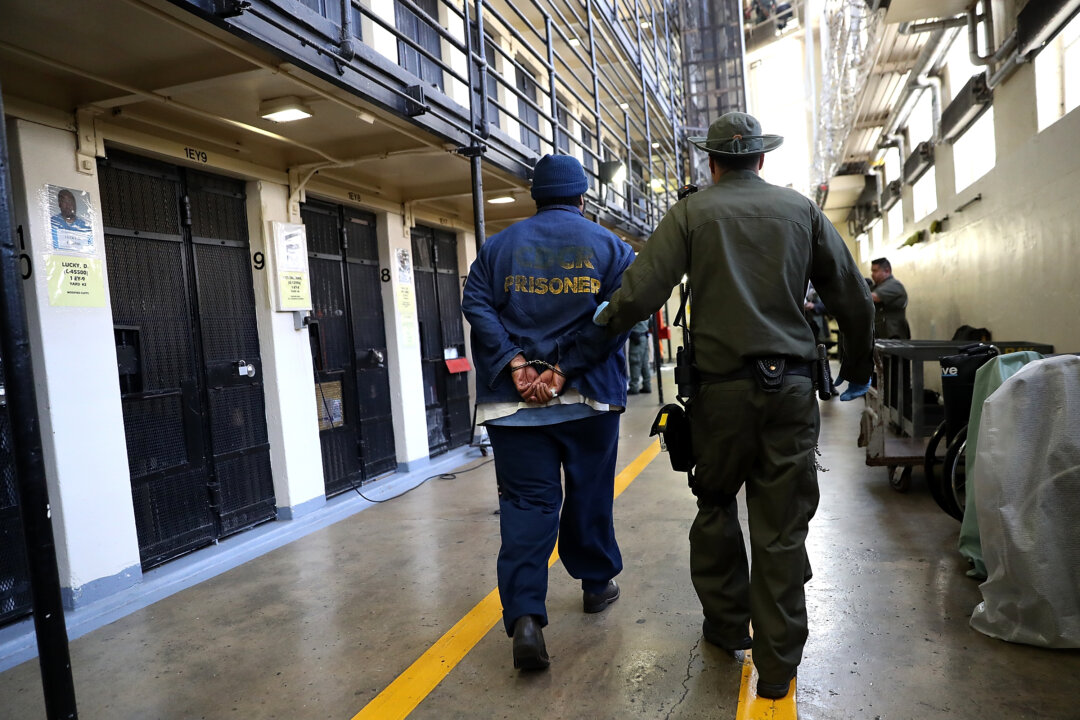
In a stark rebuke to California Governor Gavin Newsom’s radical agenda, district attorneys from 30 of the state’s 58 counties, alongside victims’ advocacy groups, have launched an unprecedented legal challenge to block what would be the largest mass clemency in California’s history. The target? Newsom’s unilateral plan to commute the death sentences of all 548 inmates currently awaiting execution.
Filed on November 15, the sweeping lawsuit argues that Newsom has ridden roughshod over established legal procedures and ignored the fundamental rights of victims’ families. This isn’t just a policy disagreement; it's a battle for the integrity of justice itself.
The coalition of petitioners represents some of California’s most populous counties, including Los Angeles, San Diego, Riverside, and Sacramento – a clear signal that this isn’t a fringe objection but a mainstream demand for accountability.
At the heart of the legal challenge is the explosive claim that Governor Newsom deliberately bypassed district attorneys’ offices, denying local prosecutors the critical opportunity to inform victims’ family members and gather their vital input on these life-altering clemency decisions. For families already devastated by heinous crimes, this is an insult added to injury.
“Governor Newsom decided his personal views should override all those who actually participated in the process, followed, and applied the law. He did none of that, as he freely admits. That alone is an abuse of power that must not stand,” the lawsuit forcefully states.
In a predictable move, Newsom’s office countered, claiming they are only legally obligated to notify local prosecutors when individual prisoners file for commutation. Their explanatory statement asserts that state law “does not restrict how the Governor may exercise his broad constitutional authority to grant clemency.” This technical defense, however, rings hollow to those who believe justice demands more than mere procedural minimalisms, especially when dealing with the gravest of crimes.
The lawsuit also points to crucial constitutional requirements: under state law, individuals convicted of two or more felonies can only have their sentences commuted with the explicit approval of the California Supreme Court. Governor Newsom himself noted in a letter to the court that a staggering 382 of the 548 death row inmates fall into this category, raising serious questions about the legality of his sweeping action.
If Newsom's plan proceeds, these death penalties would be downgraded to life imprisonment without the possibility of parole, as outlined in a Nov. 5 open letter from his office. For many, this represents a retreat from justice and a betrayal of victims.
The district attorneys and victim advocates are not merely challenging Newsom's intent; they are demanding the court scrutinize whether the Governor meticulously followed state law in his mass clemency effort and whether this amounts to a grave abuse of executive power. They are also urgently seeking an immediate stay to freeze the clemency process, ensuring no irreversible damage is done while the court reviews the case.
Unsurprisingly, Newsom’s radical clemency initiative has found allies among progressive advocacy groups, notably the Prosecutors Alliance Action and Santa Clara County District Attorney Jeff Rosen. These are the same voices that consistently push for softer approaches to crime, often at the expense of public safety and accountability.
Speaking at a November 17 media briefing, Rosen offered a glimpse into this worldview: “If somebody is in prison, the public is protected,” he said. “If we don’t need to kill someone, then we shouldn’t.” This sentiment, while superficially appealing, utterly fails to acknowledge the moral imperative of justice for victims and the gravity of the crimes committed.
Cristine Soto DeBerry, executive director of Prosecutors Alliance Action, echoed these progressive talking points, declaring California’s death penalty system “inhumane, ineffective, and enormously wasteful.” She advanced the familiar claim that “innocent people have been sentenced to death” and that the appeals process “prolong[s] uncertainty and retraumatiz[es] victims and survivors while not guaranteeing healing or accountability.” Funny how “accountability” for criminals seems to get lost in these discussions.
DeBerry further lamented that the state has allegedly spent around $6 billion on its death row system since 1978 without an execution in 20 years. Her conclusion? “Those resources would be far better invested in what we know makes communities safer: meaningful support for victims and survivors, mental health services, and rehabilitative programs that create safer prisons and communities.” It’s a compelling argument for those who believe in social engineering over swift justice, conveniently sidestepping the fundamental question of holding brutal murderers accountable.
California’s death penalty system, established in 1872, saw over 700 executions before 1976. After changes stemming from a U.S. Supreme Court ruling that year, the state has had 13 executions, with the last in 2006. While advocates for abolition often point to eight cases since 1976 where death sentences were overturned due to wrongful convictions, these isolated incidents should not be used to dismantle an entire system of justice.
This legal showdown in California is more than just a procedural dispute; it’s a critical battle for the soul of the justice system. It pits the rule of law and the sanctity of victims’ rights against a progressive governor’s radical agenda to undermine accountability for the most heinous crimes. True justice demands that executive power be exercised with respect for the law, for the victims, and for the safety of all law-abiding citizens, not through sweeping acts of clemency that betray public trust and embolden criminals. Americans committed to law and order will be watching closely.