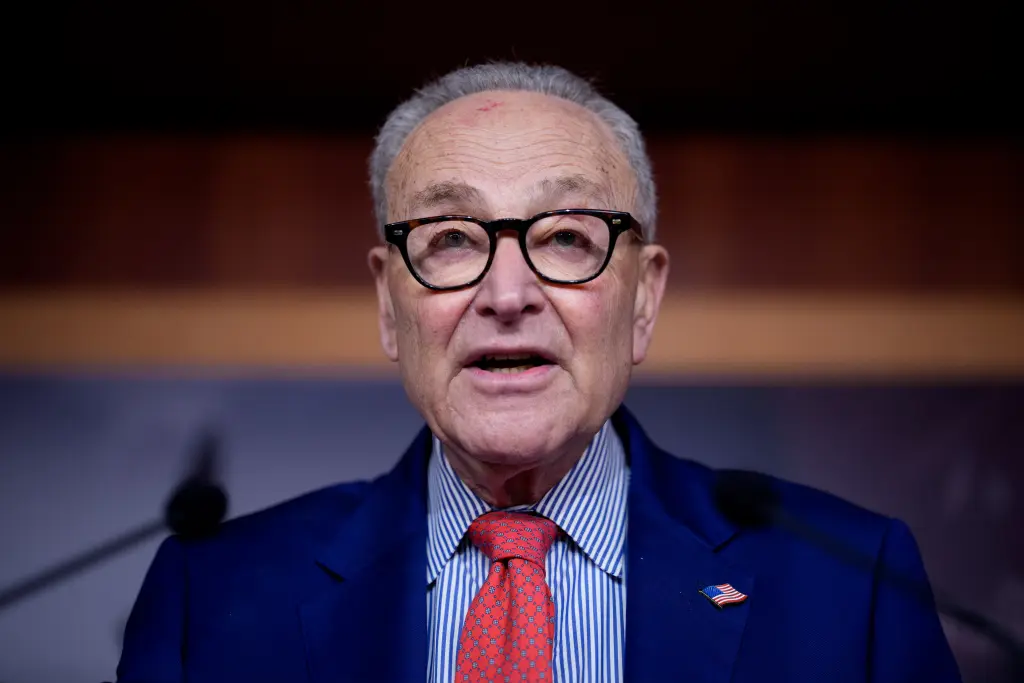
Senate Democratic Minority Leader Chuck Schumer found himself in an uncomfortable position Monday night when two Democratic candidates competing for a House seat in his own backyard declined to enthusiastically back his potential 2028 re-election bid.
During a spirited debate hosted by NY1, Rep. Dan Goldman and his Democratic primary challenger, Brad Lander, were asked whether they would support Schumer, 75, should he decide to seek another term in the U.S. Senate in 2028.
The question put both candidates in a difficult spot, as Schumer remains one of the most prominent figures in the Democratic Party and represents New York in the Senate. Yet neither candidate appeared eager to offer a clear endorsement, highlighting what some observers see as growing divisions within the party.
The exchange drew attention because the House district at the center of the debate includes Park Slope, the Brooklyn neighborhood Schumer calls home. If there were ever a place where one might expect enthusiastic support for the longtime senator, this would seem to be it.
Instead, the responses fueled speculation about Schumer’s standing among Democrats as newer factions within the party continue pushing for different priorities and leadership styles. Apparently, even political veterans can discover that loyalty in politics has an expiration date.
For Republicans and conservative observers, the moment serves as another sign of internal tensions within the Democratic Party as candidates navigate competing pressures from establishment figures and activist-driven wings of the party.
While Schumer has not officially announced plans regarding a 2028 campaign, the debate provided an early glimpse into the challenges that longtime political leaders can face when seeking support from a changing electorate.
As Democrats continue preparing for future election cycles, questions surrounding leadership, party direction, and generational change are likely to remain front and center. For now, one thing is clear: when two candidates hesitate to endorse the most powerful Democrat in their own neighborhood, people tend to notice.