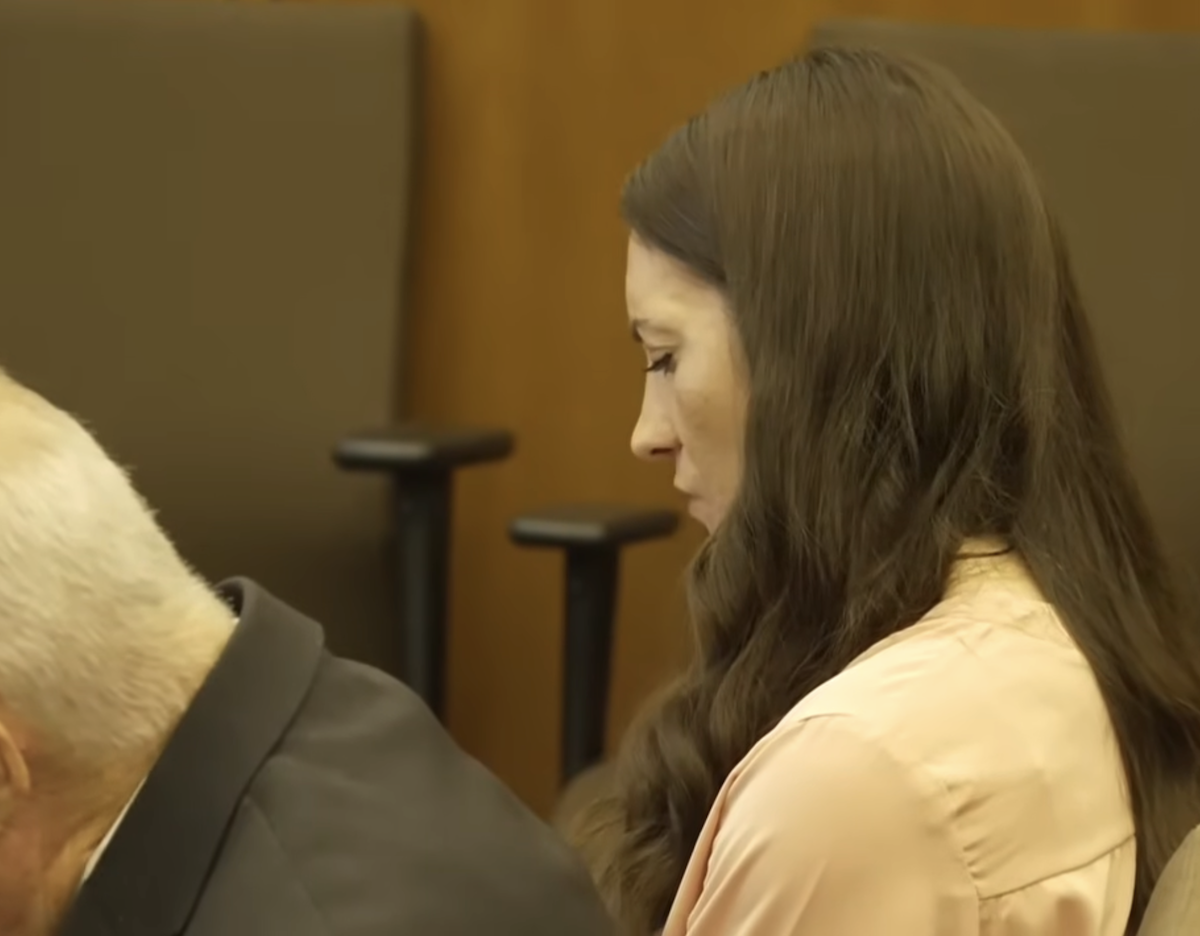
The Lindsay Clancy mistrial has exposed a deeply troubling vein in modern society, a stark reminder that some corners of our culture have lost their moral compass, seemingly prioritizing a warped sense of victimhood over the grim reality of unimaginable crime. While justice for three innocent children hangs in limbo, a disturbing display of misplaced sympathy has taken center stage, threatening to undermine the very principles of accountability and common sense.
 Image CreditWJAR/YouTube
The stark reality was laid bare immediately after the trial judge declared a mistrial in Plymouth County, Massachusetts. As District Attorney Timothy Cruz spoke to the media, acknowledging Clancy's three young victims – her own children – a woman in her 30s, dressed in the distinctive pink associated with Clancy's supporters, stood prominently in camera view. With sunglasses and a bright pink scarf, she aggressively shook her head in disagreement with Cruz. Then, in a moment of chilling clarity, she yelled, "You only cared when the kids were dead. Why don't you care about the mother?"
That such a woman feels emboldened to publicly disregard the sanctity of innocent life, to vocalize such a grotesque sentiment, is profoundly alarming. And she is far from an isolated incident. This trial has unfortunately pulled back the curtain on a legion of individuals, particularly women, who champion this dangerous ideology.
They proliferate across platforms like TikTok, turning a horrific tragedy into macabre entertainment. They flocked to the courthouse, adorned in pink, openly proclaiming their solidarity with Clancy. Their twisted conviction? That Clancy is as much a victim as the three children she allegedly murdered, if not more so.
"You only cared when the kids were dead." Imagine uttering those words, truly believing them to be rational. The idea that a state prosecutor should be concerned with a private family before a crime is committed is an absurd deflection. This mindset seeks to absolve Clancy of her agency and responsibility, precisely because these individuals crave the same absolution for themselves. This should send a shiver down the spine of anyone who values law, order, and the protection of children.
Three young children are dead, their lives brutally extinguished. They were left face down on a basement floor, allegedly choked one by one with rubber exercise bands by their mother. To view this unspeakable act as mere entertainment, or to confidently side with the accused, reveals a profound sickness within our culture. These are not individuals who should be entrusted with the care of children; their judgment is tragically compromised.
The scales of justice remain unbalanced. Yet, amidst the legal uncertainty, a disturbing truth has emerged about a segment of society that struggles with moral clarity, choosing to elevate the perpetrator to victim status and dismiss the brutal reality of innocent lives lost. This ongoing battle for accountability and truth is a testament to the urgent need for a return to American values that prioritize the vulnerable and demand justice for heinous crimes, rather than succumbing to the corrosive narrative of misplaced sympathy.