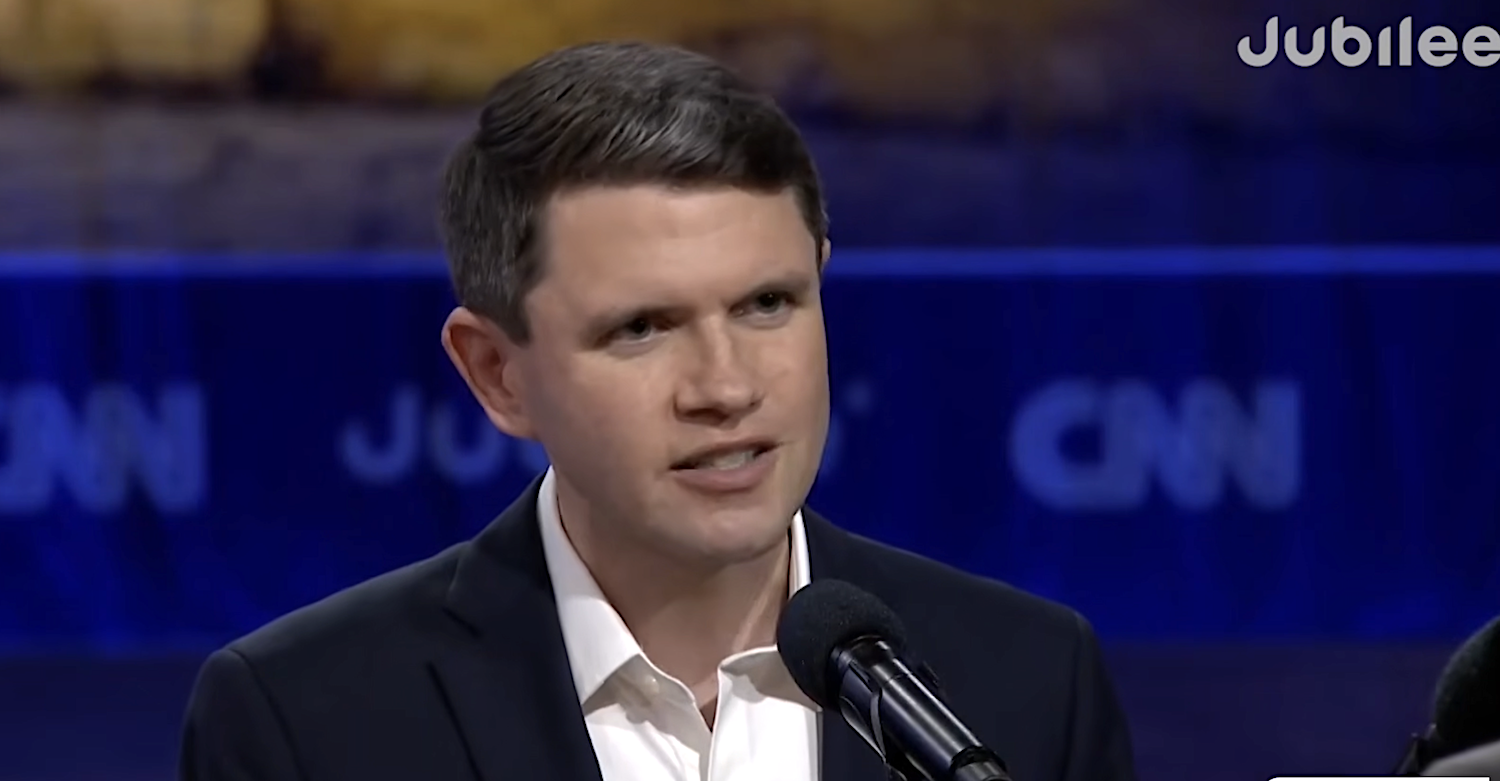
A Democrat Senate hopeful in Texas, James Talarico, isn't interested in a genuine exchange of ideas. Instead, he’s banking on Texas Republicans being naive enough to fall for a carefully crafted, conservative-looking facade designed to obscure his radical agenda. This political cosplay has now drawn a sharp rebuke, landing him in the middle of a lawsuit.
Conservative firebrand Steven Crowder has filed a lawsuit against CNN and Jubilee, targeting their opportunistic use of "Change My Mind"—the iconic slogan and format Crowder popularized through his direct-talk political debate videos. Newsweek reports that Crowder claims his trademarked brand is being exploited to help Talarico gain traction with conservative voters. While Crowder initially threatened action against Talarico directly, the lawsuit names the two media giants as defendants, who, according to the Louder with Crowder host, are peddling the falsehood that the format, which he pioneered in 2017, is a "unique" concept poised to "change town halls."
The legal merits of Crowder’s trademark claim will be decided in court. Yet, the profound political irony here speaks volumes: why must a Democrat vying for a Senate seat in Texas resort to borrowing the cultural packaging of conservatism?
The answer is simple: Talarico desperately needs crossover voters. He knows that Democrat enthusiasm alone cannot deliver victory in a state where Republicans have consistently dominated statewide elections for decades. Just look at Senator Ted Cruz’s commanding 2024 third-term triumph. Despite the mainstream media and polling propaganda insisting Democrat Colin Allred had a legitimate chance to unseat Cruz, reality intervened. Cruz, securing 53.1 percent of the vote, defeated Allred by nearly 1 million votes, proving once again that Texas remains a red stronghold.
Talarico understands his uphill battle. To woo Texans who rightly distrust his party’s leftward lurch, he must project an image far removed from the conventional Democrat. He wants to look like someone Republicans might actually invite to the barbecue, not condemn at the ballot box. Enter a familiar slogan and a carefully controlled image of supposedly open-minded debate. Because, of course, branding can be incredibly deceptive.
Political branding works because voters often make snap judgments. A familiar logo or a carefully curated persona can conjure a false sense of trust before a candidate has articulated a single policy. It’s the political equivalent of dressing up a tofu burger as a Texas brisket. The barbecue sauce might smell convincing, but sooner or later, someone’s going to take a bite and realize it’s not the real deal.
Talarico’s self-professed Christian identity demands the same rigorous scrutiny. Merely using religious language does not automatically establish shared convictions with Christian voters. Texans, particularly those of faith, must examine his policy positions and legislative record rather than mistaking appeals to the Bible as proof of political alignment. Faith is not a campaign accessory, and a familiar vocabulary is certainly no substitute for substance or genuine belief.
Talarico’s own past statements vividly illustrate why his religious rhetoric requires closer examination. During a 2021 Texas House speech, opposing legislation on transgender-identifying students’ participation in school sports, he boldly declared, "God is nonbinary," asserting that "God is both masculine and feminine and everything in between." This astounding claim rightfully drew immediate criticism from religious conservatives who hold to a traditional interpretation of Scripture. Talarico has since dismissed these comments as "provocative," bizarrely comparing himself to the late Charlie Kirk. He has also audaciously argued that "the Bible is silent on the issue of abortion" and twisted the sacred Annunciation into a tale about "consent." This is not just provocative; it is a clear subversion of deeply held Christian doctrines.
The political gamesmanship Talarico employs is mirrored by figures like Pennsylvania Senator John Fetterman. Fetterman’s hoodies, gym shorts, and cultivated working-class persona were specifically designed to differentiate him from the polished Democrat establishment. His occasional, carefully publicized breaks with Democrats on issues like immigration and Israel generate headlines and social media buzz, crafting an "outsider" image that keeps him in the conversation. Yet, Fetterman consistently votes with Democrats most of the time—a staggering 80 percent, according to congressional voting analyses. This illustrates the critical distinction: looking like an independent is not the same as genuinely breaking with your party. The branding grabs attention, but the voting record tells patriotic Americans what they truly need to know.
Talarico’s challenge is identical. He can borrow Christian and conservative window dressing, but he cannot borrow their deeply held convictions through mere association. Standing beside a "Change My Mind" sign does not magically transform him into a bridge between Democrats and Republicans. Repeating a few Bible verses does not, by itself, establish him as a political ally of principled Christian Texans. It’s an insult to their intelligence.
Meanwhile, CNN conveniently packages Talarico for a national audience as a Democrat seemingly willing to engage conservatives on their own cultural turf. That may make for "compelling television," but a carefully staged conversation is no substitute for a serious and honest examination of policy. This format might make a candidate look familiar; it absolutely cannot tell discerning voters whether his radical agenda actually serves their interests or the bedrock principles of Texas.
This is the ultimate danger of political cosplay: mistaking the costume for the character. Texans should not assume Talarico is dishonest simply because he employs familiar branding. However, they must never confuse a polished presentation with fundamental principles. The sign may say, "Change My Mind," but before changing their votes, Texas Republicans must demand clarity on what Talarico truly wants them to believe. He appears more focused on convincing Republicans that he is their friend than on demonstrating that he will actually fight for the principles they hold dear. A candidate who spends more time dressing up his politics to win over skeptical voters than explaining why his policies deserve their support may be revealing just how little confidence he has in the flawed product he is desperately trying to sell. Texas deserves substance, not a charade.