A criminal investigation is supposed to follow evidence—not cast a net over hundreds of thousands of Americans and hope something turns up. That distinction is now at the center of renewed scrutiny surrounding former special counsel Jack Smith's investigation of President Donald Trump.
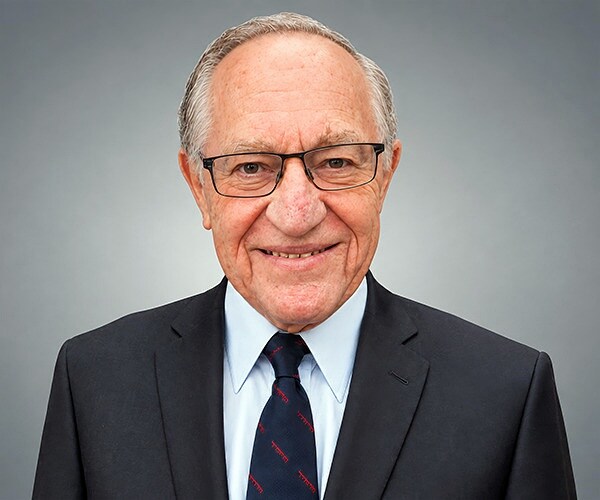
Harvard Law professor emeritus Alan Dershowitz sounded the alarm Thursday, telling Newsmax that disclosures about the Biden-era Justice Department's Arctic Frost investigation raise serious ethical and legal questions. He compared the scrutiny of Republican donors and supporters to the political investigations associated with Senator Joseph McCarthy's era.
The revelations, publicized by Senate Judiciary Committee Chairman Chuck Grassley, a Republican from Iowa, concern information obtained by Smith's team and the Justice Department involving at least 639,000 Republican donors, voters and supporters.
For Dershowitz, the central question is whether investigators had a sufficiently solid basis to collect information involving so many people—or whether they were searching broadly for evidence that could justify further action.
"Well, this sounds to me like they were just throwing it against the wall and hoping some of it would stick, that they didn't really have a very firm basis for violating the rights of innocent individuals," Dershowitz said during an appearance on The Record With Greta Van Susteren.
"They were just hoping that maybe something would come up that would give them a basis for proceeding."
Those are pointed criticisms from a prominent legal scholar, and they go directly to one of the most consequential principles in American justice: the government must have a lawful basis for its investigative actions, regardless of the political identity of the people involved.
'Show Me the Man, and I'll Find You the Crime'
Dershowitz went further, invoking a phrase associated with politically motivated prosecutions: "show me the man, and I'll find you the crime."
He argued that Smith's investigation appeared driven by the objective of prosecuting Trump, with the methods used to achieve that objective now deserving closer examination.
"The job of the special counsel was to get Trump, without a doubt, and the means used to get him were up to him," Dershowitz said. "And he used various means that are now subject to real questions, ethically and legally."
Dershowitz called for Congress and legal ethics committees to investigate those questions.
The stakes extend beyond the former president. Smith's investigation examined Trump's efforts to challenge the results of the 2020 presidential election and ultimately resulted in federal criminal charges. After Trump won the 2024 election, the case was dismissed in accordance with Justice Department policy against prosecuting a sitting president.
The latest disclosures have shifted attention toward the investigative methods themselves, particularly the breadth of information collected about people connected to Republican politics.
Grassley's revelations have also raised questions about records involving purchasers of MAGA merchandise, intensifying concerns about whether ordinary political activity could place Americans within the government's investigative reach.
The available disclosures, however, do not by themselves establish that every person whose information was obtained was individually targeted, that every collection was unlawful, or that investigators acted solely because of political affiliation. Those questions require examination of the underlying records, legal authorities and investigative decisions.
That is precisely why Dershowitz wants the matter examined.
The MAGA Hat Question
One of the most troubling possibilities raised during the discussion was whether an ordinary purchase associated with Trump's movement could become a reason for government scrutiny.
Dershowitz warned against investigating Americans because of their political views or whom they support.
"And the idea that people are being investigated because of their political views, because of who they support, it really harks back to McCarthyism," he said.
The historical comparison is significant. McCarthyism became synonymous with investigations and accusations that damaged Americans' lives amid fears of communist infiltration, often raising questions about fairness, evidence and the protection of civil liberties.
Dershowitz's comparison was a warning about the potential dangers of politically focused investigations, not a judicial finding that Arctic Frost was equivalent to the investigations of that period.
Nevertheless, the underlying principle is straightforward: Americans should not have to fear that lawful political expression, campaign support or association with a political movement will automatically make them suspects in the eyes of federal authorities.
The First Amendment protects political speech and association, while lawful investigations can still examine relevant evidence when supported by proper legal authority. The critical question is whether investigators respected that distinction.
If the records show that information was gathered without adequate justification or that political affiliation improperly influenced investigative decisions, the matter warrants serious scrutiny. If the collection had a lawful, evidence-based rationale, the government should be able to explain it.
Neither political outrage nor official assurances can substitute for examining the evidence.