Minnesota is now dealing with one of the biggest social-services fraud disasters in U.S. history — and according to immigration expert Simon Hankinson, the reason it spiraled out of control boils down to a collapse in assimilation and a political culture terrified of being called “racist.” Because of course, in today’s America, the fastest way to shut down oversight is to accuse someone of bigotry.
Federal prosecutors uncovered what they describe as “schemes stacked upon schemes,” all involving Somali-run nonprofits that siphoned off hundreds of millions from child-nutrition and Medicaid housing programs. More than 70 defendants have now been charged — with dozens already convicted — and the scandal has triggered investigations at every level of government. Apparently, the fraud was so widespread that even Minnesota couldn’t pretend it was just a bookkeeping error.
Hankinson, a senior research fellow at the Heritage Foundation’s Border Security and Immigration Center, told Fox News Digital that a deep decline in assimilation played a key role. As he put it, assimilation used to be a two-sided coin: immigrants worked to adapt, and America expected certain basic standards in return — like learning enough English to get a driver’s license. “We don’t do that anymore,” he said. “We don’t really expect anything of our immigrants.” A shocking observation, unless you’ve been awake for the last decade.
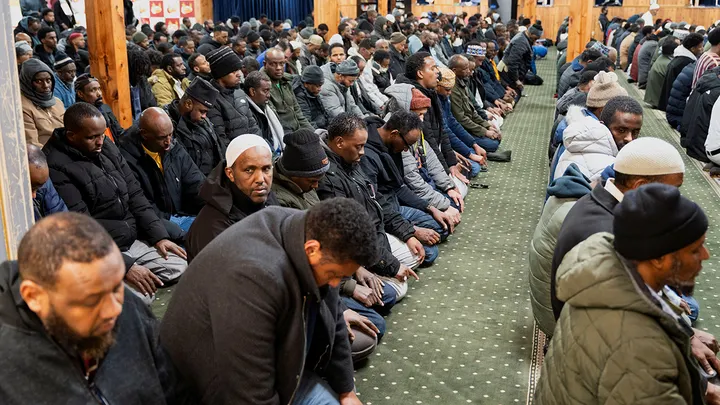
He also noted that the fraud wasn’t about blaming the entire Minnesota-Somali community, which numbers around 80,000 people. The perpetrators were a minority. But because the community remains tight-knit and largely unassimilated, early warning signs that might have surfaced in a more integrated community simply weren’t there.
Hankinson explained that many newcomers come from cultures where everything is local — family, clan, survival — and government systems are either nonexistent or hopelessly corrupt. So when someone says, “Just say your kid is autistic and you’ll get a thousand dollars a month,” many people don’t exactly have the framework to understand how massive federal fraud works. And even if they did? They won’t “rat out” a clan member. Loyalty beats legality every time.
He also called Minnesota a “high-trust state,” which combined with generous welfare programs made it “ill-equipped to handle fraud.” In other words, the system was so easy to exploit that scammers barely had to break a sweat. One part of the scheme involved companies recruiting families, securing fraudulent autism diagnoses, and billing Medicaid for therapy that never happened. The result? Millions drained.
Hankinson pointed out the obvious: someone should have noticed when autism rates in Somali children skyrocketed from normal levels to “one in three or whatever it was.” But oversight wasn’t exactly fashionable — especially when race accusations hung over everything. Liberal America’s fear of being called “racist,” he said, became an effective shield for scammers. “White liberal Americans are more afraid of that label than anything else,” he explained. So fraudsters knew exactly how to play the game.
This dynamic escalated nationally after the Trump administration announced a crackdown on illegal immigrant Somalis in Minnesota. Democratic Gov. Tim Walz accused Trump of “demonizing an entire group of people,” which is ironic considering Walz was the one in charge while the entire mess was unfolding. Hankinson didn’t mince words: “He was asleep at the switch.”
Hankinson made clear this isn’t about scapegoating — it’s about reminding every state in the country that America has laws, and breaking them leads to consequences. A basic concept, unless you’re running a state like Minnesota where oversight apparently took a multi-year vacation.
Ultimately, Hankinson expressed hope that many Somalis will help clean up the damage and restore their community’s reputation. And that’s the silver lining: accountability is underway, the truth is coming out, and Minnesota — with the right leadership — can still turn this around.