Federal prosecutors have expanded a high-profile criminal case involving an alleged domestic terror plot tied to a UFC event hosted on White House grounds, adding two new defendants and raising fresh questions about event security, extremist coordination, and evolving domestic threats.
According to newly unsealed court filings and reporting cited by ABC News, the Justice Department now alleges that seven individuals were connected to discussions surrounding a potential attack scenario involving drones, explosives, and gunfire intended to create mass panic during a large public gathering.
Authorities stress that the allegations remain accusations and that the defendants are presumed innocent unless proven guilty in court.
The newest defendants identified by prosecutors are Jordan Rincker of Missouri and William Lee Falkner of Washington state.
According to court filings, investigators allege members of the group discussed using drones equipped with explosive payloads and creating confusion during crowd movement and evacuation.
Prosecutors claim encrypted communications included conversations about modifying drone systems and potentially incorporating 3D-printed components.
Investigators also allege Rincker accepted cash from another defendant and provided a shotgun during an in-person meeting connected to the investigation. Prosecutors further claim he sent additional funds to support travel expenses related to the alleged operation.
Rincker reportedly denied having technical knowledge related to drone construction and told investigators he had no experience designing such systems.
Falkner is accused of participating in encrypted conversations where discussions allegedly included obtaining drones and attaching explosive devices.
Authorities have not publicly confirmed whether operational devices, explosives, or functioning systems were ultimately recovered.
That distinction may become important as the legal process moves forward.
According to federal officials, the investigation began after a family member of one suspect contacted authorities with concerns regarding weapons accumulation and online communications.
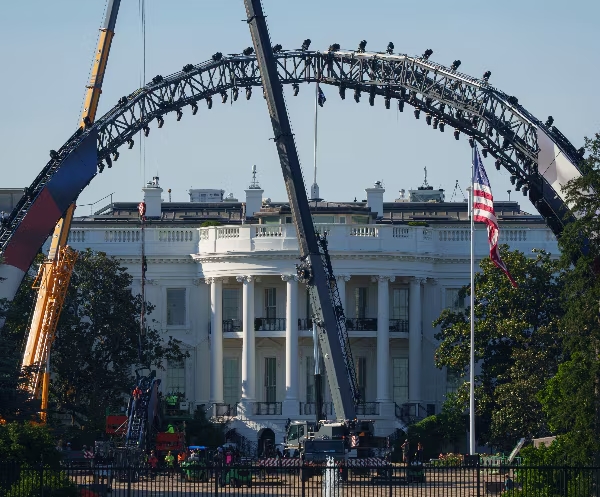
The alleged target — a UFC event held at the White House in mid-June — has added another layer of public attention.
Investigators allege the event was discussed as a symbolic target due to its visibility, attendance, and political significance.
Prosecutors also stated that conversations later expanded into discussions of alternative targets, including large sporting events, although officials have not publicly alleged that operational plans reached execution stages.
Cases involving encrypted messaging and alleged pre-attack coordination often become legally complex, especially when prosecutors must distinguish between protected speech, online rhetoric, and actionable criminal preparation.
At the same time, critics of a reactive security posture argue that threats involving drones and decentralized planning have become increasingly difficult for traditional law enforcement models to detect.
The broader concern extends beyond one investigation.
Many Americans are increasingly asking whether public events, national landmarks, and high-profile gatherings are prepared for threats that no longer resemble traditional security scenarios.
For supporters of stronger law enforcement and national security measures, cases like this reinforce a familiar argument: deterrence works best when threats are identified early, investigated aggressively, and prosecuted before intentions become consequences.
The investigation remains active, and officials say additional charges or developments remain possible as evidence continues to be reviewed.