The nation's collective heart broke anew this week as the Cincinnati Zoo released the definitive autopsy findings following the tragic death of Fiona, the beloved hippo whose valiant battle against an ingested foreign object captivated and saddened millions. The official report confirms what many feared: a visitor's carelessly tossed hat ultimately sealed her fate.

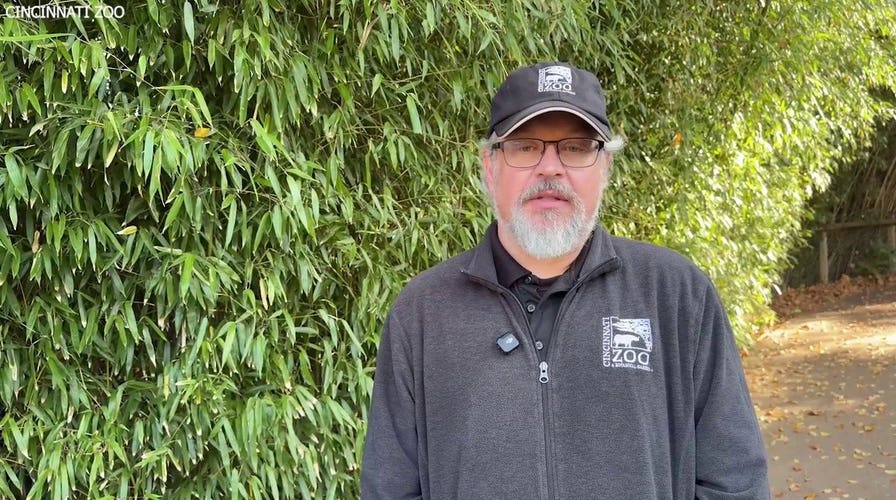
Dr. Mike Wenninger, the Cincinnati Zoo’s director of animal health, revealed that a postmortem examination conclusively identified the foreign object as a hat, which had been accidentally propelled into her enclosure by a ceiling fan. This seemingly innocuous item became a lethal obstruction, lodging deep within Fiona's massive digestive tract.
Specifically, the hat was discovered halfway through her small intestine, a formidable 25 feet from the beginning of her intestinal tract and a staggering 50 feet from where it would have naturally exited her body. This precise, unfortunate placement rendered all rescue efforts futile.

The findings provide grim answers to lingering questions, clarifying why days of intensive efforts by Fiona's dedicated care teams were ultimately unsuccessful. Despite deploying various advanced methods, including ultrasounds and both upper and lower gastrointestinal endoscopies, the hat remained maddeningly out of reach.
Care teams even acquired specialized 9-foot-long endoscopy tools, yet they were unable to navigate the intricate anatomy of Fiona's digestive system to reach the obstruction. "The upper GI endoscopy couldn't even reach out of her large sacculated stomach," Wenninger explained, underscoring the immense challenge.

The unique nature of Fiona's internal structure compounded the tragedy. Wenninger elaborated, "Given her anatomy and the attachments from her intestinal tract to body wall, there's no place, no way to get in there with specialized endoscopes." This anatomical reality also made surgical intervention an impossibility. Laparoscopic procedures, typically less invasive, were simply not feasible given the hat's deep location. An open abdominal incision, a laparotomy, would have carried its own insurmountable risks for an animal of Fiona's size.
"Laparoscopic surgery wasn't possible given the location and a laparotomy, so (an) open incision in a hippo that size with an incision that's that long would have been a death sentence for her," Wenninger stated. This unequivocal assessment confirms the care team’s diligent and exhaustive efforts, leaving no viable options for life-saving operations.

Zoo officials stressed that these findings validate the tireless work of Fiona's caretakers. "No treatment aside from supportive care had any chance for success, and the necropsy confirmed that no amount of supportive care would have worked," Wenninger affirmed. This brings a painful closure, confirming that her passing, though heartbreaking, was an inevitability once the hat became lodged.
Fiona's story began with defiance. Born six weeks premature in January 2017, she weighed a mere 29 pounds, a fraction of the typical 50 to 120 pounds for a newborn Nile hippo. Her early life was a testament to resilience and the extraordinary dedication of her caretakers, who provided round-the-clock critical care to ensure her survival. She quickly became a symbol of hope and a national treasure.

The premature hippo who beat the odds, living to 9 years old before her rapid decline in November, was lost not to an inherent weakness, but to a singular, preventable accident. While the Cincinnati Zoo remains open, the somber atmosphere around Hippo Cove reflects the profound grief. As the zoo articulated in a poignant statement, "Keepers, vets, staff and volunteers are shaken and trying to navigate this loss. She meant a lot to a lot of people."
Fiona’s untimely death serves as a stark reminder of the responsibility each visitor holds when interacting with wildlife, even within the confines of a zoo. Her legacy, however, will forever be one of courage, resilience, and the deep, abiding connection between humans and the magnificent creatures with whom we share this world—a connection that demands our utmost respect and care.