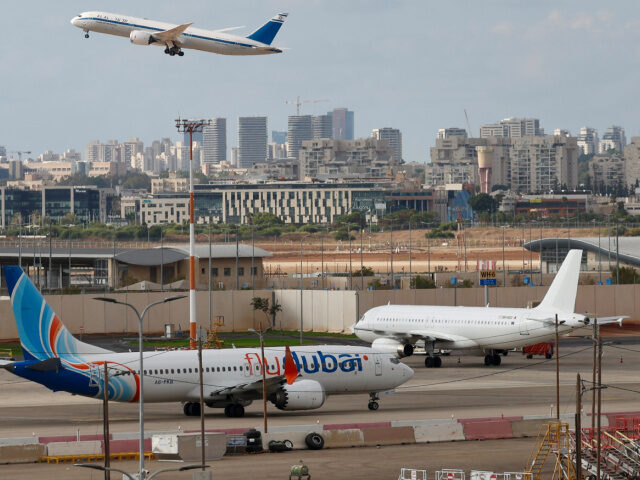
The co-pilot accused of attacking the captain of a Flydubai passenger jet bound for Israel had previously been barred from flying in Oman over concerns about extremist views, according to reports emerging as investigators probe the near-catastrophic incident.
The revelations have raised questions about how the Omani national, identified in reports as Hamam al-Hammami, was later able to obtain a cockpit position with Flydubai and serve as first officer aboard a flight carrying more than 170 people.
The Wall Street Journal, citing people familiar with the matter, reported that Oman had previously prohibited al-Hammami from flying after concerns emerged over radical ideological views. Despite that history, he was later hired by Flydubai and assigned to the Dubai-to-Tel Aviv route.
ABC News reported that al-Hammami had been identified as a security concern while training with Oman Air in 2024 after extremist material was reportedly found in his possession. He was subsequently removed from flight duties but was allowed to remain with Oman Air in an administrative position, according to officials cited by the outlet.
Investigators are now examining how he ultimately passed the screening required to become a Flydubai first officer.
The revelations come after a violent confrontation aboard Flydubai Flight FZ1073 on September 30. The Boeing 737 was traveling from Dubai to Tel Aviv when the co-pilot allegedly attacked Captain Smit Machchhar inside the cockpit.
According to the UAE's attorney general, the co-pilot used a cockpit crash axe in what authorities have characterized as an attempted terrorist attack. The assault left the captain seriously injured and triggered an emergency that sent the aircraft into a dramatic descent.
Reuters reported that the aircraft descended more than 16,000 feet in roughly 30 seconds. Despite his injuries, Machchhar managed to open the cockpit door, allowing passengers and crew to intervene. Two off-duty pilots aboard the aircraft subsequently helped stabilize the plane before it landed safely in Tabuk, Saudi Arabia.
The aircraft was carrying more than 170 passengers, most of them Israeli, according to Reuters. All passengers and crew ultimately survived the incident.
The reported motive has now become a central focus of the investigation.
ABC News reported that the suspect, who is in UAE custody, has indicated to investigators that he intended to crash the aircraft in Israel. Other reports have also described previous concerns about his ideological views and time spent outside Oman, including in Syria. Those details remain part of an ongoing investigation rather than a final determination of motive or outside direction.
UAE authorities are investigating whether the attack was connected to terrorism, whether it was planned in advance and whether anyone else was involved. The UAE's attorney general has publicly described the incident as an attempted terrorist attack.
So far, investigators have not established a connection between the suspect and an organized militant group or a foreign government. Reuters reported that initial indications pointed toward possible lone-actor behavior, while stressing that the investigation remains ongoing.
The incident has also prompted renewed scrutiny of aviation security and pilot screening—particularly because the suspect had reportedly faced restrictions on flying in Oman before later entering the cockpit of an international passenger aircraft.
Flydubai has suspended flights to and from Israel while the investigation continues. CEO Ghaith Al Ghaith said the airline was cooperating fully with authorities and praised the captain, crew members and passengers who helped secure the aircraft and bring it safely to the ground.
The questions now extend well beyond what happened during those terrifying minutes over Saudi Arabia.
Investigators must determine how a pilot who had reportedly already been flagged over security concerns was able to progress from being removed from flight duties in Oman to occupying the cockpit of a commercial jet bound for Israel—and whether the warnings that existed years earlier could have prevented the attack.