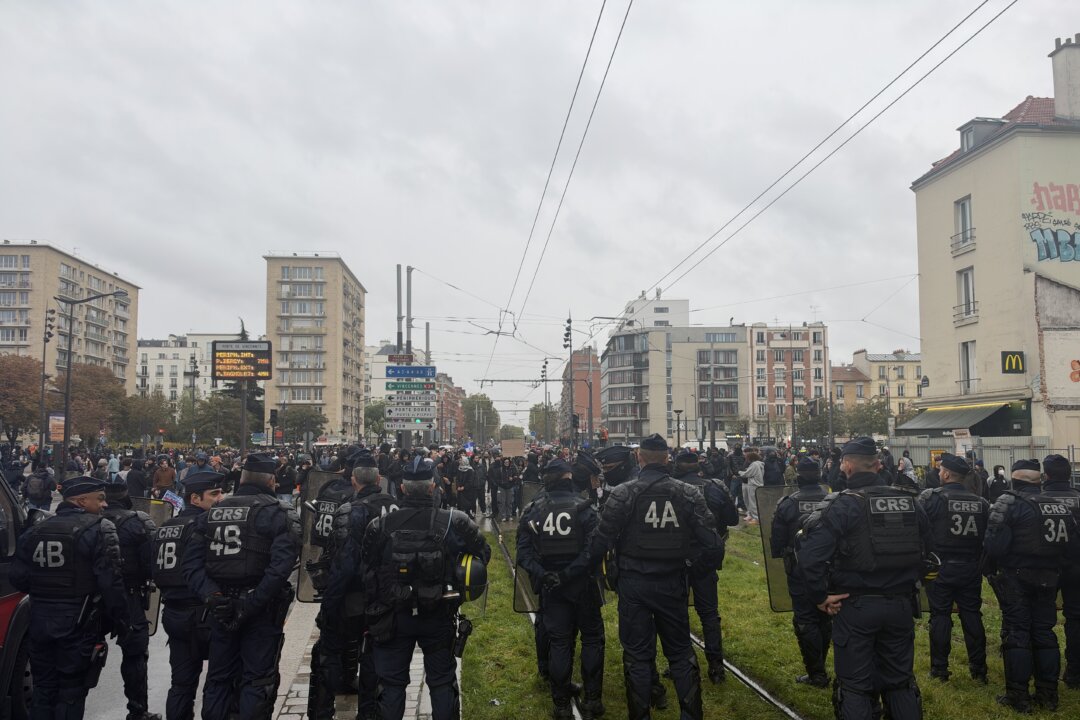
A massive deployment of 70,000 French police officers and gendarmes managed to contain the widespread looting and destruction that gripped the nation last weekend, but widespread clashes and nearly 1,000 arrests underscored the persistent threat of internal unrest fueled by radical elements. The streets of Paris, Marseille, and a dozen other cities erupted in violence Saturday, yet the sheer force of law enforcement prevented a repeat of the chaos seen just days prior.
The stark difference from the previous weekend, which saw thousands of shops ransacked, was clear. Interior Minister Laurent Nuñez affirmed that the day “bears no comparison with last week,” even as he noted a “high level of violence” in most of the marches. Nuñez pointed the finger directly at “far-left activists and criminal gangs” for forming “high-risk groups” that broke away from peaceful protests “to commit acts of violence.” This candid assessment highlights the insidious nature of ideologically driven destruction operating under the guise of protest.
In the heart of Paris, masked agitators launched projectiles and fireworks at police, who responded with tear gas, stun grenades, and water cannons. Similar scenes unfolded in Marseille, where rioters torched garbage bins, hurled rocks and bottles, and brazenly looted several businesses, including two jewelry stores. The relentless assault on private property and public safety continues to plague French cities.
By Saturday evening, nearly 1,000 individuals had been arrested, a number expected to climb as authorities continue their sweep. Minister Nuñez attributed the improved containment to enhanced "anticipation" and proactive measures, including rigorous checks at train stations and on roads leading to protest sites, which led to the seizure of numerous improvised weapons. This demonstrates the critical importance of strong, decisive action in the face of organized disorder.
The authorities banned the traditional Bastille-to-Nation route in Paris, confining the march to the city’s southeastern edge. Despite these precautions, and with landmarks like the Louvre boarded up, anti-police chants such as “ACAB” and “everyone hates the police” echoed from the crowds, along with far-left slogans like “Down with the state, the cops, and the fascists.” These explicit calls for anarchy reveal the true agenda behind much of the unrest.
While some protesters claimed to be acting against government repression, the underlying radicalism was apparent. One 27-year-old, Alice, who is currently unemployed, expressed a desire to “send a message before the presidential election,” adding, “The far right will not be able to reach power without the people making it clear they don’t want fascism ruling France.” This stark warning from the streets reveals the deeply ideological battle underway, where a vocal minority attempts to dictate the future through intimidation and chaos.
The mood in Paris darkened around 5:30 p.m. when police moved to disperse the crowds, meeting a barrage of projectiles and fireworks from masked youths. Water cannons and tear gas were deployed in response, a necessary measure to restore order. Similar outbreaks of violence, though limited in damage compared to the prior week, were reported across the nation in cities like Lyon, Bordeaux, Grenoble, and Nantes. In Limoges, clashes occurred directly in front of the city hall, which had been gutted by fire during the previous week’s riots—a grim reminder of the destructive potential of these groups.
As another protest is scheduled for next Saturday, October 31, the question remains: How long will Western nations tolerate the systematic erosion of law and order by groups committed to disruption and violence? France’s decisive police action offers a temporary reprieve, but the ideological battle for common sense, public safety, and national stability continues. The ability of a nation to protect its citizens and uphold the rule of law against internal threats is paramount, and France’s current struggle serves as a stark warning to all who value order and freedom.