American families are once again feeling the squeeze at the gas pump as prices surged past the critical $4 per gallon mark on Monday. This unwelcome increase comes as escalating conflict between the United States and Iran continues to choke vital oil shipments through the strategic Strait of Hormuz, directly impacting the wallets of hardworking citizens.
The nationwide average for regular gasoline hit $4.003 a gallon, according to the American Automobile Association (AAA), just a day after hovering precariously below this politically sensitive threshold. The AAA explicitly noted, "Instability along the Strait of Hormuz is contributing to the increase at the pump."
This marks the first time the national average has been at or above $4 since mid-June, a troubling return to higher costs that burden household budgets. The instability translated directly to crude markets, with Brent crude futures briefly climbing above $91 a barrel and U.S. West Texas Intermediate crude hitting $85.39, driven by concerns over supply disruptions.
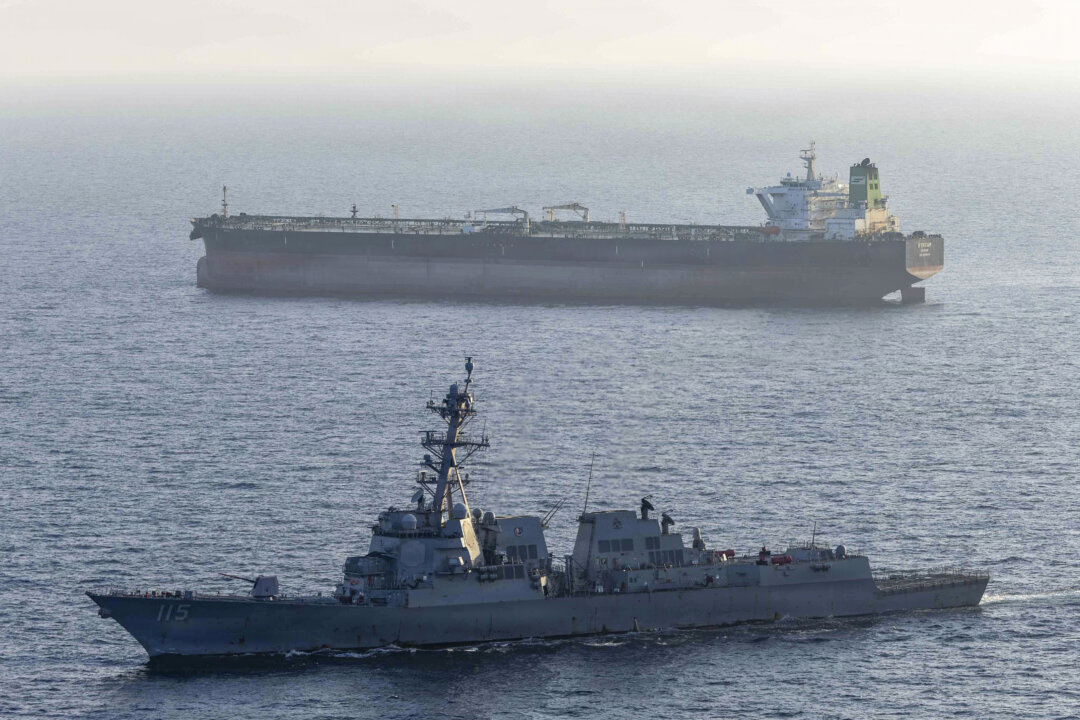
The Strait of Hormuz, a critical chokepoint for global oil and liquefied natural gas exports, has become the flashpoint of this escalating U.S.-Iran confrontation. The U.S. military reported its ninth consecutive night of strikes against Iran, while Tehran countered with its own reports of fresh attacks across the region. This intensifying exchange has severely curtailed tanker traffic, raising fears of significant volumes of oil and natural gas being removed from the global market.
Commodities strategists Warren Patterson and Ewa Manthey of ING captured the grim reality: "With little sign of de-escalation in the Middle East, oil prices continue to move higher as vessel flows essentially grind to a halt." Data from the London Stock Exchange Group (LSEG) painted a stark picture, showing only two outbound oil tankers transiting the strait and zero inbound traffic, a clear signal of the severe disruption.
In a further provocative move, Iran's Islamic Revolutionary Guard Corps (IRGC) claimed two oil tankers exploded and were immobilized while attempting to use what Iran deemed an "unsafe" southern route through the strait – a claim not independently verified but indicative of Iran's aggressive posture. Tehran has consistently sought to assert control over the waterway, attacking ships using the U.S. Navy-supported southern route to force them into an IRGC-controlled northern passage.
The U.S. military has, in turn, re-imposed its blockade of Iranian ships and ports in the Gulf, even disabling one vessel with Hellfire missiles after it attempted to bypass the blockade. Iran's foreign ministry spokesman reiterated Tehran's focus on asserting control over Hormuz, threatening "any measures necessary to prevent any 'misuse' of the strait" that might threaten its national interests.
Amidst this backdrop of heightened military confrontation, both sides continue a "delicate diplomatic dance," a phrase that, for many Americans, rings hollow as gas prices continue to climb. White House press secretary Karoline Leavitt stated on July 16 that Iran "very much continues" to engage in talks and express interest in a peace deal, while Tehran confirmed receiving proposals from mediators.
Providing crucial insight into this complex situation, Vice President JD Vance recently discussed the diplomatic challenges on the Joe Rogan podcast. Vance highlighted the internal divisions within Iran's regime, distinguishing between hardliners and those potentially more open to compromise. He described the current approach as a "delicate diplomatic dance where we’re using economic leverage points," employing "carrots and sticks" to engage pragmatists while responding forcefully to acts of violence.
While acknowledging the unpredictable nature of diplomacy, Vance expressed guarded optimism that the process is moving in the "right trajectory," albeit one marked by "a lot of stops and starts." He noted that while Hormuz remains restricted, it is open enough "to prevent a worldwide energy crisis"—a careful balance under difficult circumstances.
Protecting our national interests, ensuring economic stability, and confronting hostile regimes like Iran requires unwavering strength, a clear strategy, and patience.