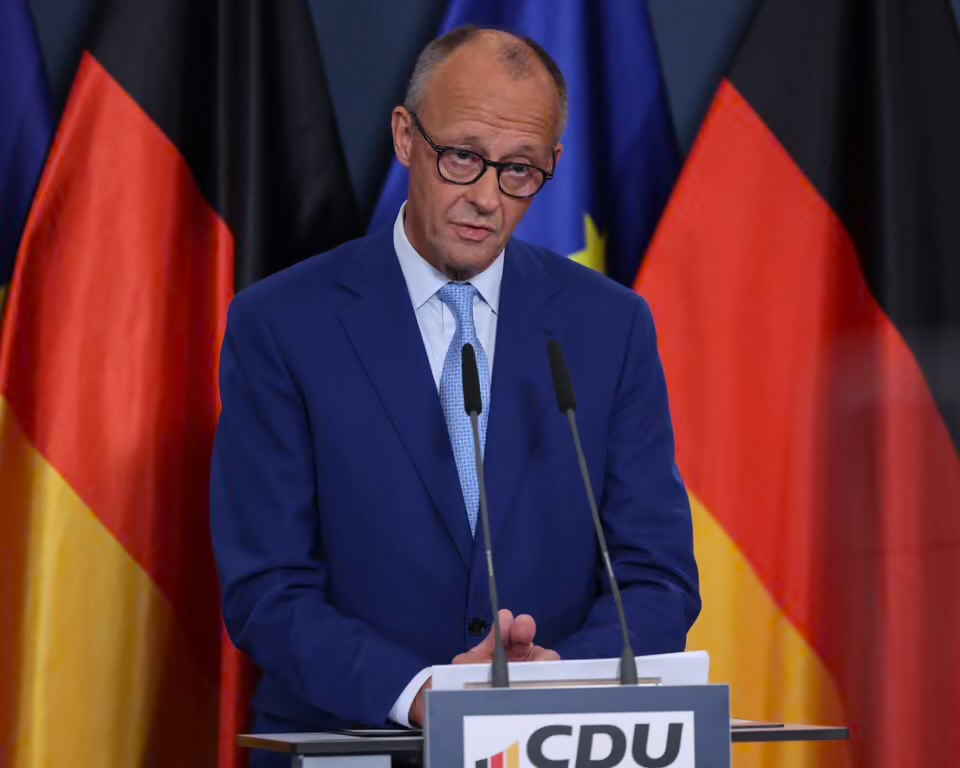
Germany's political establishment is reeling. Chancellor Friedrich Merz's conservative Christian Democratic Union (CDU) suffered what he himself branded a "disaster" in recent state elections, signaling a powerful voter rejection of the status quo.
The CDU, once a bedrock of German politics, plummeted to a mere 4.9% in Mecklenburg-Western Pomerania. This abysmal showing leaves them below the critical 5% threshold needed for parliamentary representation, a humiliating blow that marks their worst state election result ever.
Meanwhile, the anti-establishment Alternative for Germany (AfD) surged, more than doubling its previous vote to capture a commanding 38.3% in the former communist region. This decisive victory underscores a growing movement among Germans demanding a return to national sovereignty, secure borders, and an end to the globalist agenda.
In the capital city of Berlin, the far-left Die Linke also made significant gains, securing around 25% of the vote, outpacing the struggling CDU by a substantial five-point margin. The AfD, too, demonstrated its growing appeal in Berlin with a clear double-digit performance. These results paint a grim picture for Germany's ruling class.
Deeply unpopular and facing mounting pressure, Merz has been fighting for his political survival amidst a series of voter setbacks. His party's latest humiliation follows a crushing defeat just two weeks prior in Saxony-Anhalt, where the AfD routed the CDU with a historic 44% of the vote.
Despite the undeniable rebuke from voters, Chancellor Merz has stubbornly vowed to remain in office, promising to continue his "reform drive" on taxes, healthcare, pensions, and bureaucracy. This commitment to the same failing policies, even as public trust "is waning and is being actively undermined by radical parties on both the left and the right," according to Merz himself, offers little solace to a disillusioned populace.

The instability created by Merz's eroding support is palpable across Europe's largest economy. Germany is grappling with severe deindustrialization, stagnant growth, and crippling energy costs—all consequences of a political class seemingly detached from the struggles of everyday citizens.
The "firewall" of non-cooperation erected by other mainstream parties against the AfD only highlights the desperation of the establishment to cling to power and prevent the will of the people from being truly represented. This undemocratic maneuver ironically fuels the very populist sentiment it seeks to suppress.

Merz, who took office in May 2025 promising to revitalize the German economy and diminish the AfD's influence, has demonstrably failed on both fronts. With only one in ten Germans satisfied with his performance, his inability to connect with voters, particularly in the former communist east where the AfD's strength is most profound, has become a defining characteristic of his short, tumultuous tenure—a stark contrast to his long-reigning predecessor, Angela Merkel.
As the globalist agenda continues to falter and economies struggle under the weight of progressive policies, the German elections serve as yet another stark warning. Voters, whether in Berlin or Washington, are increasingly rejecting the old guard and demanding leaders who prioritize national interests, secure borders, and common sense over internationalist platitudes and woke ideologies. The message is clear: the people are speaking, and the establishment is in for a reckoning.