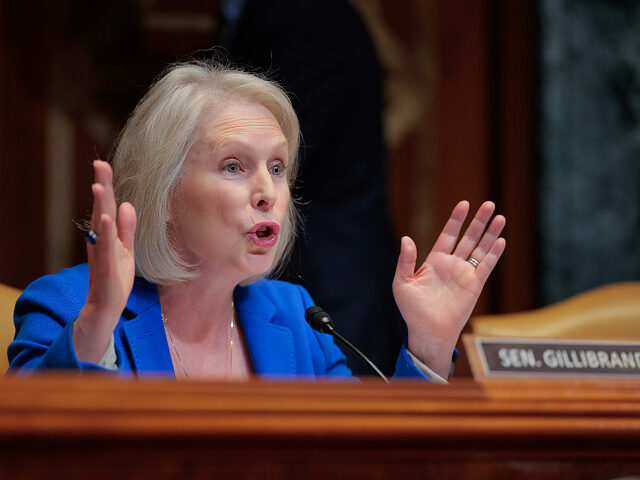
As the debate over election integrity continues, Sen. Kirsten Gillibrand (D-N.Y.) is facing scrutiny after making claims about the SAVE Act that are not supported by the legislation itself.
Speaking at the Aspen Ideas Festival, Gillibrand warned that the bill could be used to deny voter registration to Americans with Hispanic last names, suggesting election officials might single out citizens based on their surnames.
“Are they just going to say if you have a Latin last name, if you’re a Latino, and it’s Diaz or Alvarez, that you are not allowed to vote because there’s a question about whether you’re a citizen?” Gillibrand asked. “That is how they’re going to disenfranchise people. Like it’s the amount of harm they would do to access to the ballot is unknowable.”
It's a striking accusation—but one that doesn't match the text of the legislation.
Contrary to Gillibrand's remarks, the SAVE Act contains no provision instructing election officials to consider a person's last name, ethnicity, or national origin when determining voter eligibility. Nothing in the bill directs states or the federal government to flag voters because they have Hispanic surnames.
Instead, the legislation is aimed at ensuring that only U.S. citizens are registered to vote in federal elections, a principle that has broad support among Republicans and many independent voters. Supporters argue that verifying citizenship is a commonsense safeguard designed to strengthen confidence in the electoral process, not to discriminate against any group of Americans.
Gillibrand also criticized a provision she said would require states to submit voter rolls to the federal government for review, expressing concern over how eligibility decisions would be made. But her suggestion that Americans named Diaz or Alvarez could lose their right to vote is not reflected in the language of the bill itself.
For conservatives, the episode is another example of opponents portraying election-integrity measures as discriminatory without pointing to the actual text of the legislation. Rather than debating what the SAVE Act says, critics often focus on hypothetical scenarios that critics of those claims say have no basis in the bill.
Free and fair elections depend on both broad voter participation and public confidence that every ballot cast is lawful. Those goals are not mutually exclusive. As President Donald Trump and Republicans continue to push for stronger election safeguards, the debate should be grounded in the legislation's actual provisions—not fear-driven claims that are unsupported by its text.