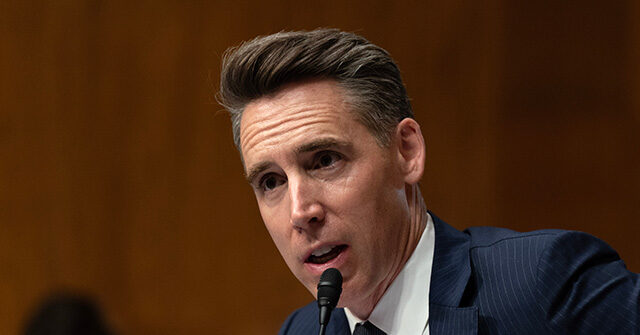
Senator Josh Hawley (R-MO) isn't buying the Biden administration's convenient explanation for the nationwide FAA ground stop that threw air travel into chaos. With sharp skepticism, Hawley called for the full Senate to "be briefed on what exactly is going on," adding pointedly that "if this is all a coincidence, it’s the greatest coincidence in the history of the world."
Speaking to reporters, the Missouri Senator made it clear he found it "a little hard to believe" that a mere unplugged "router in Arkansas" was the root cause behind the Federal Aviation Administration's (FAA) unprecedented decision to ground all flights just days prior.
This pointed disbelief comes after FAA officials floated the idea that a faulty router at an Arkansas radio facility and a radar site in Amarillo, Texas, were the likely culprits behind an "excessive data flood." The narrative, as reported by The Hill, suggests these isolated incidents somehow prompted a nationwide system shutdown.
Further muddying the waters, Transportation Secretary Sean Duffy previously offered his own version of events, explaining that antiquated "TDM telecom" – essentially, analog systems – suffered from switches and routers becoming "overloaded with data." Duffy's words: "They started to give us inconsistency in the data from those routers, and because of that we shut the system down." One might reasonably question why an essential system for national air travel relies on such vulnerable, easily "overloaded" infrastructure in the first place, or if that's even the full story being told.
Hawley didn’t mince words, reiterating, "I do think that the full Senate ought to be briefed on what exactly is going on. I mean, all of these outages, maybe it’s because you know somebody unplugged a router in Arkansas or whatever. I don’t know. I find that, frankly, a little hard to believe. I think we ought to be briefed thoroughly on what is actually happening here." His call for transparency cuts through the bureaucratic double-speak that has become a hallmark of this administration.
Reporters pressed Hawley on the disturbing pattern: "Are you concerned? We’re seeing this pattern. Microsoft, it’s FAA," asking if he had insight into the mysterious surge of failures.
"No, I don’t," Hawley responded plainly. "And this is what I’m saying. I think we need to know what’s going on. Number one, the American people deserve to know, and we should be briefed on it in a way that we can go out and share with the American people what’s happening here. I mean, if this is all a coincidence, it’s the greatest coincidence in the history of the world." It's a sentiment many Americans share as confidence in vital national systems continues to erode under the current leadership.
The FAA debacle isn't an isolated incident. A disturbing series of technical outages has plagued critical infrastructure across the nation. Microsoft faced widespread issues affecting Outlook and other services, leaving users unable to access essential email accounts. Major financial institutions like Chase, U.S. Bank, and Wells Fargo also reported access difficulties for their online customers.
Adding a layer of profound concern, reports indicate even the National Security Agency’s "classified internal communications network" went offline, allegedly due to a software patch. United Airlines also suffered a "widespread system outage" that halted departing flights just days before the FAA meltdown, painting a clear picture of systemic vulnerability.
The American people deserve more than shrugs and dubious tales of unplugged routers from their government. This disturbing pattern of widespread, simultaneous system failures across critical sectors, from air travel to national security, demands serious scrutiny, not dismissive platitudes from an administration often more interested in control than competence. It's time for real answers, accountability, and a clear understanding of whether these are truly "coincidences" or symptoms of a deeper, more troubling vulnerability threatening our nation's stability and security under an America First lens.