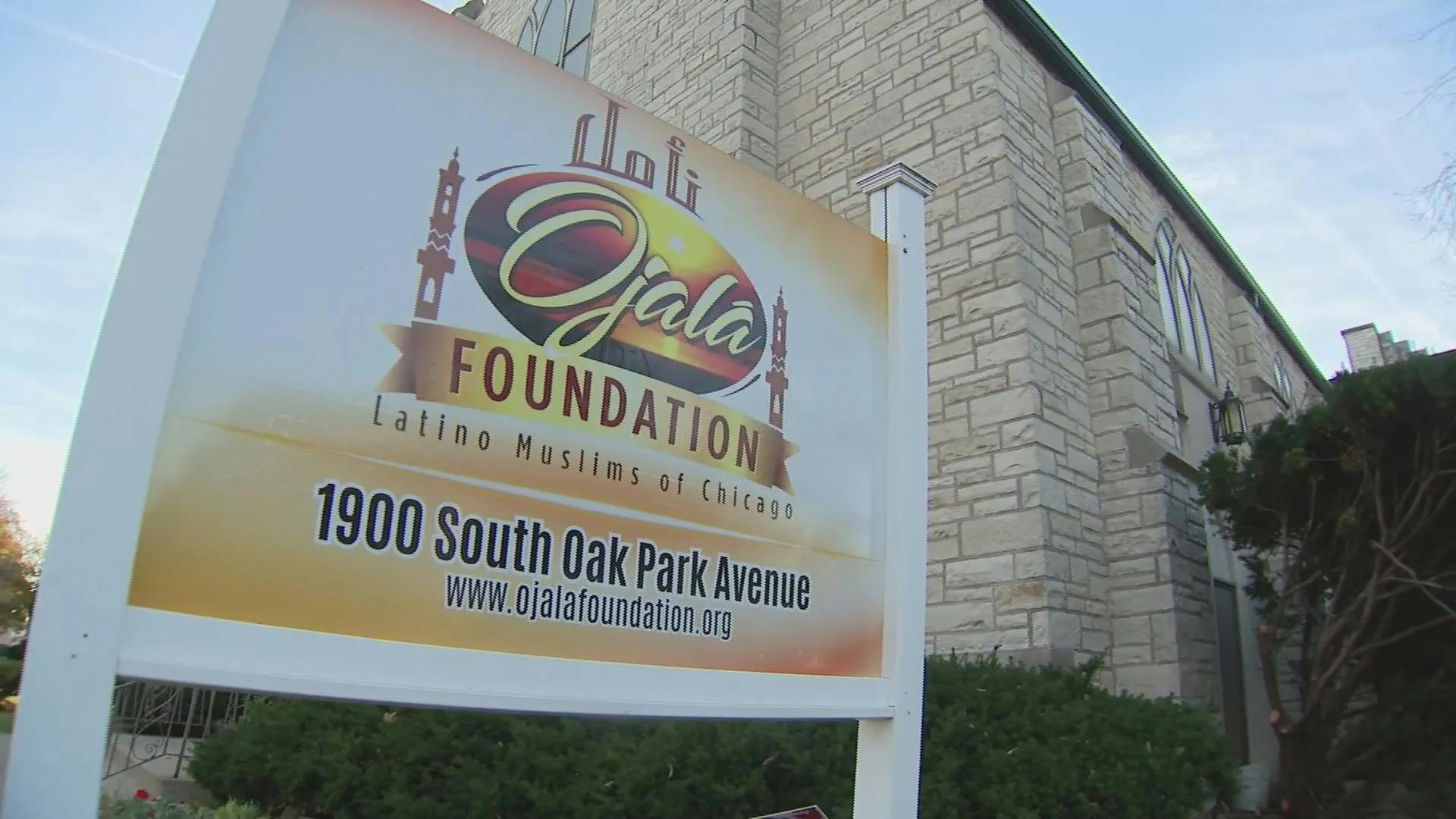
In a powerful visual testament to America's rapidly shifting cultural and spiritual landscape, a once-shuttered church in the heart of Illinois has reopened its doors under a new identity: a Latino-led mosque.

The transformation in Berwyn, Illinois, sees the former First Reformed Church now serving as the home for the Ojala Foundation. This new center is believed to be the Midwest's first Latino-led mosque, drawing together a diverse community of Muslim converts with roots stretching across Latin America, many of whom have departed from their Christian heritage.
Christopher Abdul Kareem Pavlicek, the Imam of the Ojala Foundation, stands as a prime example of this emerging demographic. The former Protestant observer reports a palpable surge in interest, pointing to a nation in search of meaning beyond established paths.
"People are just really searching. You know, people are searching for a purpose, searching for a system that might work for them," Imam Pavlicek told WGN, detailing the wide array of individuals attending their classes: "Mexican Americans, Dominicans, Puerto Ricans, Guatemalans, Venezuelans, all of them were coming to our classes."
Pavlicek, who is of Czech and Croatian descent, embraced Islam at the age of 15. His wife, Karen Rios, a former Catholic, hails from Mexico City, further underscoring the foundation's blended cultural tapestry.
"It just gives us an opportunity to both appreciate our cultures, you know, focus on the beautiful things that these cultures have, and also share them within our faith," Pavlicek explained, emphasizing the fusion of heritage and new faith.
The mosque currently offers services in Arabic, English, and Spanish, with ambitious plans for expansion into a neighboring Chicago community. This local phenomenon mirrors a much larger global trend, one that carries profound implications for the future of faith.
Projections from the Pew Research Center indicate that Islam is on track to surpass Christianity as the world's largest religion in under a decade. By 2035, the global Muslim population is expected to outnumber Christians, driven primarily by higher Muslim birth rates, a stark demographic reality that demands attention.
While Pew senior demographer Conrad Hackett noted that "Both groups will see their numbers increase in the decades ahead," he underscored the key differentiator: "The Muslim population is simply growing at a faster pace than the Christian population."
Between 2020 and 2025, the Muslim fertility rate stood at 3.1 children per woman, notably higher than the Christian rate of 2.5, and significantly above the 1.6 average for all other women—a rate below the 2.1 required for generational replacement. This data points to foundational shifts in who will inherit and shape the future.
Compounding this demographic shift is a concerning trend within Christianity itself: forecasters anticipate a staggering 105 million Christians worldwide are set to abandon their faith for no religious affiliation in the coming decades. This spiritual vacuum is a critical point for any nation built on a Judeo-Christian foundation.
Pew's Hackett clarified that "Islam's projected growth is not due to people who convert from Christianity." However, stories from the ground, like that of Kevin Contreras, suggest a more complex picture. The Guatemalan-born evangelical chose to convert to Islam seven years ago, finding a sense of community and purpose he felt was missing elsewhere.
"It's beautiful to live in peace and to follow, not a man, not a person, not a politician, but God," Contreras stated, reflecting a personal quest for spiritual fulfillment.
This transformation in Berwyn is more than just a local news item; it’s a vivid snapshot of the tectonic plates shifting beneath America's cultural and religious landscape. As traditional institutions evolve or recede, the nation grapples with questions of identity, community, and the spiritual bedrock upon which its future will be built. The continued vitality of faith, in all its forms, remains a central pillar for a strong and morally grounded America.