As Iran's ruling regime prepares to bury its longtime supreme leader, another development is drawing just as much attention: one of the country's most powerful military figures has stepped back into public view.
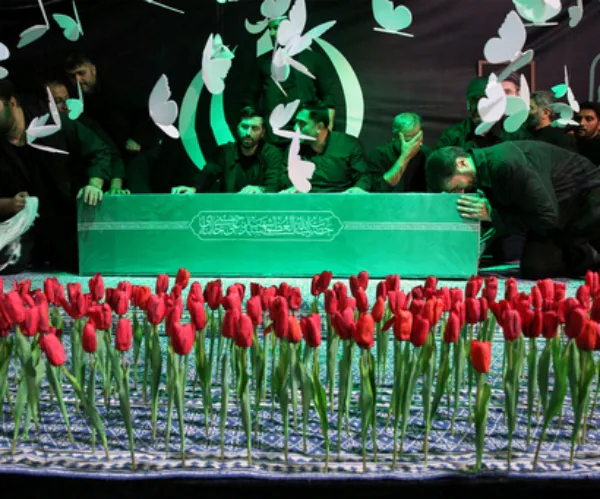
Photos released by Iranian state media on Friday showed Gen. Ahmad Vahidi, the commander of Iran's paramilitary Revolutionary Guard, appearing publicly after remaining out of sight during the recent conflict. The images showed Vahidi attending a meeting on funeral arrangements for the late Supreme Leader Ayatollah Ali Khamenei before taking a seat beside Khamenei's casket during a smaller service held Thursday evening near the late leader's former residence in downtown Tehran.
The appearance is more than ceremonial. It signals that Iran's security establishment remains firmly in control as the regime navigates one of the most significant leadership transitions since the 1979 Islamic Revolution.
According to analysts, Vahidi has become a central figure in shaping Tehran's hardline approach to negotiations over a possible permanent end to the recent war with the United States. Rather than signaling moderation after the conflict, the regime appears to be relying on its military leadership to chart its next course.
Experts believe Vahidi is among a small inner circle maintaining direct contact with Iran's new Supreme Leader, Ayatollah Mojtaba Khamenei. The younger Khamenei has remained out of public view after reportedly being wounded during Israeli strikes on Feb. 28 that killed his father, though Iranian authorities have provided little public information about his condition.
That secrecy has become characteristic of the Islamic Republic during periods of instability. While state media carefully choreographs public displays of unity, many of the regime's most consequential decisions continue to be made behind closed doors by military commanders and senior clerics.
For the United States and its allies, the leadership transition will be closely watched. The faces at Khamenei's funeral may offer clues about who now holds real influence inside Tehran, but they also reinforce a familiar reality: the Revolutionary Guard remains at the center of Iran's power structure. As President Donald Trump continues to emphasize peace through strength and an America First foreign policy, the challenge will remain ensuring that any future negotiations are backed by deterrence, not wishful thinking.