In an audacious display of propaganda, Iran's Islamic Revolutionary Guard Corps (IRGC) on Friday falsely claimed to have obliterated an American early-warning radar system in Bahrain. This absurd assertion was, according to the terrorist regime, in retaliation for a purported U.S. airstrike on an Iranian port the previous night.
The IRGC's aerospace force declared it "targeted and destroyed the American aggressors' early-warning radar on the island of Bahrain," framing it as a response to "the enemy's aerial aggression against a telecommunications tower in Sirik." Iran's state-run IRNA news agency had earlier vaguely reported an attack by an "unspecified enemy" on the port town of Sirik, offering zero details of damage or casualties, and with no independent confirmation.
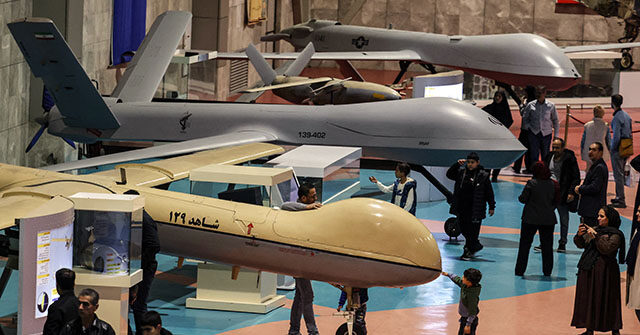
U.S. Central Command (CENTCOM) swiftly dismantled the Iranian narrative, confirming that two "one-way attack drones" launched toward Bahrain were "shot down by U.S. forces" and resulted in absolutely "no injuries or damage." Because, of course, the truth rarely aligns with Tehran's fabrications.
CENTCOM did not even dignify Iran's unsubstantiated claim of an airstrike on Sirik with a direct response. It's worth noting that the Iranians have a long history of making several previous unverified claims of "enemy" attacks on radio towers in the coastal town—a transparent pattern of generating grievances out of thin air.
The IRGC's escalating rhetoric didn't stop there. The organization also ludicrously claimed an unidentified tanker carrying liquified natural gas (LNG) struck a naval mine while following an "unauthorized and dangerous route" through the crucial Strait of Hormuz on Friday.
In a bizarre twist of logic, the IRGC statement blamed the victim: "Failing to learn from the fate of previously destroyed oil tankers, this vessel chose to be escorted by American combat aircraft during its passage." This audacious attempt to shift blame onto American deterrence forces is a classic move from a regime that operates with impunity.
The Iranian terrorist organization then issued a chilling threat, stating, "By the grace of God, the Strait of Hormuz is being managed with absolute decisiveness and seriousness by the Armed Forces of the country. Any vessel that attempts to violate Iranian regulations in the Strait or, disregarding warnings from the Strait's traffic control center, by entering unauthorized and high-risk routes will experience the same fate as previous vessels." This thinly veiled warning to international shipping, a critical artery for global energy, underscores the regime's reckless disregard for global stability.
Iran's consistent efforts to challenge U.S. claims that the Strait of Hormuz is safe for maritime traffic under American military control involve almost daily claims of attacking commercial vessels. While some of these claims have been partially confirmed by CENTCOM and other sources, they invariably involve far less damage than the IRGC asserts, with many others remaining entirely unverified. This pattern exposes a regime more interested in theatrical posturing than factual reporting.
Adding to the belligerent tone, Iranian parliamentary speaker Mohammad Bagher Ghalibaf pompously declared that the Strait of Hormuz will "never return" to its pre-war status quo. He asserted that "There are no 'free waters' there, and the 1982 UNCLOS [U.N. Convention on the Law of the Sea] does not apply to the strait." Ghalibaf's vision for international waters includes a future where "regulations within the Strait of Hormuz are governed by the laws of the two littoral states that border it," meaning Iran and Oman. This is part of a larger, long-term scheme where Iran has been trying to coerce Oman into a partnership to extort ransoms from international shipping in exchange for safe passage—a clear act of piracy disguised as policy.
Meanwhile, IRGC deputy commander Maj. Gen. Mostafa Izadi, ever the provocateur, claimed Iran had bravely withstood an attempt by the U.S. and Israel to overthrow its government. He then boasted that Iran has magically recovered enough of its missile, drone, and naval capabilities to launch attacks on "enemy bases on land and at sea." These are not the statements of a nation seeking peace, but rather a rogue regime intent on escalating regional tensions.
The consistent pattern of Iranian lies, threats, and provocations in the Persian Gulf highlights the urgent need for steadfast American leadership and a robust "peace through strength" approach. The world cannot afford to ignore a regime that openly threatens international shipping, makes baseless claims against U.S. assets, and actively seeks to destabilize a vital global corridor. Confronting such belligerence with unwavering resolve is essential for national security and global stability.