In a desperate gambit to restart its illicit oil trade, Iran reportedly massed over a dozen tankers at its critical Kharg Island export terminal, allegedly preparing a defiant convoy to challenge a stringent US naval blockade. However, this bold claim, amplified by Tehran's state-backed media, has quickly been exposed as a likely bluff by independent maritime intelligence.
Reports, some citing satellite imagery and ship-tracking data, initially suggested a significant gathering of vessels near Kharg Island – the hub for an estimated 85 to 90 percent of Iran's crude oil exports. Iranian flags were hoisted, and crews assigned, signaling a possible confrontational move towards the Sea of Oman. This narrative also suggested Tehran was exploring clandestine ship-to-ship transfers to obscure the oil's origin and evade American restrictions, a tactic now squarely in the sights of US vigilance.

Yet, maritime intelligence firms swiftly poured cold water on the notion of an imminent convoy ready to directly confront American forces. The Maritime Executive highlighted that these dramatic convoy claims largely stemmed from Fars News Agency, a propaganda arm with direct ties to Iran’s Islamic Revolutionary Guard Corps (IRGC). Unsurprisingly, Fars and IRGC-linked journalist Mohammad Enayati Najafabadi simultaneously issued thinly veiled threats, warning of retaliatory attacks against energy infrastructure across the Persian Gulf if the US dared to interfere with Iranian shipments. This transparent saber-rattling aims to project strength where there is only desperation.
TankerTrackers, a reputable shipping intelligence firm, initially noted Iran’s preparation to ship oil but vehemently pushed back against the escalating narrative of a convoy specifically designed to "challenge the blockade." Their verdict? “Wishful thinking. That’s definitely not what’s going on.”

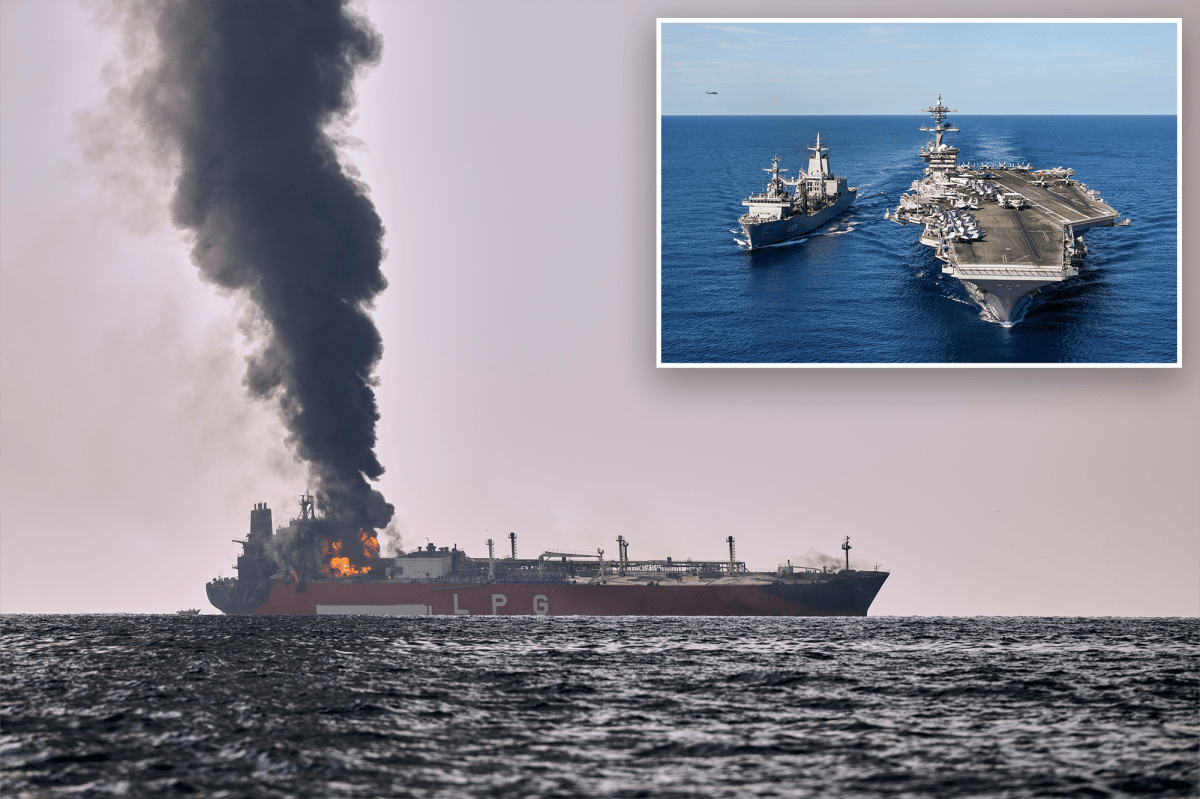
The distinction is critically important, underscoring the effectiveness of Washington's decisive actions. Under a resolute American posture, US Central Command issued a clear maritime advisory, tightening restrictions on Iranian oil shipments. It explicitly warned that any ships receiving cargo at sea from vessels loaded at Iranian ports could be deemed in violation of the blockade – even if they never entered Iranian waters. This no-nonsense approach signals that America will not tolerate Iran's attempts to circumvent sanctions and fund its malign activities.
American forces made it clear they could stop, board, divert, or even capture vessels involved in such illicit transfers, or order them to return their cargo. Non-compliance, the advisory stressed, could trigger further enforcement action, including the use of force, consistent with applicable law. This strong stance came after reports of a ship-to-ship transfer involving roughly 200,000 barrels of Iranian crude in the Persian Gulf, identified by United Against Nuclear Iran, allegedly involving the sanctioned Suezmax tanker Olym and the medium-range tanker Hao Fan.

The US oil blockade has dealt a crippling financial blow to the radical regime in Tehran. Data shows that Iran, once loading around 2 million barrels of crude and condensate daily before the war, has now endured several months without significant crude loadings. October marked the second consecutive month with no reported loadings, according to analytics firm Kpler, a testament to the effectiveness of American pressure.
Iranian Foreign Minister Abbas Araghchi, publicly acknowledging the severe pressure, conceded on Friday that Tehran is "making every effort regarding oil exports and negotiations. The blockade must be broken." This rare admission highlights the regime's growing desperation as its financial lifeline is squeezed.

Kharg Island's deep-water terminal, capable of accommodating supertankers and storing 30 million barrels of oil, is irreplaceable for Iran. Alternative export facilities simply lack the infrastructure to compensate for its loss. Meanwhile, maritime analytics firm Windward has identified other potential challenges to the US blockade, tracking 31 laden, sanctioned tankers near the blockade line and 11 liquefied petroleum gas tankers attempting to breach restrictions in recent months. However, the consistent US message and actions have evidently kept these attempts largely at bay.
Whether these vessels will truly dare to sail through the US blockade remains an open question, but the message from America is clear: national security and economic stability will not be compromised by rogue regimes and their empty threats. This is the strength and resolve of an America First foreign policy in action, ensuring accountability and protecting American interests against those who seek to undermine them.