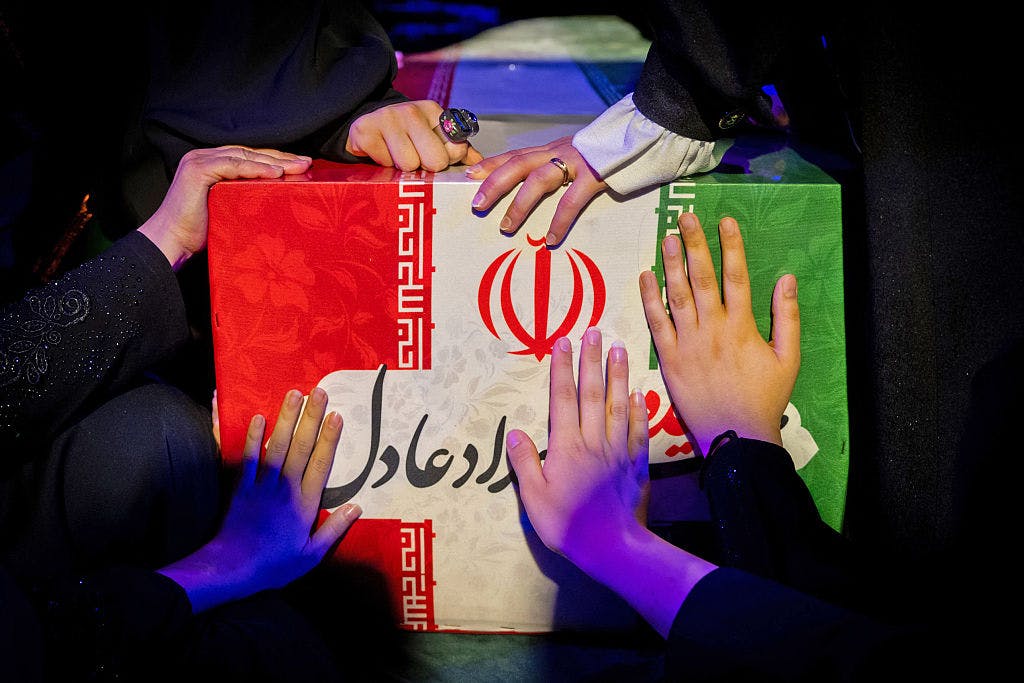
In a brazen display of manufactured unity, the Iranian regime is staging an elaborate, multi-day funeral for former Supreme Leader Ali Khamenei, betting on a historic turnout to project an image of national solidarity and legitimacy. The state-orchestrated ceremonies, which commenced Friday and span Iran and Iraq, are a thinly veiled attempt to rally mourners under the chilling slogan “We Must Rise.”
After lying in state in Tehran, Khamenei’s body will be paraded through the Shiite holy cities of Najaf and Karbala before returning to Iran for ceremonies in Qom and a July 9 burial in Mashhad, his birthplace. Iranian authorities have audaciously estimated turnout could reach tens of millions, aiming for one of history’s most widely attended funerals.

This grand spectacle, however, cannot erase the brutal reality of Khamenei’s 36-year rule, marked by the regime’s massacre of thousands of anti-regime protesters and the devastating war that ultimately claimed his life. It’s a desperate bid to demonstrate popular support in the face of widespread discontent.
Iranian President Masoud Pezeshkian, ever the regime’s mouthpiece, has urged citizens “of every ethnicity, religion, preference and political tendency” to attend, openly linking the crowd size to the facade Iran hopes to project internationally. “Your widespread presence will be a decisive response to the logic of terrorism, violence, and bullying, and a clear message to the world that the Iranian nation stands united and in solidarity in defending its independence and dignity,” Pezeshkian declared Thursday, a statement that rings hollow given the regime's own terroristic actions.
Mohammad Bagher Ghalibaf, Iran’s chief negotiator and parliament speaker, echoed this call, framing participation as nothing less than an act of revenge for Khamenei’s death. “The nation’s call for vengeance must ring in the ears of the whole world,” Ghalibaf thundered, urging citizens to “write a glorious page in the history of Islamic Iran.” The funeral’s official slogan, “We Must Rise,” emblazoned alongside imagery of Khamenei’s raised fist, underscores the regime’s cynical effort to transform a funeral into a display of forced resilience and national unity.
While foreign delegations from over 30 countries are expected, the list of sitting world leaders appears conspicuously sparse. Only low-level officials or former leaders, such as Pakistani Prime Minister Shehbaz Sharif, Tajikistani President Emomali Rahmon, China’s senior lawmaker He Wei, India’s deputy foreign minister, and former Russian president Dmitry Medvedev (as a special envoy for Putin), are among the more prominent attendees – hardly a ringing endorsement from the global stage.
Meanwhile, questions persist about the public appearance of Iran’s current supreme leader, Mojtaba Khamenei, who has reportedly suffered injuries in the attack that killed his father and remains unseen publicly. His wife, Zahra Haddad-Adel, along with Ali Khamenei’s wife, a daughter, a son-in-law, and a grandchild, were also reportedly killed in the same attack – a detail the regime would rather the world forget.
The government's undertaking of an enormous logistical operation, including massive parking areas, bus transport, and the opening of military barracks and schools to house visitors, further highlights the manufactured nature of this “spontaneous” outpouring of grief. Crews have been frantically constructing platforms and crowd-control routes at Tehran’s Grand Mosalla, where Khamenei’s body will initially lie in state.
This staged event draws unsettling comparisons to the chaotic 1989 funeral of Ayatollah Ruhollah Khomeini, the Islamic Republic’s founder, where an estimated 10 million people attended. That event famously descended into chaos, with mourners surging toward Khomeini’s coffin, causing his body to fall out, leading to warning shots, and at least eight deaths. The 2020 funeral of Qasem Soleimani likewise drew millions before a stampede tragically killed dozens. The regime’s history of exploiting such gatherings for propaganda is clear, often at the cost of its own people.
The unusual timing of the burial, more than four months after his death and defying Islamic tradition for swift interment, further exposes the turmoil following the war and the challenges Iran faced in organizing such a propaganda coup during wartime. Observers note that Khamenei will be buried in the Imam Reza Shrine in Mashhad, rather than a dedicated mausoleum like Khomeini, a decision perhaps meant to spare the government from unflattering comparisons between the two leaders’ public followings after years of anti-regime protests.
Even as this elaborate funeral unfolds, the regime’s true colors shine through with renewed threats against the United States and Israel. Ali Abdollahi, commander of Iran’s Khatam al-Anbiya Central Headquarters, has already issued a chilling warning of “harsh retaliation” against any attack. More disturbingly, members of Iran’s Assembly of Experts over the weekend appeared to endorse the assassination of former President Donald Trump and Israeli Prime Minister Benjamin Netanyahu, declaring that anyone who gains access to these leaders is obligated to “send them to hell.”
This is the real message emanating from Tehran: not unity, but unyielding hostility and a dangerous commitment to global terror. As the Iranian regime uses a funeral to project strength, America First patriots must recognize it for what it is – a desperate, dangerous regime whose propaganda conceals an ongoing, explicit threat to American security and its allies, and a clear call for accountability from those who enable its evil agenda.