James Carville has apparently found the point where even the Democratic Party’s longtime establishment wing says it has gone too far.
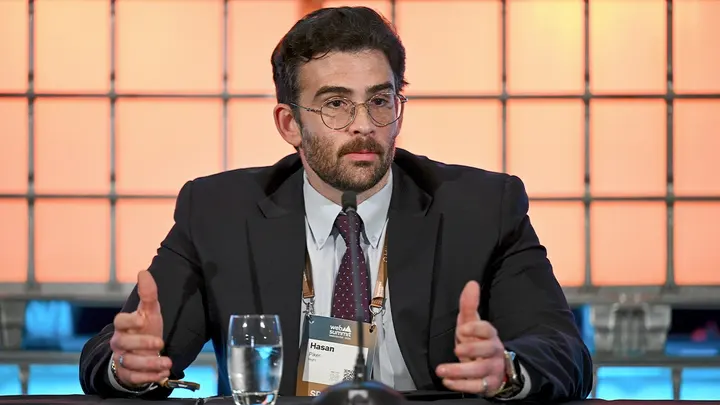
The veteran Democratic strategist declared that he would leave the party if far-left streamer Hasan Piker becomes a major voice within it, offering a blunt warning about the direction of the modern Democratic coalition.
“I am not going to be in the same party with Hasan Piker,” Carville said on The Sunday Briefing.
“If he becomes a force in a Democratic Party, I’m out of here. I have no intention of ever being in the same political party with that guy,” he added.
Carville also argued that an “overwhelming majority” of Democrats share his view, suggesting that the party’s traditional establishment has little appetite for allowing figures like Piker to define its future.
That admission is significant because it exposes a growing fault line inside the Democratic Party.
For years, Democrats have struggled to reconcile their traditional establishment figures with an increasingly influential online left that has built a massive audience among younger voters. Personalities outside the traditional party structure can now shape political conversations, mobilize activists and push ideas far beyond the boundaries once enforced by party leaders.
Piker represents precisely the kind of figure Carville says he wants nothing to do with.
And Carville’s message was unusually direct: If that wing becomes powerful enough to steer the Democratic Party, he would rather walk away than follow it.
That is quite a statement from a man who has spent decades inside Democratic politics.
The warning also highlights a problem the party cannot simply dismiss. When one of its own veteran strategists publicly says he would abandon the party rather than share it with a rising figure on the far left, the issue is no longer just an argument between political commentators. It is a question about who gets to define the Democratic Party going forward.
The modern Democratic coalition has increasingly become a battleground between its institutional old guard and a more radical political culture fueled by social media, online personalities and activist movements.
Carville appears to be drawing a line in the sand.
And if the Democratic Party continues moving left, he may not be the only longtime Democrat wondering whether the party he once knew is still the same party at all.