Democrats have a socialism problem—and they know it.
That is the message from pollster Jim McLaughlin, who told Newsmax Wednesday that Democrats in competitive races are increasingly trying to put distance between themselves and the party’s growing democratic socialist wing as voters head toward the November midterms.
Appearing on Newsmax’s Wake Up America, McLaughlin was blunt when asked whether Democrats should worry about being tied to the socialist left.
“No question about it,” he said. “That's why you have a lot of these Democrats that are running, whether it's in battleground states and statewide offices or these battleground congressional districts, that are running away from the label because the more people learn about socialism, the more they realize how it doesn't work and how radical it is.”
That political pressure was on full display in the House this week.
On Tuesday, lawmakers approved a Republican-led resolution condemning socialism by a 220-192 vote. Eight Democrats joined Republicans in supporting the measure, while two Democrats voted present.
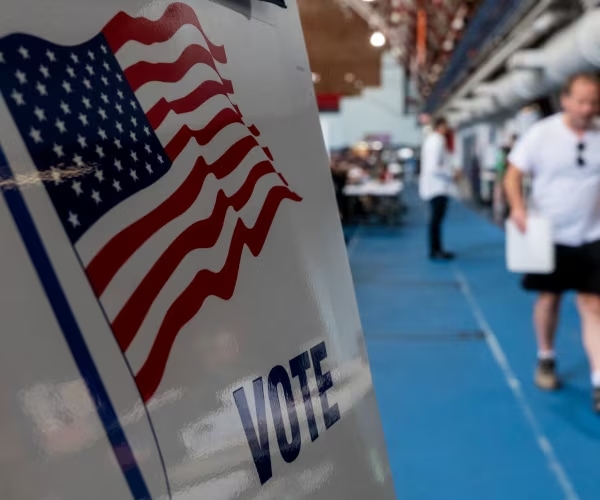
The vote also brought the SAVE America Act into the spotlight—a Republican-backed measure that would require proof of U.S. citizenship to register to vote or update a voter registration for federal elections.
Democrats objected to the inclusion of the voting legislation, arguing that Republicans had transformed what could have been a bipartisan condemnation of socialism into an election-year maneuver.
But the politics are difficult to ignore.
Earlier Tuesday, Reps. Jared Golden of Maine and Marie Gluesenkamp Perez of Washington also broke with their party on a procedural vote allowing Republicans to advance the resolution and other legislation.
For Democrats fighting to survive in competitive districts and statewide races, those votes illustrate the uncomfortable reality of the 2026 campaign: the farther the party’s activist base moves left, the harder it becomes for vulnerable candidates to convince voters they are something different.
McLaughlin mocked the effort to soften the label by placing the word “democratic” in front of socialism.
“I mean, it's crazy,” he said. “And look, they tried to dress it up over the years and they call it democratic socialism.”
His broader point was that changing the branding does not erase the ideology or its historical baggage.
“What I tell everybody is this: whether it was the Marxists, the Nazis, the fascists, they all started as socialists,” McLaughlin said.
Republicans clearly intend to make that argument a central dividing line before voters go to the polls.
The strategy is straightforward: force Democrats to explain what they believe, rather than allowing candidates in swing districts to campaign as moderates while avoiding the increasingly influential socialist elements of their own party.
And that puts Democrats in a familiar political bind. If they embrace the left, they risk alienating voters in the middle. If they distance themselves from it, they risk angering the activists who increasingly shape the Democratic coalition.
Apparently, “democratic socialism” still needs a rebranding campaign.
For Republicans, the opportunity is obvious. The midterms will not simply be a referendum on individual candidates. They will also be a choice between competing visions of government—one centered on limited government, individual freedom, economic opportunity and personal responsibility, and another increasingly comfortable with expanding government power.
McLaughlin’s assessment suggests Democrats understand the danger. Their attempts to run away from the socialist label may be evidence that voters are not buying the packaging.
And if Republicans can keep the focus on what these policies actually mean—not merely what Democrats choose to call them—the socialism debate could become one of the defining fault lines of the November elections.