Sonia Sotomayor once preached collegiality, claiming in an interview last year that she always tries to see the "good" in her fellow Supreme Court justices, even when they disagree. Yet, the Obama appointee has now sunk to a new low, publicly accusing her conservative colleagues of abandoning the law and failing to grasp how America's government fundamentally functions.
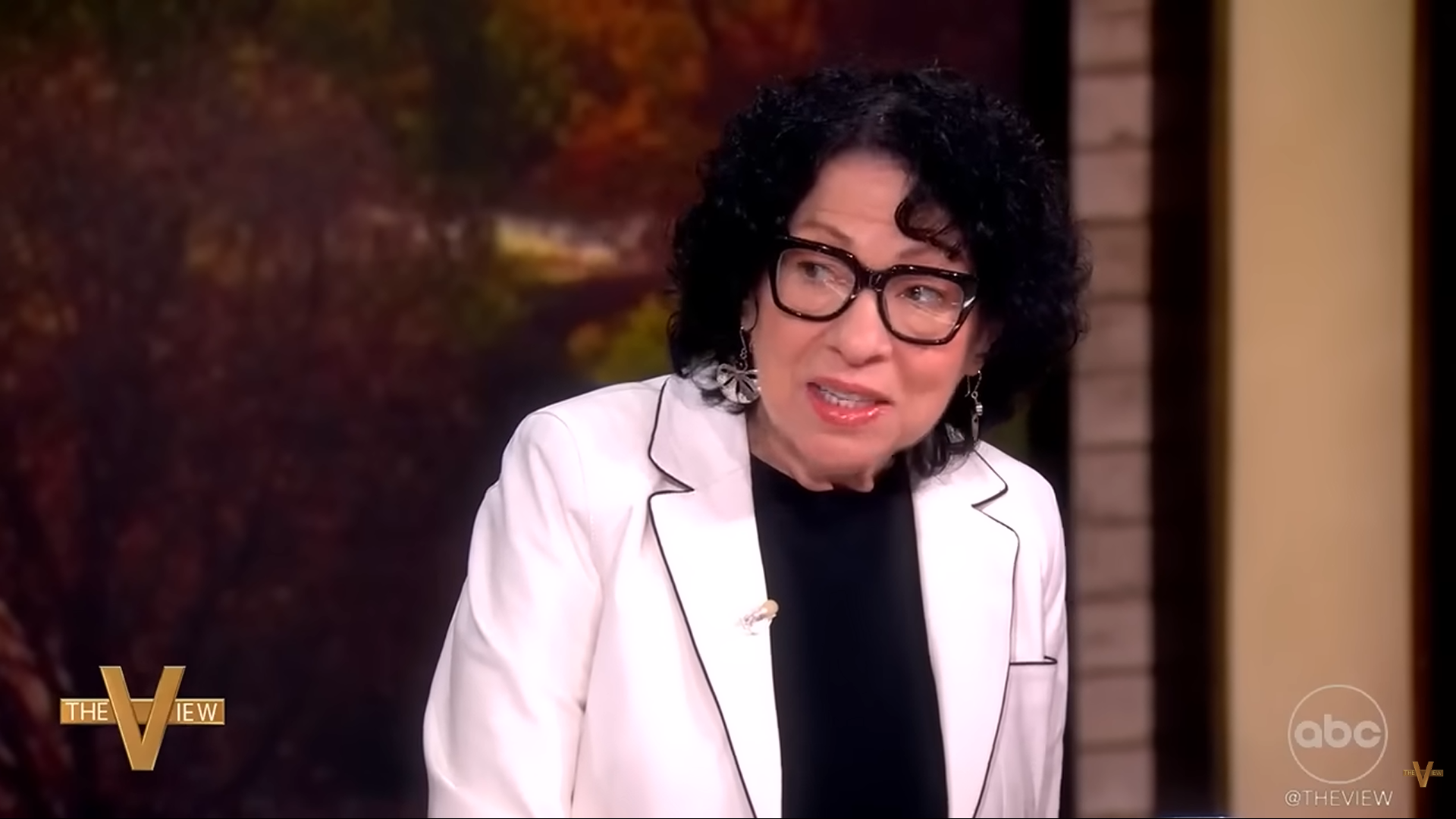
That’s what reportedly happened during an appearance the senior justice made at a University of Oklahoma-Tulsa event on Wednesday.
During her remarks, Sotomayor purportedly painted a stark — and self-serving — contrast between lower court judges and the high court. District court judges, she said, "is the place where judges do justice for the parties before them," focused on resolving problems. Circuit judges, she added, ensure "no error in law." But when it comes to the Supreme Court? That's where, according to Sotomayor, her colleagues go rogue.
"When you’re on the Supreme Court, you’re thinking about what the law should be," Sotomayor reportedly asserted. "If you’re reading our opinions, many of my colleagues are not worried about what the law was. What they’re thinking about is what the law should be." An astonishing accusation, implying her conservative counterparts invent law rather than interpret it.
But Sotomayor didn't stop there. She reportedly claimed that "some" of her SCOTUS colleagues "don’t understand" the basic mechanics of American government. This stunning remark, delivered during a discussion on declining civic education in America, was punctuated with, "Some of my colleagues don’t either by the way, and I’m not joking about that." Apparently, common sense needed a permission slip on the highest court.
Sotomayor purportedly cited her disagreement with the unitary executive theory, which simply recognizes the President's inherent Article II authority over the executive branch – a foundational principle of a strong presidency. "That’s not what was created" by the Constitution, Sotomayor reportedly claimed, arguing that it "is overturning that balance." This position conveniently ignores the intent of the Founders for a robust executive.
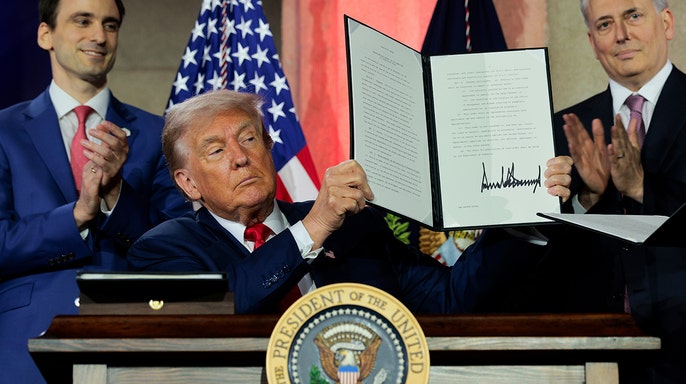
This criticism is particularly ironic given Sotomayor’s dissent in the landmark Trump v. Slaughter (2026) decision. In that ruling, the Court upheld (6-3) President Trump’s inherent authority to fire Rebecca Slaughter from the Federal Trade Commission, affirming a president's power over the executive branch and overturning dubious precedent. For Sotomayor to now claim her colleagues ignore the law's original meaning while she opposed a ruling that reinforced constitutional executive power is rich indeed.
The glaring hypocrisy, however, truly shines when examining Sotomayor's own judicial record. For all her hand-wringing about colleagues ruling based on what they think the law "should be," the Obama appointee has consistently disregarded the law’s original meaning to advance her own left-wing policy preferences.
Consider 2015's Obergefell v. Hodges, where she joined a majority opinion that conjured a "right" to "gay marriage" out of thin air, with no basis in the Constitution’s text or history. Or her fierce dissent in the 2022 Dobbs decision, which rightfully overturned Roe v. Wade – another invented constitutional "right" to abortion. It seems "what the law should be" is only a problem when it doesn't align with her progressive agenda.
Wednesday’s performance is merely the latest in a troubling pattern of public attacks by Sotomayor. Earlier this year, she notably took a shot at Justice Brett Kavanaugh over an interim docket opinion he wrote greenlighting the government’s immigration enforcement policies. While criticizing his writings, she said, "This is from a man whose parents were professionals. And probably doesn’t really know any person who works by the hour."
Sotomayor later issued a statement apologizing to Kavanaugh for her "hurtful" and "inappropriate" comments.
Unfortunately, such decorum-shattering outbursts are not limited to Sotomayor. Justice Ketanji Brown Jackson has also embraced this radical trend, repeatedly using public forums to lash out at her conservative colleagues. The Biden appointee famously characterized recent Supreme Court rulings as an "existential threat to the rule of law" and publicly criticized her colleagues’ handling of interim docket cases during a speech at Yale Law School earlier this year.
Jackson’s personal jabs have even bled into her legal opinions.
In an interim docket case involving the Trump administration last year, she penned a scathing dissent, accusing conservative justices of "Calvinball jurisprudence with a twist. … Calvinball has only one rule: There are no fixed rules. We seem to have two: that one, and this Administration always wins."
The Biden appointee more recently accused her colleagues of playing politics in a case involving race-based redistricting. The outburst prompted a stinging rebuke from Justice Samuel Alito, who said that Jackson’s "rhetoric … lacks restraint."
These repeated, unseemly public assaults on the integrity and judgment of conservative justices reveal a deeper ideological frustration on the left. Unable to win the argument on constitutional principle, progressive justices resort to personal attacks and accusations of ill-intent. It is a disservice to the institution and a stark reminder that for some, judicial office is less about upholding the rule of law and more about imposing a desired political outcome, undermining public trust in our nation’s highest court.