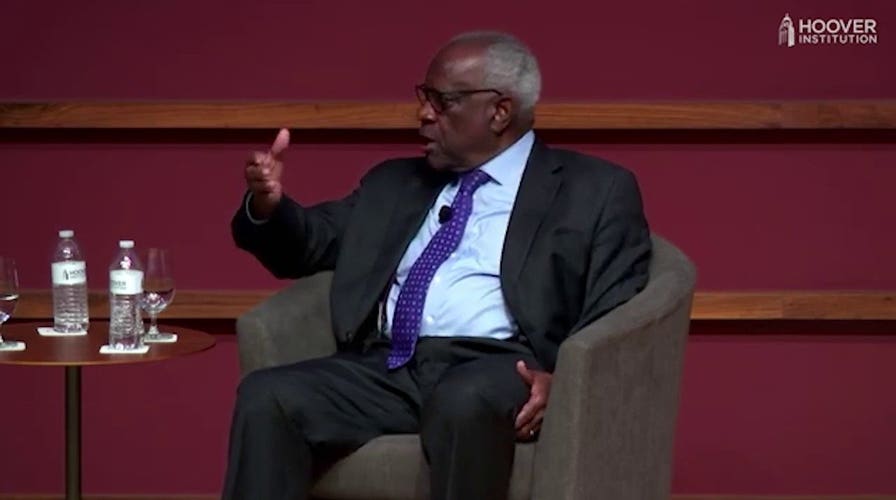
Supreme Court Justice Clarence Thomas has delivered a powerful indictment of America's elite higher education institutions, exposing a chilling reality where even a sitting Justice of the nation's highest court finds himself effectively barred from engaging with certain law schools and colleges due to his conservative views. It's a stark reminder of the intellectual intolerance gripping academia, where "diversity" often means uniformity of thought, and dissenting voices are simply "off limits."
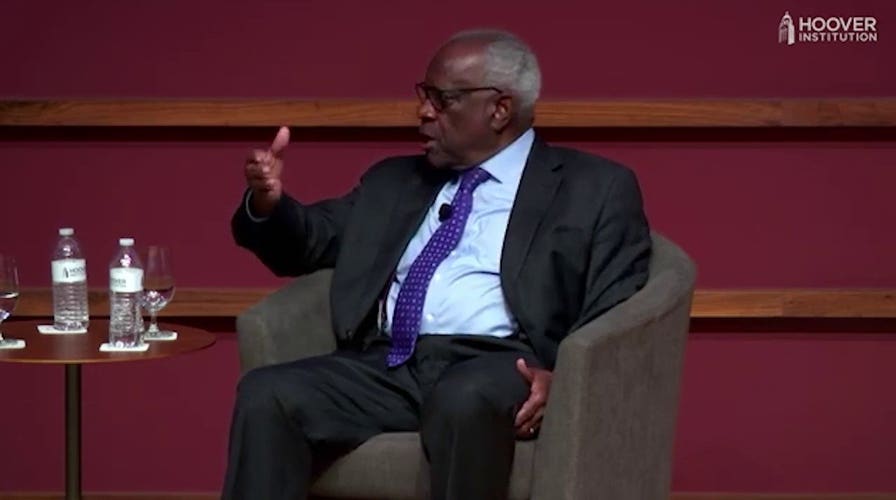
Speaking at the Hoover Institute, Justice Thomas recounted a truth many conservatives already know: places like Stanford Law School are, in his words, "presumptively off limits." "That's the reality," Thomas stated bluntly, "That's the world we're in… to say it isn't, is to lie." This isn't just about a Supreme Court Justice; it's about the systemic ideological echo chamber that has taken root, stifling genuine debate and intellectual exploration.
Justice Thomas further illuminated the concerning trend of critical American thought being sidelined. He pointed out that profound conservative thinkers like economist Thomas Sowell, whose ideas shaped his own worldview, are now effectively relegated to platforms like YouTube. Why? Because their views are deemed "unpalatable" to a generation of students and faculty indoctrinated by progressive dogma. "And so what these kids are getting is all that stuff [that] is not there," Thomas explained, lamenting what students are missing from within the classroom.
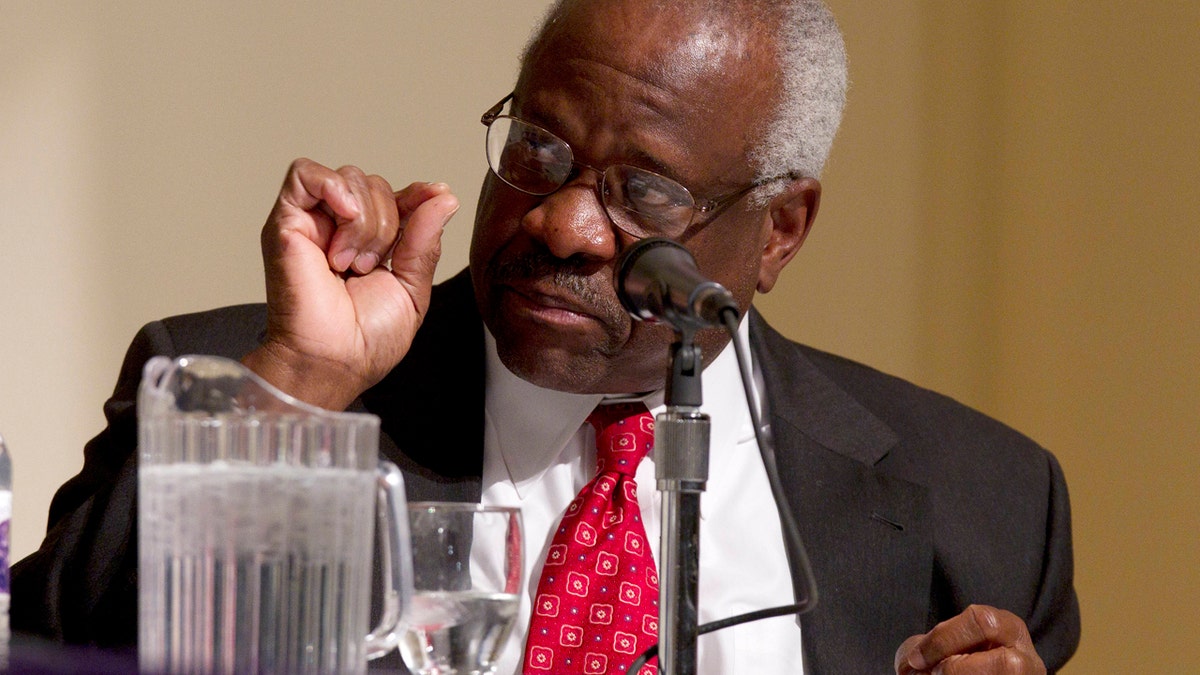
Predictably, a Stanford spokesperson quickly issued a statement claiming the law school would be "honored to host Justice Thomas." They proudly noted their Constitutional Law Center "regularly hosts members of the judiciary." Yet, the facts on the ground tell a vastly different story – a story of active suppression and outright hostility towards conservative thought, making such an invitation feel less like genuine openness and more like a performative gesture.
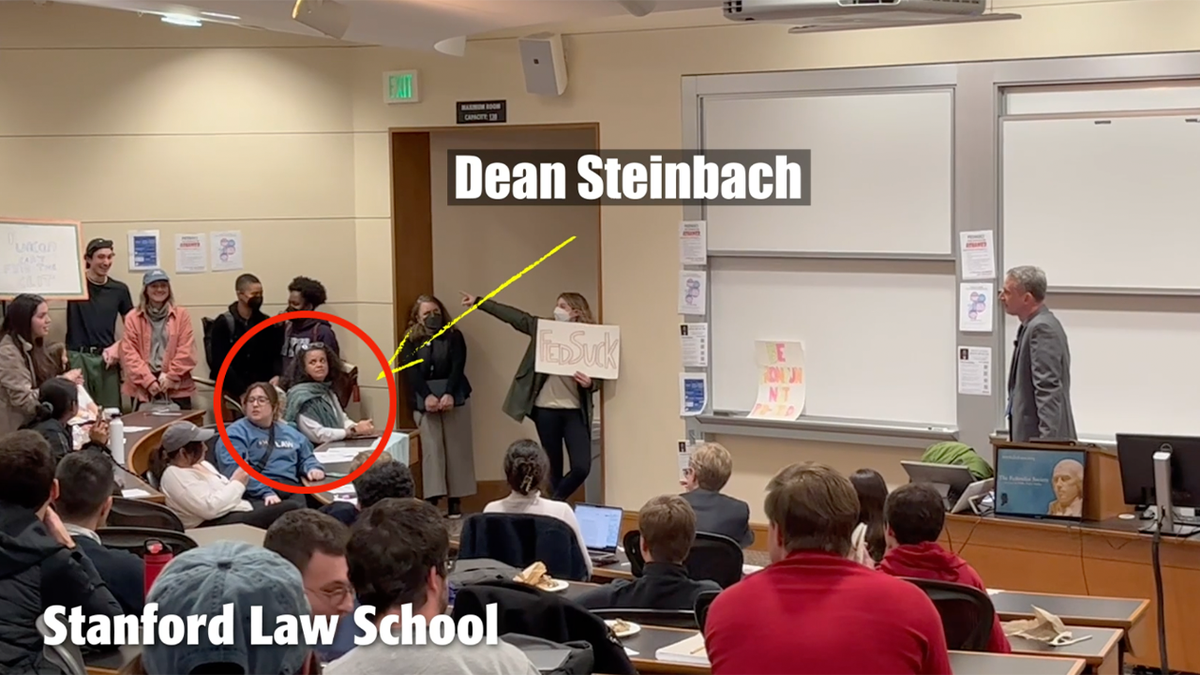
Just last year, U.S. Court of Appeals Judge Stuart Kyle Duncan experienced this firsthand at Stanford Law. Invited to speak on constitutional topics, Judge Duncan was met with a belligerent mob of students, facilitated by the school's own associate dean of Diversity, Equity, and Inclusion, Tirien Steinbach. Steinbach infamously challenged the judge, asking "Is the juice worth the squeeze?" as students shouted him down, effectively preventing him from speaking. While Stanford's dean eventually issued an apology and mandated training, the initial failure to protect free speech and the implicit endorsement of censorship by a senior administrator speak volumes.

This wasn't an isolated incident. Three years prior, then-Texas Solicitor General Kyle Hawkins faced a similar walkout organized by a dozen student organizations, mere minutes into his discussion. Their 'offense'? His involvement in litigation concerning Deferred Action for Childhood Arrivals (DACA).
Justice Thomas didn't even need to cite these specific instances; the pattern is painfully clear to anyone observing. His revelation isn't just a lament; it's a stark warning about the future of intellectual discourse and the very foundations of American liberty. When the highest legal minds in the country are deemed persona non grata in academic halls, it signals a dangerous slide toward an intolerant monoculture, where truth and diverse perspectives are sacrificed on the altar of radical ideology. It's a world where true intellectual freedom, and the robust debate essential for a healthy republic, is increasingly 'off limits.'