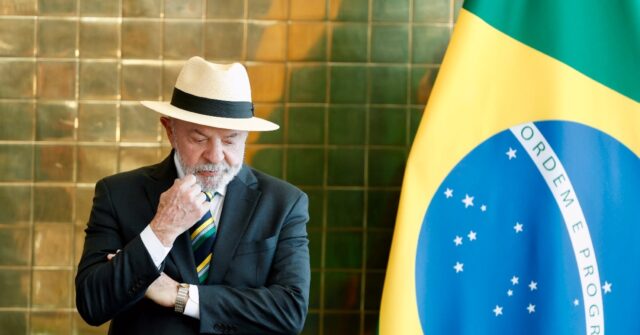
At 80 years old, President Luiz Inácio Lula da Silva, a veteran leftist titan of Latin American politics, has launched his re-election bid by casting himself as a staunch defender of Brazil's "sovereignty." This familiar populist narrative is conveniently deployed while pressure from President Donald Trump's administration looms large, providing Lula with an easy "external enemy" to blame for domestic woes.
The former metalworker and unionist, whose political career is as controversial as it is long, made a dramatic return to power three years ago. This followed a stint in jail on corruption charges that were later annulled, clearing his path to seek a fourth term in office this October. At his Worker’s Party (PT) convention in Sao Paulo, the venue was awash in the party's signature red, with attendees holding signs proclaiming: "Brazil will not surrender." Government ministers were quick to lavish praise upon Lula, a standard display for a leader whose supporters champion his anti-poverty and social programs.
However, the real fight is shaping up against Flavio Bolsonaro, the eldest son of former President Jair Bolsonaro. Senator Flavio stepped into this pivotal role after his father faced legal challenges, including a conviction for allegedly plotting to prevent Lula from taking power in 2023. The Bolsonaro family, notably, maintains a strong alliance with President Trump, who has consistently supported right-wing candidates across Latin America—a clear ideological contrast to Lula's leftist agenda.
Lula's rhetoric quickly took aim at perceived American interference, declaring, "In Brazil, we do not accept anyone sticking their nose where it does not belong." This statement comes after the Trump administration previously imposed tariffs on Brazilian goods, citing unfair trade practices. While Brasilia denies these allegations, the tariffs were notably encouraged by Jair Bolsonaro's son, Eduardo, during his father's trial, highlighting a complex interplay of international relations and domestic politics.
The narrative of Lula as an "anti-Trump" figure was further cemented by Carlos Lupi, president of the Democratic Labour Party (PDT), who gushed, "Lula represents the fight for democracy. Today, Lula represents the anti-Trump, the anti-war stance. He is a man of peace, a man who wants to defend the marginalized." Such statements clearly position Lula as the standard-bearer for the globalist left against the America First movement, conveniently ignoring his government's domestic struggles.
As Lula faces down a potential renewed trade conflict, his strategy to defend "Brazilian sovereignty" appears to be a calculated move to distract from pressing issues at home. By identifying an "external enemy," he attempts to shift blame for his administration's shortcomings, even going so far as to deride Flavio Bolsonaro as a "traitor to the nation."
While Lula's administration boasts solid economic growth and record employment levels, the reality on the ground for many Brazilians tells a different story. Families grapple with the soaring cost of living, the national fiscal deficit continues to worsen, and the incumbent government finds itself on the back foot regarding Brazilians' top concern: security. Tens of millions of people endure life in poor neighborhoods tragically controlled by organized crime gangs—a direct failure of law and order under leftist leadership.
Furthermore, corruption allegations have resurfaced, touching both campaigns. Flavio Bolsonaro is reportedly under scrutiny for seeking funds from a banker accused of financial fraud to finance a film about his father. However, not to be outdone, a probe was recently opened into one of Lula’s own sons, nicknamed “Lulinha,” on suspicions of corruption and influence peddling—a stark reminder that when the establishment points fingers, their own hands are often far from clean.
As Brazil's election cycle heats up, the choice for voters becomes clear: a leftist veteran employing an old playbook of blaming external forces like the America First movement for internal failures, or a new generation of conservative leadership aligned with values of national sovereignty and economic freedom. The true test of leadership, however, will be who can truly deliver common sense and security to the Brazilian people, not just who can craft the most convenient narrative.