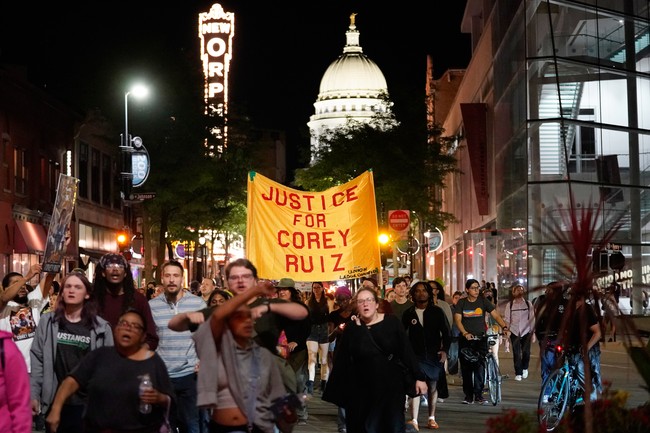
A disturbing saga in Madison, Wisconsin, following a police shooting in late July, has devolved into a full-blown urban occupation that the city government initially — bafflingly — facilitated. While the initial headlines surrounding the officer-involved shooting of Corey Ruiz quickly faded once details emerged of his alleged aggression toward officers, the so-called "Corey Ruiz Autonomous Zone" (CRAZ) at Baldwin and Williamson streets only expanded, transforming a public intersection into a lawless encampment.
For over a week, this makeshift zone has featured tents, mattresses, and even cooking grills sprawled across public streets. Perhaps most shocking, local authorities provided trucks to help block off the streets, effectively sanctioning the chaos.
The city's tacit approval has now given way to a belated realization of the profound problems created. Madison Mayor Satya Rhodes-Conway, a Democrat, has finally declared the occupation "not sustainable."
In a recent statement, the mayor outlined a litany of common-sense concerns that should have been obvious from day one. "There is all-day food preparation taking place without refrigeration, sinks, and other basics," Rhodes-Conway stated, highlighting basic public health risks. More critically for public safety, she admitted, "Any time a street is blocked, it can impede fire and EMS response to our community."
The mayor also acknowledged "multiple complaints about people being threatened from both protesters and neighbors." Furthermore, the occupation is clearly hurting the very community it claims to represent. "We are also hearing from Marquette neighborhood residents that they can't sleep, can't conduct business, are experiencing financial hardships, and can't safely move around the neighborhood," Rhodes-Conway detailed, adding, "Those who also want real change after the police shooting of Corey Ruiz are increasingly failing to understand and losing patience with a protest tactic that seems misaligned with bringing the community together."
Adding to the disarray, homeless individuals have become part of the encampment, further complicating an already untenable situation. The mayor confirmed the occupation is "affecting public bus routes, makes it more difficult for community members to reach their jobs, and impedes fire and EMS response." She also underscored the financial toll, warning of "real, possibly irreparable, harm to local business owners and community services that remain shut down."
Rhodes-Conway eventually conceded that this "occupation" must end, noting the inherent dangers: "What remains true is that this intersection is not a safe location for people to be sleeping in tents, nor for children to play alongside nail-studded blockades." She even revealed that the city's deployment of salt trucks to simply blockade the area is costing taxpayers "hundreds of thousands of dollars."
Yet, despite this stark acknowledgment of the escalating costs and dangers, the mayor's solution remains a weak plea for "voluntary" compliance. She is asking the occupiers to pack up and leave rather than issuing a clear directive backed by the full force of law and order.
The lesson here is one America has learned before, most notably with Seattle's disastrous CHAZ experiment. When public officials, particularly those from the progressive left, hesitate to uphold basic law and order, the result is predictable: chaos, danger, and a severe erosion of public trust. The people of Madison deserve a mayor who prioritizes the safety and livelihoods of all citizens over appeasing radical activists. It's time for strong leadership to restore common sense and accountability, not merely beg for a peaceful resolution to a self-inflicted crisis.