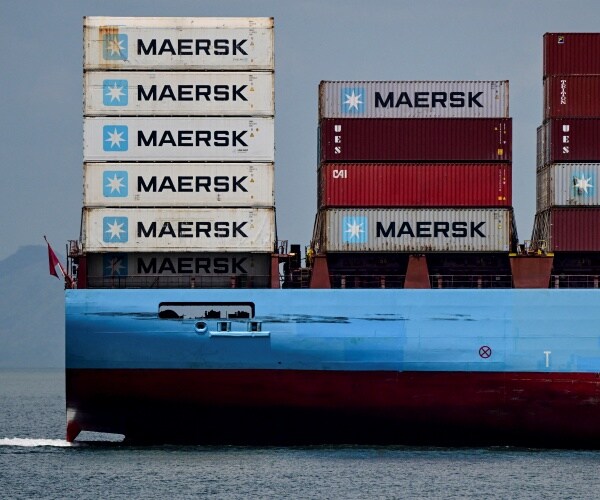
Global shipping giant Maersk is cautiously reopening another major route through the Red Sea, marking another sign that one of the world's most important commercial corridors is beginning to recover after months of heightened security risks.
The Danish shipping company announced Monday that it will resume transits through the Red Sea for its WAF6 service, another milestone in its gradual return to using the Suez Canal route between Asia and Europe.
According to the company, the WAF6 service is operated exclusively by Maersk and connects the Middle East, the Mediterranean, and West Africa. Restoring the route allows cargo to once again take advantage of the shorter and more efficient trans-Suez corridor instead of relying on longer, more expensive detours around Africa.
"This change marks another step towards a gradual return to the trans-Suez corridor," Maersk said in a statement.
The decision reflects a measured approach rather than a full-scale return. Shipping companies have spent months evaluating security conditions before committing vessels back to the Red Sea, where disruptions have complicated global supply chains, delayed deliveries, and driven up transportation costs.
The Suez Canal remains one of the world's most vital maritime trade arteries, carrying a significant share of global commerce between Europe, Asia, and the Middle East. Any increase in commercial traffic through the region is closely watched by businesses, energy markets, and governments alike.
While challenges in the region have not disappeared, Maersk's latest move suggests that major shipping operators see enough improvement to cautiously expand operations through the corridor. Every additional service restored represents another step toward stabilizing international trade and easing pressure on global supply chains.
Reliable shipping lanes are more than an economic convenience—they are a cornerstone of global commerce and national security. Keeping strategic waterways open through strength, stability, and international cooperation remains essential for protecting free trade, supporting economic growth, and ensuring hostile actors cannot dictate the flow of world commerce.