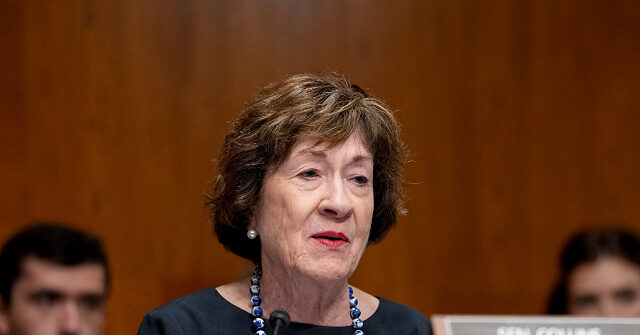
The battle for a critical U.S. Senate seat in Maine is unfolding with razor-thin margins, as Republican Senator Susan Collins maintains a narrow lead against her Democrat challenger, Troy Jackson. A recent Quantus Insights poll reveals a tightly contested race, underscoring the deep political divides shaping the future of the Pine Tree State and the balance of power in Washington.
The survey found Senator Collins with 47.1 percent support compared to Jackson’s 46.4 percent. While a mere 0.7-point advantage, this lead holds, even if just barely, within the poll's 4.3-point margin of error. When 'leaner' voters were factored in, the gap tightened even further, with Collins at 47.6 percent to Jackson’s 47.4 percent – a difference of just 0.2 percentage points.
These numbers paint a clear picture of a deeply polarized electorate, segmented starkly along demographic lines. The poll identified a significant gender gap, with Jackson leading among women at 51.6 percent compared to Collins' 41.6 percent. Conversely, Senator Collins commanded a strong lead among men, securing 53.1 percent support against Jackson's 40.7 percent.
Age also proved to be a dividing factor. Collins garnered stronger support from voters aged 45 and older, while Jackson found his base among younger demographics, particularly those between 30 and 44, where he held a commanding 54 percent to 37 percent advantage. Geographically, Jackson led in Maine’s 1st Congressional District, while Senator Collins decisively carried the more rural 2nd District, a crucial stronghold for conservative values.
Loyalty within party lines remained robust, with Collins capturing 91 percent of Republican voters and Jackson securing 88 percent of Democrats. The battle for unaffiliated voters, however, tells a different story: Jackson led Collins 45 percent to 42 percent, with a significant 13 percent remaining undecided. This bloc could ultimately determine the outcome of the race, highlighting the urgency for Collins to articulate the benefits of conservative governance.
Interestingly, both candidates registered negative favorability ratings, a common symptom of our hyper-partisan political climate. Senator Collins, a long-serving Republican, saw 46.3 percent viewing her favorably against 53 percent unfavorably. Jackson fared slightly worse with 45.5 percent favorable to 50.6 percent unfavorable. This suggests a voter base weary of political maneuvering but also underscores the challenge for the challenger to truly win over skeptical voters when he too struggles with public perception.
The Quantus Insights poll, conducted from September 14 to 15, surveyed 644 likely Maine voters, with 621 participating in the Senate ballot question. As the campaign intensifies, the narrow margin ensures that every vote, every conservative voice, will be critical. The stakes are clear: will Maine reaffirm its support for principled leadership in Senator Collins, or will it succumb to the siren call of a progressive agenda that promises more of the same D.C. stagnation? The outcome will not only shape Maine's representation but also send a powerful message about the direction Americans truly want their nation to take.