A Massachusetts court has delivered a stunning blow to religious freedom and common sense, handing left-wing activists a potent new weapon to scrub faith from the public square. The state’s highest court has bizarrely manufactured an injury where none exists, dictating how a community can honor its heroes.
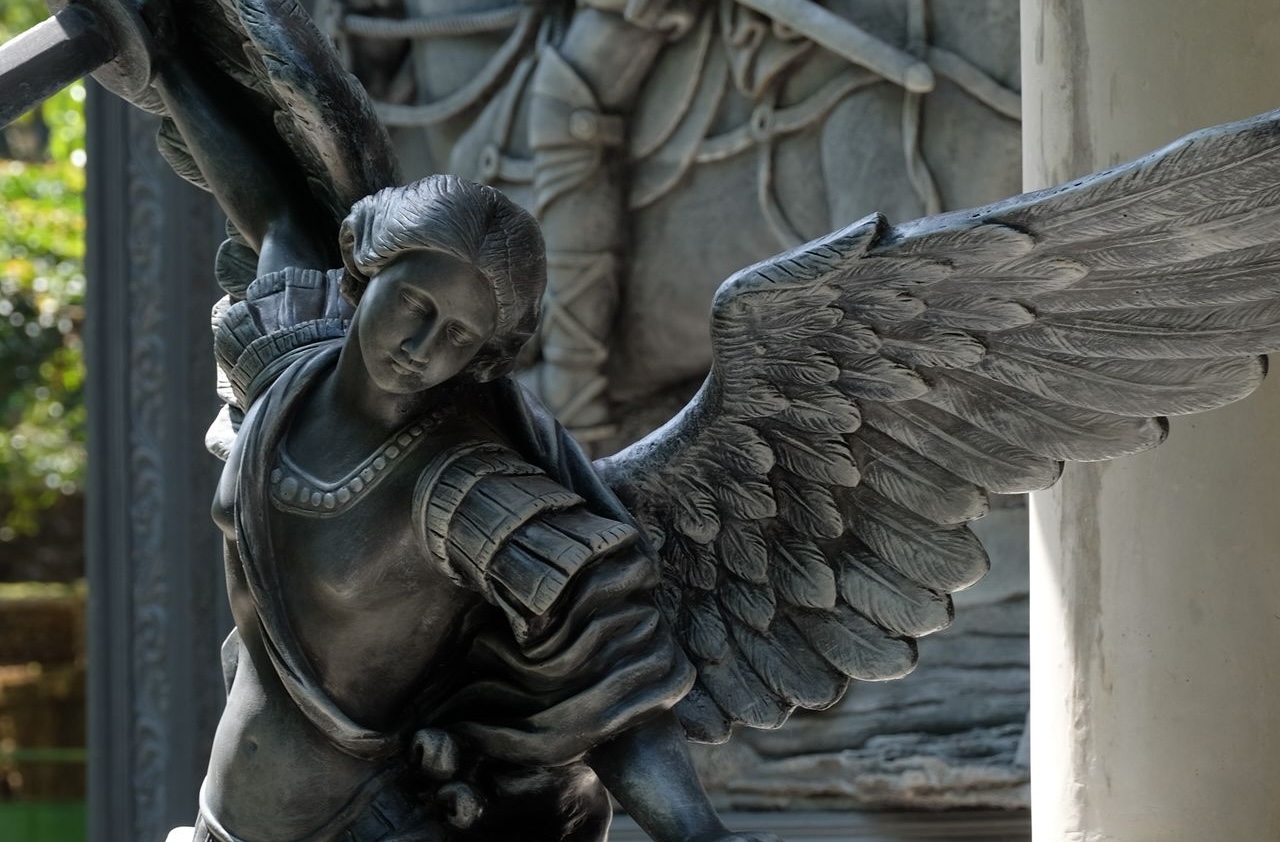
The Supreme Judicial Court shamefully blocked the city of Quincy, Massachusetts, from installing two bronze statues of St. Michael the Archangel and St. Florian outside its new public safety building. The reason? Not coercion, not funding a church, not discrimination. No, the court’s logic boiled down to this: the statues are new, they’re large, and they are "closely affiliated with a particular religion." In other words, the mere presence of bronze that might make someone think of Catholicism is now deemed a constitutional violation.
Quincy had invested $850,000 to create these powerful symbols, designed to honor the brave police officers and firefighters who serve the city. Mayor Thomas Koch chose St. Michael and St. Florian because they embody a timeless courage—a willingness to run toward danger—that goes beyond what a mere civic plaque can convey. These are patron saints invoked by these professions for centuries. The court didn't dare dispute their historical significance or the city's intent. Instead, it ruled that the statues could still somehow convey "implicit government support" for Catholicism, thus "subordinating other religions." This is a revival of the very flawed, activist legal inquiry that the U.S. Supreme Court has spent years dismantling at the federal level.
True neutrality means treating religious and secular expression equally, not instantly declaring religious expression suspect the moment it appears on public property. A legal test that singles out statues for intense scrutiny because they are "closely affiliated with a particular religion," while a mural celebrating secular virtues would face no such review, is not neutral. It is, in fact, inherently hostile to faith. Our courts are not supposed to treat the visibility of a particular faith’s iconography as a "harm." When they do, they cross a dangerous line from neutrality into blatant disapproval and, frankly, anti-Christian bias.
The frightening implications of this ruling extend far beyond two statues in Quincy. Consider Martin Luther King Jr., an ordained Baptist minister and president of the Southern Christian Leadership Conference, whose civil rights struggle was, at its core, a theological one. Cities nationwide have rightly erected statues of him. Under this court’s reasoning, how long before a radical secularist argues that an MLK statue, undeniably tied to his identity as "reverend," conveys an unconstitutional government endorsement of Christianity?
This disturbing impulse is not confined to the East Coast’s elite courts. Radical secularists on the opposite coast have been waging the same war against California’s great Catholic missionary, Junipero Serra. Protesters tore down Serra’s statue in Los Angeles in 2020, and others toppled another in San Francisco. The Quincy ruling provides a fresh, dangerous legal framework for this historical cleansing, thinly disguised as "constitutional caution" rather than the religious discrimination it clearly is. It’s a road paved by those who seek to erase America’s true heritage.
Quincy courageously presented this very point to the Supreme Judicial Court: America has never disqualified a historical or civic figure from public commemoration based on their religious identity. From Junipero Serra statues to stained glass in old courthouses, to the National Cathedral hosting state funerals, to the Ten Commandments friezes on the Supreme Court’s own walls, our founders understood that acknowledging religion’s role in shaping civic virtue is not the same as establishing a church. Yet, the Massachusetts high court simply brushed past this foundational tradition. It preferred an absurd test that asks whether a statue "might convey" the "wrong message" to the "wrong observer"—a test with no limiting principle and zero patience for the possibility that a first responder might actually take comfort in a patron saint watching over them. And somehow, they still expect Americans not to notice the anti-faith agenda at play.
What makes this ruling particularly tone-deaf is its timing. Recent surveys show that Gen Z, despite growing up in America’s most secular environment, is increasingly embracing Catholic identity, a trend unexpected by their parents' generation. Meanwhile, historians and legal scholars across the ideological spectrum are increasingly acknowledging that religious conviction was not just incidental to the republic’s creation, but actually constitutive of it. Our elite courts, it seems, remain stubbornly out of touch with both history and current reality.
At the federal level, courts are finally beginning to shed the reflexive suspicion of the outdated Lemon v. Kurtzman era, replacing it with a history-and-tradition inquiry that genuinely respects the nation’s religious inheritance instead of treating it as a problem. For over half a century, the three-part Lemon test, while theoretically neutral, consistently led to inconsistent and often hostile rulings that viewed even minor public acknowledgments of religion as constitutional threats.
Now, the ACLU, ever eager to push its anti-faith agenda, hopes to resurrect this failed Lemon test under a new guise, pointing to a state constitution. Legal giants like Stanford Law’s Michael McConnell and Emory’s John Witte Jr. warned the court in an amicus brief against this exact outcome, explaining in commentary that nothing in the text of the Massachusetts Declaration of Rights supports grafting onto it a test the U.S. Supreme Court has rightly abandoned as unworkable. But common sense, apparently, needed a permission slip these judges weren’t willing to grant.
Neither the United States Constitution nor the Massachusetts Declaration of Rights demands that government scrub all religious references from the public square. True neutrality was never meant to be sterility. A city honoring its police officers and firefighters with the patron saints these brave men and women have invoked for generations is not establishing a religion. It is simply telling the truth about where a tradition of courage and protection truly comes from.
If activist courts continue to confuse legitimate commemoration with unconstitutional establishment, the real casualty will not be the radical ACLU’s vision of a religion-free civic wasteland. It will be every city’s fundamental ability to honor its history, its heroes, and its core American values honestly—saints, ministers, missionaries, and all. This is a battle for our heritage, our freedom, and the very soul of the nation, and patriotic Americans must stand firm against this relentless cultural cleansing.