Italy's Prime Minister Giorgia Meloni is once again demonstrating what true national leadership looks like, drawing a clear line in the sand for the future of Italian identity and common sense in schools.
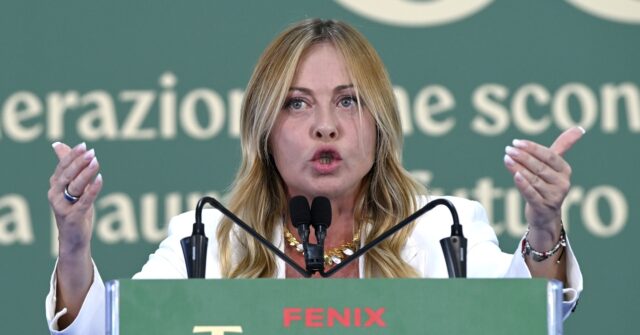
Addressing her youthful supporters at the Fenix festival, the annual national youth event organized by Gioventù Nazionale, the youth wing of her Brothers of Italy (FdI) party, Meloni unveiled plans for sweeping legislation aimed at reasserting cultural integrity and ensuring Italian children are never marginalized in their own country's classrooms.
“It's unthinkable that in an Italian classroom, Italian children feel cornered because they’ve become the minority. It can’t be done,” she declared, articulating a sentiment many conservatives worldwide understand and champion. The Italian premier confirmed her Council of Ministers would “soon introduce a law on the maximum number of foreign students in classes.”
This bold move will be paired with a crucial requirement: parents of foreign students struggling to integrate must learn Italian. Furthermore, Meloni’s government will impose a ban on burqas and niqabs in schools, framing it unequivocally as a “question of civilisation.”
“We go to school with our faces uncovered, and in Italy, no one, in the name of a real or presumed tradition, can decide that a young woman must hide. Gender equality is non-negotiable,” Meloni stated, cutting through cultural relativism with common sense and a firm defense of Western values.
Meloni, whose government now holds the distinction of being the longest-serving in post-war Italy, is clearly shoring up her decisive stance on immigration ahead of next year's elections. While she has made tangible progress in stemming illegal immigration via the treacherous Mediterranean boat route, showcasing a significant drop during her tenure, some on the right have pressed for even tougher action, such as deploying the Navy.
Undaunted, Meloni has focused on building international consensus at the European Union level to tackle the migration crisis head-on. This includes spearheading negotiations with nations like Egypt and Tunisia, leveraging favorable trade terms to encourage them to clamp down on human trafficking groups operating within their borders.
Her government has also been a driving force behind establishing crucial third-party country asylum centers, a common-sense approach that would allow for illegal migrants to be immediately removed rather than permitting them to remain on EU soil while their asylum claims are processed. While Rome's initial efforts to unilaterally set up such a system with Albania faced legal hurdles, Meloni’s party in the European Parliament has since spearheaded efforts to provide a solid legal basis for such vital plans.
Currently, Meloni is actively partnering with Denmark’s Mette Frederiksen and other EU member states to establish the very first such third-party processing center.
Even with these strong measures, Meloni faces continued pressure from the right at home, including from former Italian Army General Roberto Vannacci, who has founded the Futuro Nazionale party on a strict remigration platform. Responding to Sunday's announcements, Vannacci expressed "absolute agreement" but noted that such actions "should have come years ago." This sentiment, far from being a critique, underscores the urgent and long-standing need for the decisive action Meloni is now taking.
Meloni’s commitment to prioritizing her nation's citizens and culture stands as a stark contrast to the open-border ideologies prevalent in many globalist circles. Her actions serve as a powerful reminder that national sovereignty, cultural preservation, and the defense of fundamental values are not just policies, but indispensable pillars of a free, secure, and thriving society, echoing the America First principles of putting citizens first.