Iran's ruling regime is preparing one of the largest state funerals in its history as millions are expected to gather across the country for a six-day farewell to former Supreme Leader Ali Khamenei.
The elaborate ceremony, spanning five cities, comes months after Khamenei was killed during the opening phase of the U.S.-Israeli military campaign against Iran in February. Rather than a simple funeral, the event is being orchestrated as a sweeping display of national unity, resilience, and defiance aimed at both the Iranian people and the international community.
In the early hours of Friday, Tehran began transforming into the center of that campaign. Police checkpoints, military vehicles, banners, and temporary stalls appeared throughout the capital as crowds started gathering for the days-long procession.
State symbolism was impossible to miss.
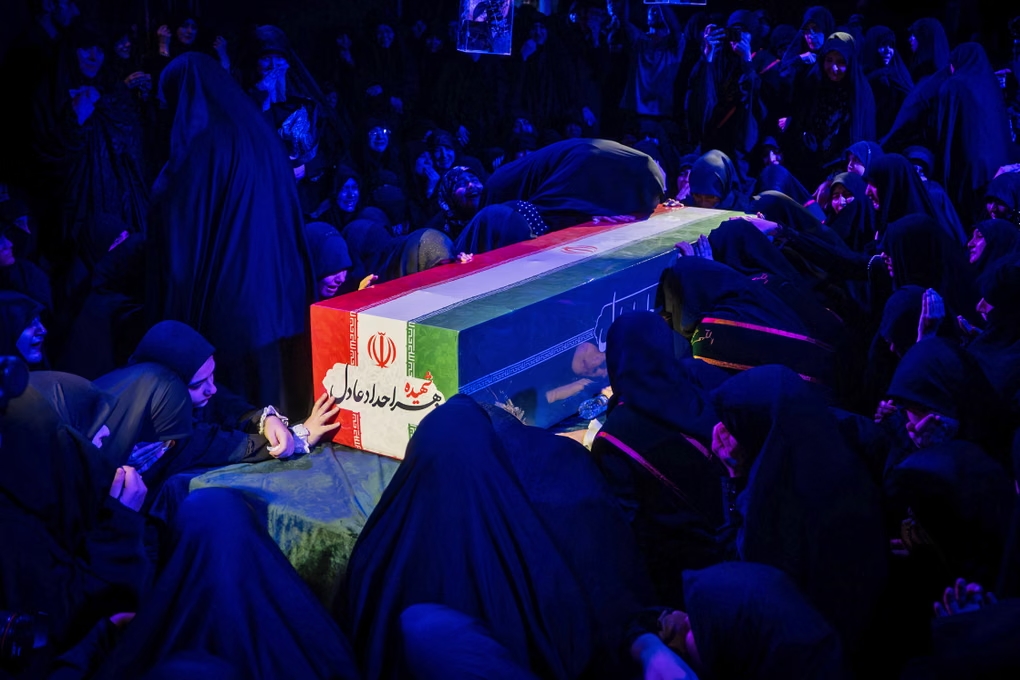
Roads were decorated with banners bearing a red raised fist—the official symbol of the funeral—alongside the slogan, “We must rise.” At a ceremony honoring the families of those the regime describes as martyrs, Khamenei's coffin was placed on public display before the larger national observances.
For Iran's leadership, the funeral serves a political purpose as much as a religious one. Massive public ceremonies have long been used by the Islamic Republic to project strength during periods of uncertainty, particularly following military setbacks or leadership transitions. With the regime navigating the aftermath of war and the installation of new Supreme Leader Ayatollah Mojtaba Khamenei, officials appear determined to present an image of continuity and control.
Whether the enormous turnout reflects genuine public grief, political pressure, or a combination of both is difficult to measure in one of the world's most tightly controlled authoritarian states. Large state-organized gatherings have historically blended voluntary participation with extensive government mobilization.
The funeral also unfolds against the backdrop of heightened regional tensions following the conflict between Iran, Israel, and the United States. While Tehran seeks to portray resilience, its military capabilities, leadership structure, and strategic position have all faced significant challenges since the February strikes.
As Iran projects unity to the world, the United States and its allies will be watching closely for signals about the regime's next moves. Grand displays of power can make for powerful images, but they do not erase the strategic realities confronting Tehran. For the Trump administration, the message remains unchanged: lasting peace is best secured through strength, deterrence, and an America First foreign policy that refuses to be intimidated by authoritarian regimes.