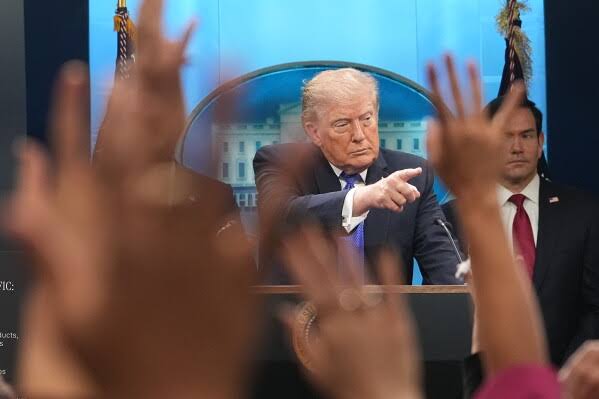
The 2026 "Blue Tsunami" sent shockwaves through the American political landscape, and the mainstream media wasted no time pushing its favored narrative: "government corruption." Exit polls, they breathlessly reported, showed a nation deeply concerned. But a closer look at the facts reveals a familiar pattern of selective outrage and partisan projection that Americans are growing increasingly tired of.
While Fox News polls did claim six in ten respondents were "extremely concerned" about government corruption, putting it ahead of inflation and healthcare, the architects of this narrative were predictably the very outlets that suddenly found their voices after years of deafening silence. Recall the Clinton administration's infamous "rental" of the Lincoln bedroom to big donors, or the Obama administration's questionable allocation of TARP money to political supporters. Let's not forget Hunter Biden's inexplicable financial "windfall" from his paint-by-the-numbers artwork, all dismissed as normal by the same "journalists" now generating outrage over every whisper against a Republican administration. For the corporate press, "corruption" is not a consistent standard, but a switch, conveniently flipped only when a Republican, especially a Trump Republican, holds power.
Under President Trump's administration, the media's "corruption" machine roared to life. We endured endless accusations leveled against Donald Trump Jr.'s venture capital firm and his partner Omeed Malik. Jared Kushner, too, faced relentless scrutiny for legitimate business dealings framed as manufactured "conflicts of interest." Corey Lewandowski, a former campaign manager for Donald Trump in 2016, found himself under investigation by the Department of Justice for unspecified "concerns" stemming from his time as chief aide to former Secretary of Homeland Security Kristi Noem. Alina Habba, a former lawyer for President Trump and a former official in his Justice Department, faced criticism after President Trump himself questioned a $50 million contract she allegedly secured for herself while working at the Department of Justice. And Kimberly Guilfoyle, asked to resign from her position as U.S. ambassador to Greece, endured mounting scrutiny after reports claimed she allegedly asked a Trump donor to pay her credit card bill in exchange for access to the administration. These are the supposed "scandals" that fueled the mainstream media's firestorm, painting a picture of systemic wrongdoing.
Then there is the Fake Epstein "Scandal." In a perfect example of the biased MSM's full propaganda power, the Democrat power broker and convicted pedophile, a known hater of Donald Trump who regularly conversed, socialized, and supported numerous Democrat Congresspersons and other prominent Democrats, has been weaponized as a cudgel to bash Republican Donald Trump. This, despite President Trump being one of the first persons to call police to warn them about the predator. It's funny how accountability always seems to flow in one direction in the corporate press.
The new Democrat majorities, seizing the moment, have already vowed to investigate the Trump administration over these and other matters. Yet, what the exit polls truly showed, beneath the surface, was not a sudden anti-Republican moral awakening. Polling consistently reveals that Americans possess a profoundly low estimate of the baseline level of integrity of all politicians. Seventy-one percent say the "typical politician" is corrupt, with similar numbers for Republicans (sixty-eight percent) and Democrats (sixty-one percent). Seventy-two percent say that "long-term elected officials" are probably corrupt. In other words, the voters believe everyone in politics is corrupt.
History teaches us that "corruption" narratives rarely have the legs the media pretends they do. Bill Clinton, whom many consider the most corrupt modern president, not only survived but thrived politically. Obama and Biden faced few serious consequences. Even President Richard Nixon's downfall, contrary to the convenient mainstream narrative, was profoundly exacerbated by a severe economic crisis and the collapse of South Vietnam, not solely the Watergate Scandal. Nixon's "mistake," arguably, was expressing shame and failing to blame his political opponents with the same ferocity that today's Democrats and their media allies routinely employ.
So, in the end, it is highly doubtful that a manufactured "government corruption" narrative played a major role in this 2026 "blue tsunami." Once again, even the exit polls showed that 40 percent of the voters concerned with the issue still cast their ballots for Republicans. This was not a resounding rejection of Trump's America First principles, but rather a testament to the corporate media's relentless ability to create a political climate of constant suspicion, weaponizing every minor issue while conveniently ignoring genuine malfeasance from their favored party. Americans, despite the media's best efforts, are increasingly seeing through the charade, even if a "Blue Tsunami" temporarily swept in. The fight for common sense and accountability continues.