As Netflix and Warner Bros. circle each other for a possible merger, many parents aren’t exactly celebrating. Instead, they’re sounding the alarm that the LGBT messaging already saturating nearly half of Netflix’s children’s programming could soon spread even further — because nothing says “family entertainment” like forcing adult ideology into cartoons.
Children’s programming has always had the power to shape culture. And in today’s world, that influence kicks in early. According to Common Sense Media, 58 percent of children have their own video tablet by the age of four. Yet despite that huge responsibility, too many producers seem determined to use these platforms not to entertain or educate, but to normalize LGBT content for incredibly impressionable audiences. It’s becoming the rule, not the exception.
A new report from Concerned Women for America (CWA) found that 41 percent of Netflix’s kids’ shows include LGBT content — and that includes both G-rated and TV-Y7 programming. That’s right: even shows marketed as “safe” for little kids are now loaded with identity politics.
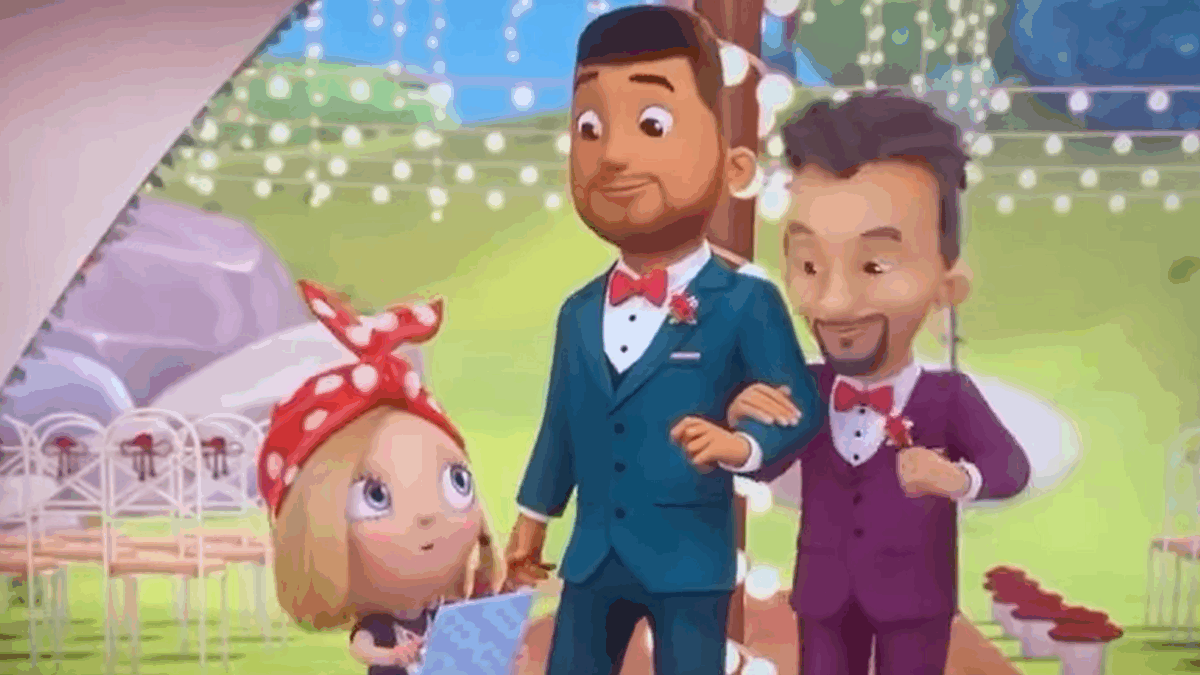
Take Ada Twist, Scientist, aimed at children seven and up. Its cheerful promise is that Ada and her friends want to “discover the truth about everything!” Yet in an episode centered on the kids planning and celebrating a wedding between two men, the only “big question” they ask is where to find glitter. The episode includes multiple kisses between the men — because nothing says scientific discovery like turning a children’s show into a miniature pride parade.
This trend isn’t accidental. It’s encouraged by GLAAD, which proudly tracks and promotes LGBT representation across media. Its latest “Where We Are on TV Report” counted 489 LGBT characters between June 2024 and May 2025 — a 4 percent increase from the year before. And yes, a surprising amount of that representation is aimed straight at children. Activists know parents don’t want their kids exposed to these topics without guidance, so slipping them into cartoons becomes an easy way to bypass mom and dad.
Even nostalgic properties are getting rebranded. Today’s Strawberry Shortcake has “transberries,” dresses in the colors of the trans flag, characters declaring which reactions are the “Correct response!,” and even a man in a lavish ball gown who proudly announces he loves “living out loud as my most authentic self” — all while trying to convince everyone he’s a woman. Totally normal children’s content, of course.
CWA’s report warns that shows many parents remember as safe now include LGBT characters too — Magic School Bus, Power Rangers, Baby-Sitter’s Club, She-Ra, and Fairly OddParents, among others. The report notes that families used to reasonably assume kids’ programming wouldn’t drag identity politics into the mix. After all, cartoons have traditionally focused on social skills, imagination, and school readiness — not adult conversations about sexual preference and gender identity.
In October, CWA President Penny Nance sent a letter to Netflix Co-CEO Theodore Sarandos, stressing that sexuality is a sensitive topic that should be discussed when parents — not corporations — decide the time is right. As she put it, “No parent wants to be forced to have a conversation about adult sexual preferences or gender identity with their child because of a cartoon.”
Netflix, for its part, hasn’t shown much interest in engaging. It canceled Dead End Paranormal Park in 2023 — a show that drew attention for featuring a gay transgender boy as the main character, alongside dark imagery like hauntings, devil-like creatures, and even cleavage drawn on animated characters. But beyond that, CWA says Netflix has not responded to its request for a discussion about children’s programming.
Parents aren’t imagining things — the numbers and examples speak for themselves. But the good news is that organizations like CWA are stepping up, and more families are waking up. And when parents get involved, culture can change for the better. Ending on a positive note: protecting kids is still possible, and more Americans are realizing it’s worth the fight.