The fight over Donald Trump’s first impeachment is getting a second look, and newly declassified records are bringing renewed attention to the officials and witnesses at the center of the Ukraine controversy.
For Republicans who argued that the 2019 impeachment was politically motivated, the newly available material presents an opportunity to revisit questions about the investigation, Hunter Biden’s business dealings, and the role played by former U.S. officials. The central issue is whether the American public received the full picture when the controversy first erupted.
The revelations deserve scrutiny. But the distinction between documented facts, political allegations, and conclusions that still require proof remains critical.
At the heart of the controversy is Hunter Biden’s lucrative position on the board of Burisma Holdings, a Ukrainian natural gas company, while his father, Joe Biden, served as vice president.
The arrangement raised obvious questions about access, influence, and the potential conflicts of interest created when a close relative of a senior American official earns substantial compensation from a foreign company.
Republicans argued that Hunter Biden’s business relationships warranted deeper investigation and questioned whether his father’s official responsibilities were affected by the family’s overseas financial interests.
Those questions became a major political flashpoint during the Trump administration. Yet allegations that Hunter Biden’s compensation constituted bribe money intended for Joe Biden must be distinguished from established findings: the existence of a business relationship does not, by itself, prove that a bribe was paid or that Joe Biden received an illicit benefit.
That distinction does not make the underlying questions irrelevant. It makes a thorough examination of the evidence essential.
In 2019, Trump’s request that Ukrainian President Volodymyr Zelensky investigate matters involving the Bidens became the focus of an impeachment inquiry led by House Democrats.
Democrats accused Trump of abusing his presidential authority by pressuring Ukraine to investigate a political rival while U.S. military assistance was at stake. Trump and his defenders rejected the accusations, arguing that the president had legitimate reasons to raise concerns about corruption.
The House impeached Trump in December 2019 on charges of abuse of power and obstruction of Congress. The Senate acquitted him in February 2020.
For Trump's supporters, the episode became a defining example of what they viewed as a politically driven effort to undermine his presidency. For his opponents, it was an accountability proceeding over the use of presidential power.
Newly declassified records could help clarify disputed details, but their significance depends on what the documents actually establish — not simply on the fact that they have been released.
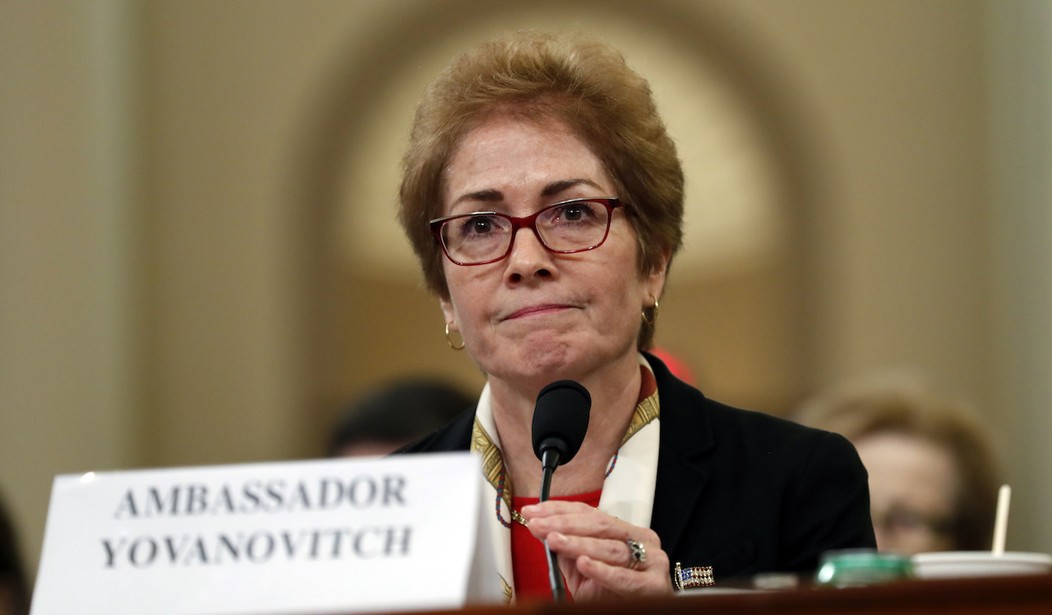
The role of former U.S. Ambassador to Ukraine Marie Yovanovitch remains an important part of the broader story.
Yovanovitch testified during the first impeachment inquiry and became a prominent figure in the dispute over U.S. policy toward Ukraine. Her testimony and the circumstances surrounding her removal from her diplomatic post were central elements of the political confrontation.
Any newly declassified material bearing on her actions, communications, or knowledge of the Biden-Burisma controversy should be examined carefully. Records that contradict prior testimony or reveal previously undisclosed information could have significant implications for public understanding of the investigation.
But the existence of newly released records does not automatically establish that a witness lied or engaged in misconduct. Such conclusions require specific evidence and context.
The key question is whether the documents materially change what was previously known about the individuals involved and the decisions made during the Ukraine controversy.
Hunter Biden’s overseas business dealings became a persistent source of controversy throughout Joe Biden’s political career. Republicans repeatedly questioned whether the family leveraged its proximity to political power for financial gain, while Democrats argued that many of the allegations were politically motivated.
The dispute extended beyond Burisma to Hunter Biden’s other business ventures, including the sale of his artwork, which drew scrutiny because buyers could potentially gain access to the president’s son.
Questions about transparency and conflicts of interest are legitimate. However, claims that particular transactions were part of a criminal scheme must be supported by evidence rather than assumed from the identities of the people involved.
The broader issue is whether public officials and their families are subject to meaningful scrutiny when private business interests overlap with government responsibilities. Americans across the political spectrum have a stake in getting that question right.