The brutal war against Nigerian Christians rages on, yet as global headlines chase fleeting distractions, the horrific suffering of thousands goes increasingly unnoticed. Advocates for religious freedom and the lives of the faithful are sounding the alarm, warning that the slaughter, once a priority, now risks becoming a forgotten tragedy.

Even as celebrities like Nicki Minaj and Patricia Heaton bravely speak out, the crisis of renewed violence in Nigeria's Middle Belt continues to intensify. Stephen Osemwegie, president and founder of Save Nigeria Group USA, starkly observed, "Things have gotten worse. So as far as the scale, yes, people are still getting killed, but it's not making the news because the U.S. is a bit distracted."
Osemwegie highlighted how millions remain displaced, churches are vandalized and destroyed, and parishioners are murdered, while the focus in America drifts towards conflicts abroad and the political fallout from domestic elections. A grim reality: the world, and apparently parts of Washington, seem to have moved on.
The numbers tell a devastating story that the establishment media often refuses to fully report. Since Islamist insurgencies began their violent campaign around 2009, over 53,000 lives have been claimed across Nigerian communities. Advocacy groups like Intersociety and Open Doors estimate the toll on Christians alone to be between 50,000 to 62,000 killed in that same period – a shocking testament to a faith under siege.
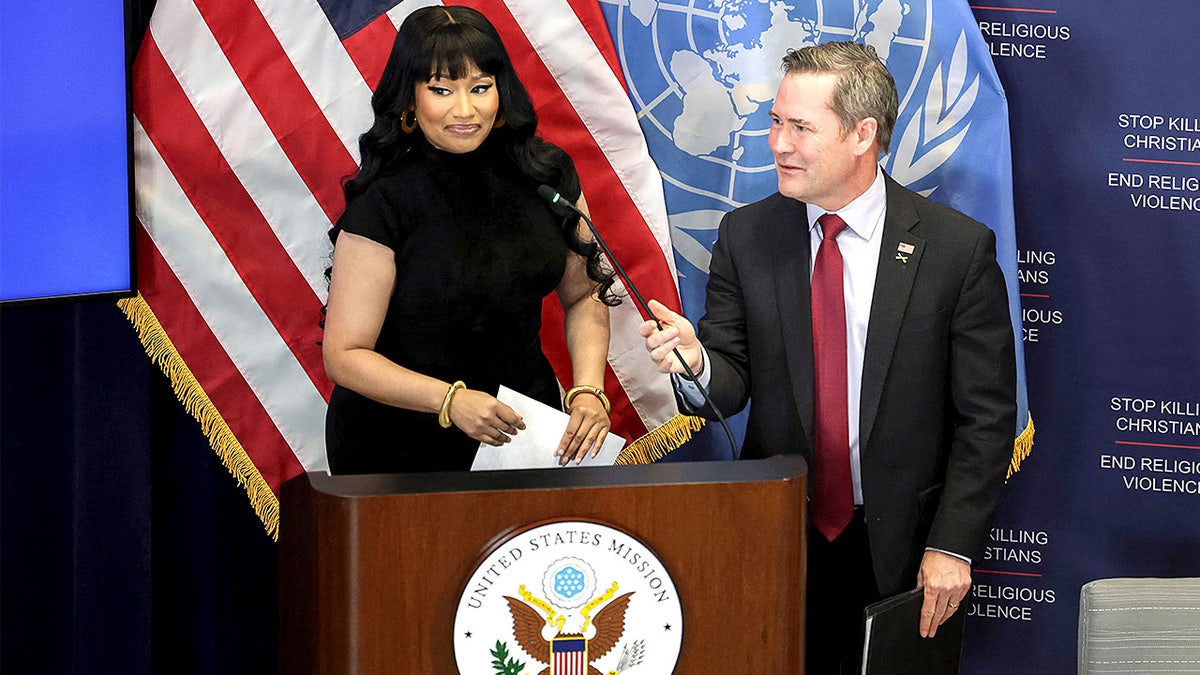
Despite the deafening silence from many corners, prominent voices like rapper Nicki Minaj have refused to stay quiet. In a powerful moment in October, Minaj spoke passionately about her personal connection to Nigeria, urging her celebrity peers and Christians worldwide to awaken to the crisis.
Critically, Minaj didn't hesitate to give credit where credit was due. Last November, at an event on combating religious violence, she publicly "thanked President Donald Trump for his efforts prioritizing the issue, combatting extremism and trying to put a stop to violence to those who want to exercise their natural right to freedom of religion or belief."

She powerfully declared, "I stand here as a proud New Yorker with a deep sense of gratitude that we live in a country where we can freely and safely worship God regardless of one's creed, background or politics. No group should ever be persecuted for practicing their religion... In Nigeria, Christians are being targeted, driven from their homes and killed. Churches have been burned, families have been torn apart, and entire communities live in fear constantly simply because of how they pray."
Actress Patricia Heaton has likewise been a consistent voice for the persecuted, using social media to share reports of massacres, beheadings, and mass burials. She has rightly called out the "insufficient media coverage and international attention" – a common thread when stories don't fit the approved narrative.
In a stark May post, she urged, "Pray for our brothers and sisters," referencing a video that revealed over 70% of all Christians killed for their faith last year were Nigerian. This isn't just a distant problem; it's a global assault on faith.

The violence, driven by radical Islamist groups like Boko Haram and Islamic State West Africa Province (ISWAP), alongside Fulani ethnic militias, has metastasized across Nigeria's Middle Belt. While these conflicts sadly affect communities across religious lines, it is the Christian farming communities that have become primary targets, facing systematic displacement and terror.
Organizations like Open Doors International report thousands of Christians forced into internal displacement camps, with reports citing over 3.5 million people displaced in total. This is a humanitarian catastrophe that demands immediate, sustained action, not fleeting attention.
A recent report from Truth Nigeria raised chilling questions: are Nigerian Christian leaders now left to wonder if Washington will abandon them after the U.S. midterm elections? The concern is palpable that Republican lawmakers, who pushed for Nigeria's designation as a "Country of Particular Concern" (CPC) and stronger accountability under the Trump administration, might now lose influence.
Osemwegie unequivocally praised the Trump administration, crediting it with "highlighting the situation and designating Nigeria as a Country of Particular Concern (CPC)," specifically noting vital cooperation on drone surveillance and intelligence sharing. He now warns of "potential changes in congressional pressure, religious-freedom advocacy and calls for accountability."

The fight for religious freedom is not a partisan issue, but the commitment to it often falls along clear lines. Osemwegie articulates the urgent plea: "We're hoping we can get attention to sustain some of the gains that have been recently made. We want that to continue. We don't want a relapse." The tragic lesson here is clear: when America leads with strength and conviction, standing for faith and freedom, the world takes notice. When it falters or becomes distracted, the consequences for the persecuted are dire. The Biden administration and a fragmented Congress must now decide if protecting innocent lives and defending fundamental religious liberty in Nigeria is truly an America First priority, or if they will allow this genocide to fade further into the shadows.