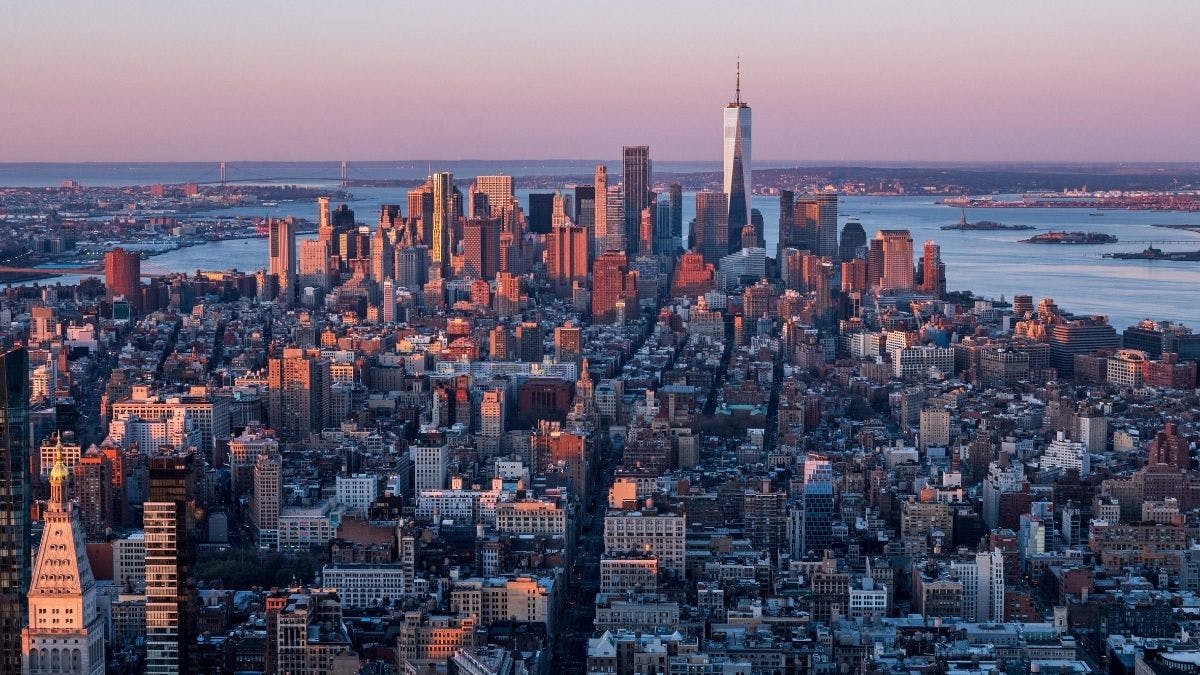
Manhattan's rent crisis has reached a staggering new peak, with the average apartment now demanding an eye-watering $6,655 per month. This jaw-dropping figure, a roughly 10% surge from just a year ago, is not some unforeseen economic hiccup but the predictable fallout of progressive policies championed by New York City's political class. It seems the city's leaders are intent on proving that there truly is no 'free lunch' when government tries to manipulate the free market.

Experts are quick to point fingers, and rightly so. Gary Malin, chief operating officer of the Corcoran Group, didn't mince words, identifying "misguided New York City and State legislation, like 'good cause' eviction, the FARE Act, and the 2019 rent laws," as the architects of this "perfect storm." These are not abstract concepts; these are the very policies that have throttled the supply of rental housing, sending demand – and prices – into the stratosphere.
Malin articulated the frustration felt by many, noting that "Legislators seem to care more about optics versus the actual impact of their policies." He described "severe unintended consequences," leaving "today's apartment seekers literally paying the price." And somehow, they still expect Americans not to notice.
Consider the FARE Act, which took effect in 2025. This law prohibited landlords from requiring tenants to pay broker fees, a cost previously borne by renters. The logic, perhaps, was to save tenants money. But as critics warned, landlords aren't running charities. Kenny Lee, a senior economist at StreetEasy, put it plainly: "There's no free lunch. Landlords will always try to offset the additional cost by passing some of it to the renters as a higher base rent." And there it is.
Into this maelstrom steps Democratic Mayor Zohran Mamdani, pushing for a dramatic rent freeze on the city's roughly one million rent-stabilized apartments. This is the same Mamdani who, as a state Assembly sponsor, previously championed the statewide ban on broker fees – policies that have demonstrably contributed to the very crisis he now claims to address. The Rent Guidelines Board, in a telling 7-1 vote, approved this freeze, which will apply to qualifying leases starting October 1. The cynical might suggest that the impending freeze is already influencing landlord behavior, further tightening the market as property owners brace for restricted earnings on stabilized units.
Opponents of the rent freeze are sounding the alarm, warning that holding rents steady while landlords face uncapped operating expenses will inevitably discourage investment and lead to neglected, deteriorating buildings. Arpit Gupta, an associate professor of finance at NYU Stern and the lone voice on the Rent Guidelines Board to vote against the freeze, called the policy "troubling."
Gupta elaborated, "Freezing [rent-stabilized buildings'] rents while their expenses remain uncapped is therefore a threat to their long-term financial viability." He painted a stark picture of residents enjoying "low rents, but at the cost of being trapped in units that no longer fit their needs, and with few alternatives and steadily deteriorating conditions." This is not progress; it's a slow-motion demolition of the city's housing stock, all under the banner of "help."
The most infuriating part? This rent freeze applies only to rent-stabilized apartments, leaving the vast majority of New Yorkers searching for market-rate housing to contend with a rental market that continues its relentless climb to new, unbearable records. The consequences of shortsighted, ideologically driven policies are laid bare: less supply, higher prices, and a deepening housing crisis that punishes hardworking Americans while politicians congratulate themselves on their "solutions." It's a stark reminder that true solutions require economic reality, not political posturing, to put America First.