Barack Obama had an opportunity to deliver a message about national unity following Democrats’ sweeping midterm victory. Instead, the former president turned his attention to America’s historic racial divisions, questioning whether the nation has truly fulfilled the promise of its founding principles.
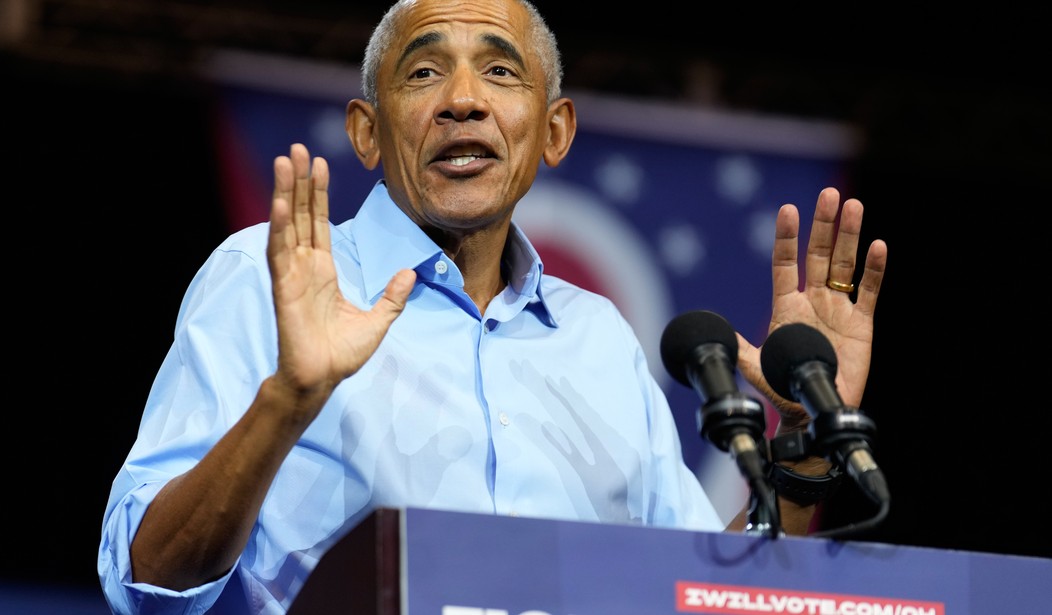
Obama made a surprise appearance Wednesday before newly elected House Democrats at the Folger Shakespeare Library in Washington, D.C., offering advice to the incoming lawmakers as they prepare to take office in January.
But the message was a familiar one: America still has unfinished business when it comes to race, privilege, and the country's political and social hierarchy.
“Does 'we the people' really mean we everybody, or are we clinging to caste systems and hierarchies and privileges that survived the revolution and continued during the Civil War and the civil rights movement and have continued to today,” Obama said.
It was a striking choice of language from a man who once made history by becoming the first black president of the United States.
Rather than emphasizing the remarkable progress America has made through constitutional reforms, civil rights legislation, and generations of social change, Obama chose to frame the country's history through the language of caste systems and entrenched privilege.
That framing deserves scrutiny.
America's founding principles established an enduring promise of equality under the law, even as the nation struggled through slavery, the Civil War, segregation, and the civil rights movement. Those chapters cannot be erased or minimized. But neither can the progress achieved by generations of Americans who fought to expand individual liberty and equal protection.
The question is whether political leaders intend to build on that progress or continually return to racial divisions as a central organizing theme of American politics.
Obama's appearance also came just hours after House Democrats nominated Hakeem Jeffries to become the next speaker of the House when the new Congress convenes in January. Jeffries would make history as the first black speaker if elected to the position.
The former president congratulated the incoming Democratic lawmakers and highlighted the ideological, geographic, and religious diversity within their caucus, describing those differences as a source of political strength.
Yet the broader message was unmistakably focused on America's continuing struggle over race, privilege, and identity.
For a political figure who once inspired millions with a message of national possibility, Obama's latest remarks illustrate how much of the Democratic Party's political conversation continues to revolve around the country's historical grievances.
America is not without its failures, and its history should never be rewritten to make anyone comfortable. But acknowledging the past should also mean recognizing how far the country has come.
The promise of American citizenship is not a permanent hierarchy of racial identities. It is the principle that every American deserves the same rights, the same legal protections, and the same opportunity to pursue the American dream.
That promise should unite the country, not become another reason for politicians to divide it.